
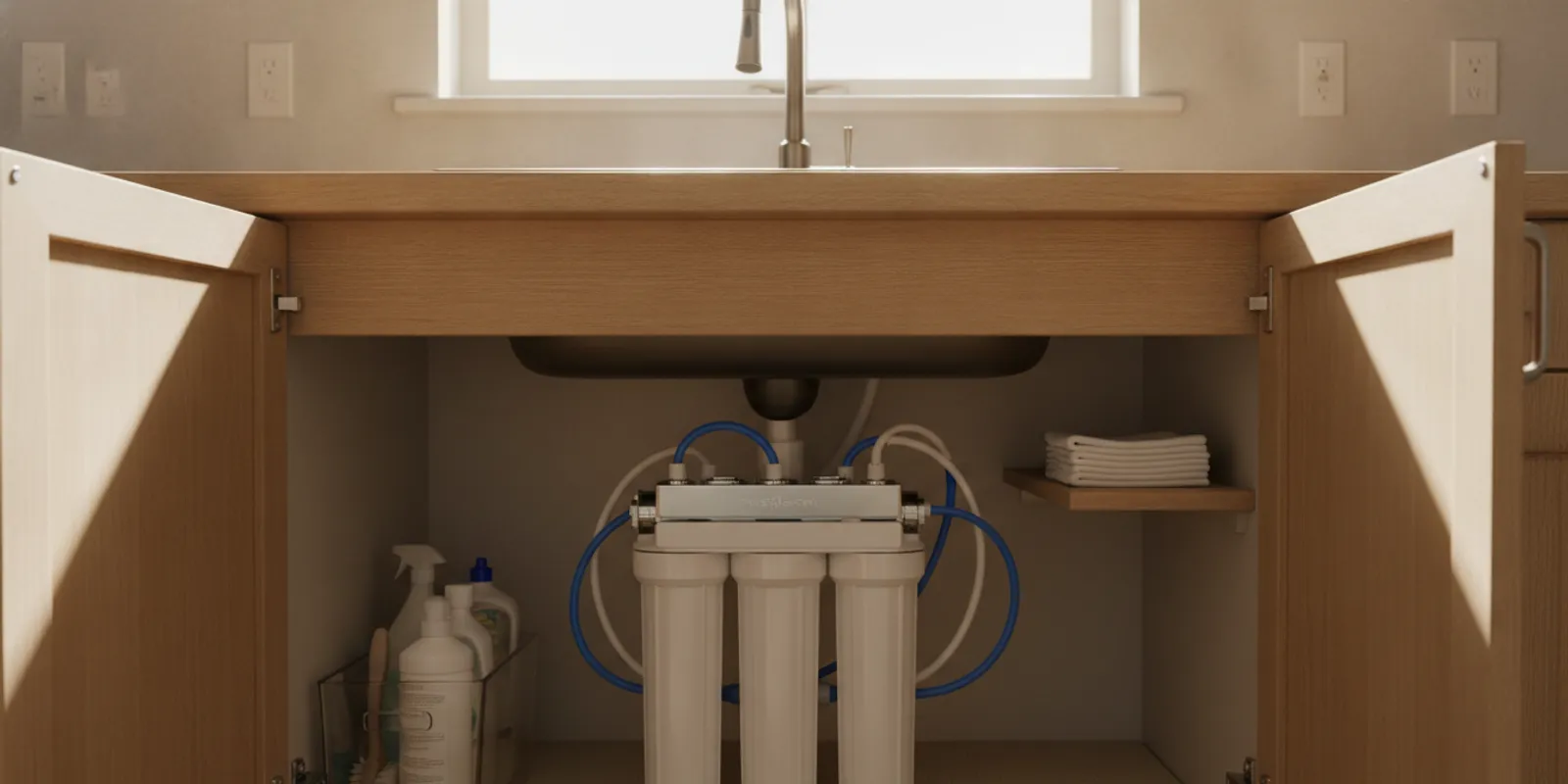
Choosing the best under sink water filter installation starts with a simple question: what do you want the filter to improve? Some homeowners want better-tasting drinking water. Others are comparing filtration technologies, trying to reduce a specific substance, or planning a dedicated faucet. The right setup depends on the water concern, available cabinet space, plumbing connections, and the maintenance you are willing to do. This guide walks through those decisions before you buy a system or schedule installation.
Contact Plumbing by Bishop to discuss water-treatment installation
What Should You Want an Under-Sink Filter to Do?
Start with the outcome, not the product category. Under-sink systems can use different treatment methods, and no single filter is designed to address every possible water concern. A unit that changes taste may not be the right choice for a specific contaminant concern. A more complex system may require extra space and regular filter or membrane changes.
Write down what prompted your search. Is it an unwanted taste or odor? Are you looking for a filter for cooking and drinking water rather than treating every tap? Has a water report identified a particular issue? Or are you replacing an older system and want to understand its connections and upkeep? Your answer helps narrow down which product claims and specifications matter.
If you are concerned about a particular substance, look for system information that identifies what the product is designed and tested to reduce. Check the exact model and the documentation behind the claim. Do not assume that a general phrase such as “purifies water” means a system treats every concern. If you use a private well, have a specific water-quality concern, or are unsure what is present in your water, consider obtaining appropriate water testing and professional guidance before choosing treatment. If you want help discussing a suitable plumbing setup, contact Plumbing by Bishop about your water-treatment installation.
The Florida Department of Environmental Protection provides an overview of water filtration system types, including reverse osmosis and ion-exchange filters. It is a useful starting point for understanding that systems use different processes and are selected for different purposes: Florida DEP’s water filtration systems overview.
Which Under-Sink Filter Types Should You Compare?
Product descriptions can make systems sound interchangeable, but their treatment methods, installation needs, and upkeep vary. Compare the system’s stated purpose, what comes with it, and what you will need to maintain it. A few common configurations are summarized below.
| System type | Typical configuration | What to check before choosing |
|---|---|---|
| Inline or single-stage filter | Connects to the cold-water line and may supply a dedicated drinking-water faucet or an existing faucet, depending on the model. | Which substances or taste concerns it addresses, compatibility with the faucet, replacement cartridge availability, and change interval. |
| Multi-stage cartridge system | Uses multiple filter stages in one assembly, often with a dedicated faucet. | Space for the unit and cartridges, connection requirements, replacement part cost and availability, and which stage does what. |
| Reverse-osmosis system | Typically includes several treatment stages and a storage tank; some configurations require a drain connection. | Cabinet room for the unit and tank, drain and faucet requirements, expected maintenance, and product-specific installation instructions. |
| Faucet-connected or no-new-faucet system | May use an existing faucet or another connection specified by the manufacturer. | Whether the current faucet and plumbing are compatible, where the filter will sit, and whether the product meets your intended treatment goal. |
These are broad categories, not a guarantee that every model in a category has the same features. Read the manufacturer’s installation manual for the exact configuration. The manual should clarify whether the kit includes tubing, valves, a faucet, mounting hardware, a tank, or a drain connection. It should also specify whether the unit is for cold water only and what operating conditions it requires.
Independent product reviews can help you compare features, but check the test method, the exact model, and whether the system fits your household. Consumer Reports describes under-sink models it tested and notes that product cost and installation cost are separate considerations: Consumer Reports’ under-sink water filter testing. Use reviews as one input, not as a substitute for checking treatment claims and plumbing compatibility.
How Can You Check Cabinet Space Before Buying?
Measure the area beneath the sink before ordering a system. Do not measure only the empty cabinet floor. The disposal, drain trap, water shutoff valves, cleaning supplies, and stored items all compete for room. A reverse-osmosis tank or a bulky multi-stage assembly may not fit comfortably beside existing plumbing, even if its main filter housing looks compact in a product photo.
- Measure height, width, and depth. Include the space needed to remove a filter cartridge or open a housing for service.
- Locate obstructions. Note the garbage disposal, pipes, water valves, electrical outlets, shelves, and cabinet braces.
- Leave access room. A system that fits only when pressed against other items may be difficult to inspect or maintain.
- Check the faucet area. If the system uses a separate faucet, confirm that the sink or countertop can accept it and that there is room to reach its handle.
- Think about routine use. Keep household chemicals and stored items from blocking access to valves, tubing, or filter housings.
Take a photo of the cabinet and make a simple sketch with measurements. Compare those details with the manufacturer’s dimensions and installation diagram. Product dimensions may describe the main unit but not the space needed for tubing bends, a storage tank, or cartridge replacement. When in doubt, leave more clearance rather than planning a tight fit. If your cabinet layout is cramped, ask Plumbing by Bishop to discuss the installation requirements before purchasing a system.
What Faucet and Drain Connections Might Be Required?
Under-sink filters connect to the plumbing in different ways. Some systems supply a dedicated faucet; others are designed to connect through an existing faucet or another specified arrangement. Reverse-osmosis systems commonly have more components than a basic cartridge filter, and some models call for a drain connection and a storage tank. The exact requirements depend on the product, so use the instructions for the specific model rather than relying on a generic installation video.
Before purchase, check whether the kit is intended for your sink and faucet arrangement. A dedicated faucet may require an unused mounting hole or a new hole in the sink or countertop. Drilling is not appropriate for every surface, and the sink material and location matter. Do not assume you can safely make a new opening without checking the sink or countertop manufacturer’s guidance.
Also look at the shutoff valves and supply lines. An installer needs a suitable point to connect the system, enough room to work, and compatible fittings. Older, corroded, leaking, or hard-to-reach valves may affect the work. A disposal, tight cabinet, or unusual pipe layout can make routing tubing and mounting the filter more involved. Avoid forcing a connection or using improvised fittings that are not specified for the product.
For a drain-connected system, follow the manufacturer’s instructions for the drain saddle or other supplied connection. The connection needs to be installed in the approved location and sealed correctly. Poorly routed or secured tubing can leak, kink, or interfere with use of the sink. If the instructions are unclear, or the cabinet plumbing is in poor condition, ask a plumbing professional to assess it before installation.
How Do You Compare Maintenance and Ongoing Upkeep?
Every filter system needs attention. Before selecting a model, find out which parts must be replaced, how the manufacturer specifies the replacement interval, and whether the parts will be easy to obtain. Replacement timing can depend on the product’s instructions and actual household use. Avoid treating a generic schedule as a substitute for the model’s requirements.
- List each replaceable part. A multi-stage system may have several cartridges, and a reverse-osmosis system may include a membrane as well as pre-filters or post-filters.
- Check replacement availability. Confirm that compatible replacement parts are sold and that you can identify the correct model numbers.
- Understand service steps. Some designs allow straightforward cartridge changes; others involve more steps, including shutting off water, relieving pressure, or sanitizing components as directed.
- Keep a record. Write down the installation date, model, and replacement dates so routine upkeep is easier to track.
- Watch for changes. A change in flow, taste, or visible leakage calls for checking the system instructions and addressing the issue; do not wait for a reminder if something appears wrong.
Ask whether filter changes are simple enough for you to handle or whether you would prefer help. Consider the time and effort as well as the price of replacement parts. A system that looks affordable at purchase may require several different parts over its service life. On the other hand, a more elaborate unit is not automatically a better fit if its treatment features or maintenance exceed your needs.
After installation or a cartridge change, follow the maker’s directions for flushing the system and checking connections. Inspect the cabinet again after the first use and periodically afterward. If you see moisture, shut off the system’s water supply if you can do so safely, and arrange repair rather than leaving a leak unattended.
Can You Install an Under-Sink Filter Yourself?
Some homeowners with basic plumbing skills and a straightforward cabinet setup may be comfortable installing a simple system by following its instructions. Before starting, make sure you understand every step and have the correct tools and fittings. Shut off the appropriate water supply, protect the cabinet from spills, and verify that the installation does not interfere with the sink, disposal, or existing plumbing.
Professional installation may be worthwhile when the work requires a new faucet opening, a drain connection, a storage tank, modifications to supply plumbing, or work in a cramped cabinet. It can also be a practical choice if the shutoff valves are old, the plumbing is unfamiliar, the instructions do not match what you see, or you want the finished system checked for leaks and proper operation.
A plumber can review the available space, identify connection points, and explain whether the selected configuration appears compatible with the sink. If the product is not yet purchased, have its model information and installation guide available. That lets the installer discuss the actual requirements rather than guessing from a general product description.
Professional help is not a substitute for choosing an appropriate filter. Confirm the system’s intended treatment purpose and maintenance requirements first. Installation and product selection are related, but they answer different questions: the product needs to suit your water concern, while the plumbing work needs to suit your home.
What Should You Ask Before Scheduling Installation?
A short conversation before the appointment can clarify what the work involves. Be ready to describe your sink layout and share the system’s make, model, and instructions if you have selected one. Useful questions include:
- Does this model need a dedicated faucet, a drain connection, a tank, or a new hole in the sink or counter?
- Does the cabinet have enough room for the unit and future filter changes?
- Are the existing shutoff valves and supply connections in usable condition?
- What work is included in the installation, and could additional plumbing repairs be needed?
- How should the unit be flushed, checked, and maintained after installation?
- How can I obtain pricing for this particular installation and any additional work that may be required?
Pricing can depend on the selected system and the existing plumbing, so discuss the specific installation rather than assuming all under-sink filters require the same work. Plumbing by Bishop serves residential and light commercial customers on the Treasure Coast. For water-treatment service questions, share the model information and describe the connection you plan to use. Send your installation questions through the contact page.
What Is a Sensible Order for Choosing and Installing a System?
Make the decision in stages so a product does not dictate a solution before you know what the plumbing can support. First, define the goal: taste and odor, a documented water concern, or a dedicated drinking-water source. Next, identify the system’s treatment claims and confirm they relate to that goal. If the issue is uncertain, seek testing or qualified guidance rather than assuming a filter’s broad marketing language answers it.
Then compare the installation diagrams for products that meet your needs. Check the complete dimensions, all included components, faucet arrangements, and whether the unit needs a drain connection or tank. At this point, measure the cabinet and sink, take a photo, and note where the valves and disposal sit. Check access not only for the original installation but also for future cartridge changes and leak inspections.
Before you commit, review maintenance. Record the names or model numbers of replacement filters, the manufacturer’s schedule, and the instructions for flushing after service. Consider whether replacement parts are readily obtainable and whether you want to perform changes yourself. If the unit has multiple stages, make sure you can tell which part needs replacement and when.
Finally, decide whether the installation is a manageable DIY project or a better fit for a plumber. A simple connection that matches the manual may be reasonable for someone comfortable with household plumbing. New faucet holes, a drain connection, limited clearance, questionable valves, or unfamiliar fittings raise the value of a professional review. Share the installation guide and cabinet photo when asking for help. After installation, test the system as the manufacturer directs, inspect every connection, and keep the manual and service record somewhere easy to find.
This order helps prevent common mismatches: purchasing a system that does not address the actual concern, discovering the tank will not fit, or overlooking the work needed for a separate faucet. It also gives you a clear basis for asking questions about the product, installation scope, and upkeep before making a purchase.
Frequently Asked Questions
Does an under-sink filter treat water at every faucet?
Usually, an under-sink point-of-use system treats water at the connection or faucet it serves, not throughout the whole home. Check the system’s product documentation to confirm which fixture it supplies. A whole-house system is a different scope and should be selected based on different needs.
Do all under-sink filters need a separate drinking-water faucet?
No. Some systems use a dedicated faucet, while other models are designed for a different connection arrangement. Review the exact model’s instructions and check your sink setup before buying; do not assume a faucet included with one system will work with another.
Does every under-sink system need a drain connection?
No. Drain requirements vary by system. Some configurations, including many reverse-osmosis units, use a drain connection, while other filter types may not. Confirm the requirement in the product’s installation guide before choosing a unit.
Can I install a filter if there is already a garbage disposal under the sink?
Possibly, but the disposal reduces available space and may affect how a unit, tank, and tubing can be positioned. Measure the cabinet and compare it with the full installation diagram, including clearance for filter changes. A plumber can assess a tight or complicated layout.
How often should I replace under-sink filters?
Follow the replacement instructions for the specific system and its components. Different cartridges and membranes may have different service intervals, and household use can affect upkeep. Keep a record of changes and check the manufacturer’s guidance if taste, flow, or other performance changes.
Get Help With an Under-Sink Filter Installation
Choosing a system is easier when you know what you want it to address, how it connects, and what upkeep you can manage. Compare the documented treatment purpose, measure the cabinet, confirm faucet and drain requirements, and plan for filter changes before you buy. If the layout is difficult or you want a plumber to review the connection requirements, discuss the specific system and your existing sink setup with Plumbing by Bishop.
Contact Plumbing by Bishop to discuss your installation
A careful fit and a clear maintenance plan can help make an under-sink filter more convenient to use and easier to keep in good working order.