A clogged toilet can turn into an overflowing bathroom in seconds, but the first response does not need to be complicated. Safe clogged toilet repair starts with stopping the water, protecting the floor, and determining whether the blockage is limited to one toilet or affecting other fixtures. The right next step depends on that distinction.
Contact Plumbing by Bishop for clogged toilet repair in the Treasure Coast.
The steps below help homeowners in Stuart, Jensen Beach, Palm City, Hobe Sound, Port St. Lucie, and nearby communities respond without creating a bigger mess or damaging the toilet. Stop the DIY process and arrange professional help whenever sewage backs up, the clog keeps returning, or more than one fixture is affected.
What should you do first when a toilet is clogged?
Quick answer: Do not flush again. If the bowl is rising, turn the toilet supply valve clockwise and close the flapper inside the tank if water is still moving. Protect the floor with towels, keep people away from contaminated water, and check whether nearby sinks, tubs, or toilets are also slow.
- Stop flushing. A second flush adds more water to a bowl that may already be near the rim. If someone has already pressed the handle, stay calm and focus on stopping the water rather than trying another flush.
- Turn off the supply valve if the level is rising. Look for the small valve on the wall or floor behind the toilet. Turn it clockwise until it stops. Do not force a valve that is stuck or visibly corroded.
- Close the tank flapper if needed. Remove the tank lid and press the rubber flapper over the opening at the bottom of the tank. This prevents tank water from continuing into the bowl while you assess the situation.
- Protect the bathroom floor. Put towels around the toilet base and wear disposable gloves if dirty water has spilled. Keep children and pets away from the area. If water reaches an electrical outlet or appliance, do not step into it, and get professional help.
- Check nearby fixtures without adding much water. Look at the sink, tub, shower, and other toilets. Gurgling, slow draining, or wastewater appearing in another fixture suggests the problem may be farther into the drain system.
Do not pull the toilet from the floor during the first response. Removing a toilet can expose you to contaminated water and can damage the wax seal or supply connection if the work is not completed correctly. First identify whether the bowl level drops and whether the issue appears isolated.
How can you safely try clogged toilet repair yourself?
Quick answer: If only one toilet is affected and the bowl is no longer rising, start with a toilet flange plunger. Create a seal over the drain opening, use controlled strokes, and stop after a few short attempts if the water does not move. A closet auger is the next tool, not a metal hanger or harsh chemical.
1. Choose a flange plunger
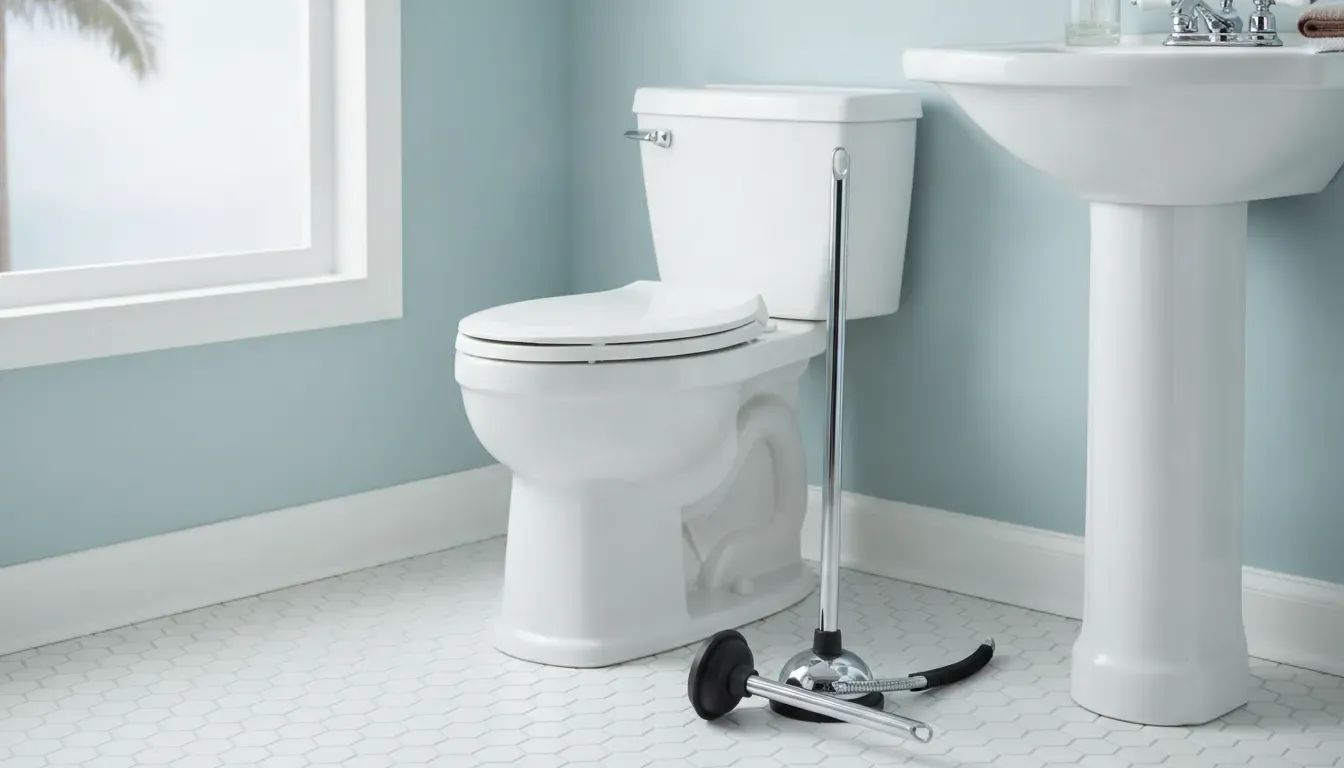
A toilet flange plunger has an extended rubber lip that fits into the toilet outlet. A flat cup plunger is made for a sink and often fails to seal inside a toilet bowl. A good seal matters more than force. If the bowl has too little water to cover the rubber cup, add a small amount from a bucket. Never add water if the bowl is already close to overflowing.
2. Plunge with steady, controlled strokes
Place the flange directly over the opening and press gently at first to remove trapped air. Then use firm, even strokes while keeping the seal in place. Try one round of about 15 to 20 seconds, pause to watch the water level, and repeat once or twice if the level is responding. Aggressive jabbing can splash dirty water, damage the seal at the base, or make the blockage harder to diagnose.
3. Try warm water and dish soap only for a soft blockage
If the water level has dropped, a small amount of liquid dish soap followed by warm, not boiling, water may help loosen a soft paper blockage. Wait several minutes, then try the flange plunger again. Boiling water is not a safe shortcut because sudden heat can damage porcelain. Do not combine this method with any chemical drain product.
4. Use a closet auger carefully
A closet auger, sometimes called a toilet auger, has a protective sleeve designed for the toilet trapway. Feed it gently, turn the handle slowly, and stop if you feel hard resistance or metal contacting porcelain. An auger is useful for a blockage close to the bowl, but it cannot solve every problem inside a drain line. If it does not clear the toilet without force, stop.
For a broader look at common toilet symptoms, including weak flushing and leaks, read Plumbing by Bishop's toilet repair guide. It covers a wider set of toilet concerns. This article stays focused on a blockage, safe first steps, and the decision to call for service.
Which clogged toilet repair mistakes should you avoid?
Quick answer: Avoid repeated flushing, chemical drain cleaner, sharp objects, excessive force, and improvised tools. These methods can cause an overflow, splash corrosive liquid, scratch or crack porcelain, damage seals, or push an object farther into the trapway. A cautious stopping point is safer than turning a manageable clog into a larger repair.
- Do not keep flushing to test the toilet. Once the bowl drains, test only with a controlled, small flush while ready to close the flapper. A full flush can recreate the overflow before the blockage is truly gone.
- Do not pour chemical drain cleaner into the toilet. Many drain cleaners contain corrosive ingredients and are designed for specific sink or shower drain conditions, not every toilet blockage. Poison Control explains that some drain cleaners can cause severe burns and dangerous splash injuries. Read the safety guidance at Poison Control before using any chemical product, and never mix products.
- Do not use a coat hanger or bare metal cable. Improvised metal tools can scratch the bowl, damage the trapway, or become lodged. A protective-sleeve closet auger is the appropriate tool when an auger is reasonable.
- Do not force a plunger or auger. Pressure is not a substitute for a good seal and diagnosis. Stop if the porcelain moves, the base leaks, the handle binds, or the tool meets an immovable object.
- Do not ignore an object-related clog. Toys, hygiene products, wipes, and other non-flushable items may not respond to plunging. Tell the plumber what may have entered the toilet so the right removal method can be chosen.
- Do not treat sewage as ordinary water. Keep the area contained, use gloves, and clean or disinfect affected surfaces according to product directions. If wastewater has spread beyond the bathroom or the source is unclear, get professional guidance.
Contact Plumbing by Bishop if plunging has not cleared the blockage or the toilet is backing up.
What signs mean the clog is deeper than the toilet?
Quick answer: A deeper drain problem is more likely when multiple fixtures are slow, wastewater backs up into a tub or shower, toilets gurgle, or the same clog returns soon after clearing. These symptoms can point beyond the toilet trapway, so stop using affected fixtures and arrange an evaluation instead of repeating DIY attempts.
| What you notice | What it may indicate | Safer next step |
|---|---|---|
| One toilet is slow or clogged, while other fixtures work normally | A blockage in the toilet trapway or nearby branch drain | Try a flange plunger once the water level is safe, then stop if it does not improve |
| More than one toilet, sink, tub, or shower is affected | A blockage farther along a shared drain line | Limit water use and request professional drain diagnosis |
| Wastewater appears in a tub or shower when the toilet is flushed | A substantial downstream blockage or backup | Do not flush again; treat it as urgent plumbing service |
| The toilet clogs again every few days or weeks | A recurring obstruction, poor flow, pipe issue, or an underlying fixture problem | Ask for a root-cause evaluation rather than repeated plunging |
| Water leaks from the toilet base after the clog clears | A compromised seal, loose connection, or movement at the fixture | Stop using the toilet and schedule toilet repair |
These signs are not a diagnosis by themselves. They are decision points that help you avoid adding water to a drainage system that may already be backing up. Plumbing by Bishop's drain cleaning service can help address a blockage that is beyond the toilet bowl, while the plumbing repair service can address leaks or fixture-related damage.
When should you call a plumber for clogged toilet repair?
Quick answer: Call a plumber when the toilet is overflowing, sewage is backing up, more than one fixture is affected, the clog returns, an object is lodged, or safe plunging does not work. Professional service is also the better choice when the toilet base leaks, the shutoff valve is stuck, or you are not comfortable handling contaminated water.
Arrange urgent plumbing support when:
- The bowl is overflowing or cannot be stopped with the supply valve and flapper.
- Wastewater is backing up through a tub, shower, floor drain, or another toilet.
- Several fixtures become slow or unusable at the same time.
- You see sewage near electrical outlets, appliances, or living areas.
- The toilet cannot be used without immediately rising or gurgling.
Schedule a non-emergency evaluation when the clog returns, a plunger only provides temporary relief, the toilet has a weak or incomplete flush, or you suspect a foreign object. Repeatedly clearing the symptom without finding the cause can waste time and increase the risk of leakage or a larger drain blockage.
Plumbing by Bishop serves homeowners and light commercial customers across the Treasure Coast. Its technicians are background-checked and drug-tested, and the company is known for leaving work areas clean. For a broader urgent-service pathway, see the emergency plumbing service page. Contact the company for service-specific pricing and an estimate based on the actual diagnosis, access, materials, and repair required.
How can you prevent a toilet clog from returning?
Quick answer: Flush only toilet paper and human waste, keep wipes and hygiene products out of the toilet, and use a wastebasket for other items. Pay attention to weak flushing, gurgling, slow nearby drains, or repeated clogs. Early attention can prevent a small fixture problem from becoming a larger plumbing repair.
- Keep wipes, paper towels, tissues, cotton products, dental floss, and hygiene products out of the toilet, even when packaging says they are flushable.
- Use a reasonable amount of toilet paper and teach children not to flush toys or household objects.
- Do not use the toilet as a disposal point for grease, cleaning products, or other materials not intended for plumbing.
- Pay attention to a toilet that flushes weakly, bubbles, runs, or needs repeated attempts.
- Address a leak at the base or a recurring clog before water damages flooring or the fixture connection.
If replacement becomes necessary, water efficiency and performance both matter. The US Environmental Protection Agency notes that WaterSense labeled toilets use 1.28 gallons per flush or less and are independently certified for performance. See the EPA's residential toilet guidance when comparing options with a plumber.
Frequently asked questions about clogged toilet repair
Quick answer: Most isolated soft clogs are reasonable to approach with a flange plunger after the water is controlled. Stop when the blockage does not respond, the problem returns, another fixture backs up, or contaminated water is involved. Those conditions call for diagnosis rather than more force.
Can I use a plunger on a clogged toilet?
Yes, if the bowl is not overflowing and no chemical drain cleaner has been added. Use a flange plunger, keep a seal over the opening, and make a few controlled attempts. Stop if the water does not move, the base leaks, or other fixtures are affected.
Is chemical drain cleaner safe for a toilet?
Do not assume it is safe. Many chemical drain cleaners are corrosive, and a fully blocked toilet can cause splashback. Avoid mixing products, follow the label, and tell a plumber if any chemical was already used so the work can be planned safely.
How long should I plunge a clogged toilet?
Try one or two rounds of steady plunging for about 15 to 20 seconds each, pausing to observe the water level. If the clog does not respond or returns quickly, stop rather than plunging harder. A recurring or resistant clog needs a better diagnosis.
Why does my toilet keep clogging after I clear it?
Repeated clogs can come from an object in the trapway, a weak flush, a branch drain obstruction, or a larger shared-line problem. Because the same symptom can have different causes, repeated plunging is not a reliable long-term repair.
Is a clogged toilet an emergency?
It can be urgent when the toilet is overflowing, sewage is backing up elsewhere, multiple fixtures are affected, or contaminated water is spreading. Turn off the water, limit plumbing use, and contact a plumber. A single slow toilet that responds to safe plunging is usually less urgent.