A plumbing problem at a business can interrupt service, frustrate customers, and put employees to work around a mess. A slow drain in a restaurant or an overflowing restroom in an office can affect the whole operation. A water heater failure in a retail space deserves a plan that looks beyond the fixture that first showed trouble.
Contact Plumbing by Bishop about your business plumbing needs
What Are Commercial Plumbing Services, and How Do They Differ From Residential Work?
Commercial plumbing services cover the installation, maintenance, repair, and replacement of plumbing systems in business properties. Depending on the building, they may involve multiple restrooms, larger water heaters, main-line drains, backflow protection, and work scheduled around daily operations.
Commercial plumbing supports the water, drainage, and related systems a business depends on to operate. That can include a small office, retail space, restaurant, professional practice, or another light-commercial property. The work may involve repairs, maintenance, renovations, or planning for a system that serves employees, customers, tenants, and business equipment.
Higher use and more fixtures
A residence usually serves a household with a predictable number of bathrooms, sinks, appliances, and water-using activities. A business may have multiple restrooms, employee facilities, customer areas, utility spaces, and equipment connected to the same building system. More fixtures and heavier daily use can make a small issue more disruptive. A slow drain, leak, or failed fixture may affect staff and customers, restrict access to part of the property, or interrupt normal operations.
More complex systems require a broader assessment
Commercial plumbing is not limited to the basic fixtures found in a home. Depending on the property, a system may include potable water, wastewater, backflow protection, specialized equipment connections, or other building services. Oregon State University's plumbing overview describes the range of systems a commercial plumbing team may maintain. That context helps explain why a business repair may require more than replacing a visible fixture.
A qualified plumber needs to understand how the affected component connects to the building's larger water and drainage network. That broader assessment also helps protect access and scheduling. A contractor may need to coordinate with a property manager, business owner, tenants, employees, or other trades before shutting off water or opening a work area. Clear communication helps the business plan around the repair instead of discovering the operational impact after work begins.
Documentation and local requirements matter
Commercial work may also involve documentation, project approval, and requirements that do not apply in the same way to a routine residential repair. The applicable rules can vary by local building code, state regulation, water-treatment requirements, and the type of facility. Review the relevant requirements before a conversion, renovation, replacement, or major repair, rather than assuming a residential process will be sufficient.
In practical terms, the difference is scale, coordination, and system responsibility. Light-commercial plumbing still needs plain-language communication and careful workmanship. The right plan must account for how the building is used, which systems are connected, how access will be managed, and what documentation or approvals the project requires.
Commercial Plumbing Services for Restaurants, Offices, and Retail Spaces
A slow kitchen drain can interrupt food preparation. A restroom backup can frustrate employees, customers, or tenants. Low pressure may affect several fixtures at once, while a failed water heater can disrupt multiple suites or business operations. The right response starts with understanding how the property is used, then matching the plumbing work to the symptom and its effect on the business.
Plumbing by Bishop provides light commercial plumbing services for restaurants, offices, retail spaces, and similar properties across the Treasure Coast. Depending on the property and requested scope, business owners can discuss commercial kitchen drains, multi-fixture restroom repairs, commercial water heaters, main-line drain clearing, backflow service, and plumbing needs connected with renovations or tenant improvements.
| Property type | Common concerns | Planning priorities |
|---|---|---|
| Restaurants | Slow or backed-up kitchen drains, grease-related drainage concerns, restroom fixtures, and hot water interruptions. | Address recurring drain symptoms early and plan water heater service around operating hours. |
| Offices | Multi-fixture restroom problems, recurring low pressure complaints, leaks, and water heater issues. | Consider staff and visitor needs, coordinate access, and reduce disruption through planned repairs or upgrades. |
| Retail and multi-tenant spaces | Main-line drain backups, supply or waste-line leaks, tenant complaints, and plumbing needs during build-outs. | Coordinate work across suites and evaluate whether the existing system needs a targeted repair or broader replacement. |
Restaurants need dependable drainage and hot water
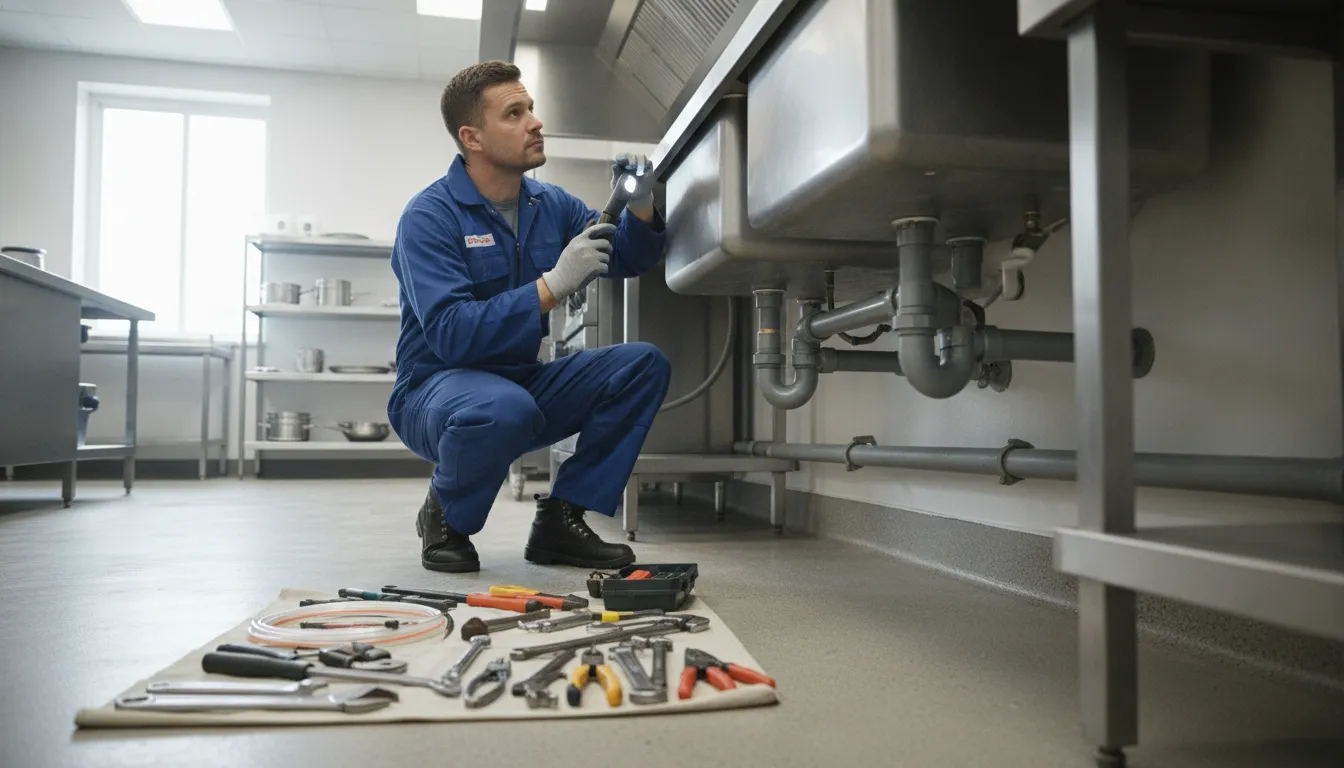
Food service puts frequent demand on kitchen drains and hot water equipment. If water begins draining slowly, backs up during a busy shift, or affects nearby fixtures, the issue deserves professional assessment. A commercial plumber can evaluate the drain system and related equipment instead of treating the symptom as an isolated sink clog.
Recurring maintenance planning may help the business schedule service before a disruption occurs. Commercial water heater service also matters when staff need dependable hot water for cleaning, food preparation, and normal facility operations. The right schedule depends on the property, equipment, usage, and history of recurring problems.
Offices and retail spaces need coordinated access
In an office, a restroom issue can affect several fixtures and interrupt normal use. In a retail or multi-tenant property, a leak, low pressure complaint, or main-line drain problem may involve shared infrastructure and multiple occupants. Repairs should account for business hours, tenant access, and the location of supply and waste lines.
For renovations or new tenant layouts, plumbing work can be planned with the improvement rather than added after construction decisions are made. Ask the contractor to explain which areas require access, whether water must be shut off, and how the work will be kept orderly while the property remains occupied.
For any setting, clear communication matters as much as the repair itself. A professional assessment should identify the affected fixtures, explain the recommended scope in plain language, and leave the work area clean for employees, tenants, and customers.
Which Commercial Plumbing Problems Need Prompt Attention?
A plumbing problem becomes a business concern when it affects customers, staff, tenants, equipment, or the ability to keep the property open. A slow drain may be manageable during a quiet period, but a sewer backup, visible leak, burst pipe, or failed water heater can quickly disrupt normal operations. Persistent low pressure and recurring clogs also deserve attention because they may point to a developing issue rather than an isolated inconvenience.
Watch for wastewater backing up through floor drains or fixtures, unusual odors, wet ceilings or walls, unexplained sounds, or water collecting near equipment. A sudden loss of hot water can affect restrooms, food-service operations, cleaning, and customer comfort. Repeated clogs, fluctuating pressure, or several fixtures draining slowly can indicate a problem in a shared line. Prompt professional diagnosis helps separate a simple repair from an issue that needs broader planning.
When a commercial plumbing issue appears, take these practical steps:
- Protect people and property. Keep employees and customers away from wet floors, contaminated water, exposed electrical equipment, and areas where ceiling or wall materials may be damaged. Move vulnerable inventory or equipment only if it is safe to do so.
- Shut off the water if safe. Use the local fixture shutoff or the building's main shutoff when you know its location and can reach it without entering an unsafe area. Do not take risks around electrical hazards or active flooding.
- Document the symptom. Note when the problem started, which fixtures or areas are affected, whether the issue is recurring, and what action has already been taken. Photos can help a professional understand the situation before arriving.
- Contact a qualified professional. An experienced commercial plumber can assess the cause and recommend an appropriate repair. Plumbing by Bishop provides 24/7 emergency service for businesses and other customers in its Treasure Coast service area.
- Coordinate access. Identify the affected rooms, arrange access to utility areas, and notify staff or tenants about temporary restrictions. Clear information can make the repair process more orderly and reduce disruption.
Businesses can contact Plumbing by Bishop for help evaluating urgent plumbing symptoms and planning the next step without guessing at the cause.
Contact Plumbing by Bishop for commercial plumbing help
How Preventive Maintenance Protects a Business
A practical maintenance rhythm helps a business find small plumbing problems before they interrupt staff, customers, tenants, or daily operations. The right schedule depends on the property, equipment, usage, and age of the system. It should also give someone clear responsibility for routine checks and follow-up.
Build a simple inspection routine
Start with the areas employees can safely observe. Look for moisture beneath sinks, around toilets, near water heaters, and along exposed supply lines. Check that shutoff valves are accessible and clearly identified. Note slow drains, recurring odors, unusual sounds, changing water pressure, or hot water that takes longer than usual to reach fixtures. These symptoms can point to developing leaks, restrictions, failing components, or capacity problems.
Restaurants and food-service businesses should discuss drain cleaning and grease-related service around actual use, not only after a backup occurs. Offices, retail spaces, and other light-commercial properties may need attention to shared restrooms, break rooms, main-line drains, and water heaters. A contractor can help set an interval based on fixture count, occupancy, operating hours, and the history of the property.
Review equipment and water protection
Include water heaters in the maintenance plan. Review temperature performance, visible corrosion, leaks, unusual discharge, and recovery issues. Do not adjust temperature controls without considering fixture safety and applicable requirements. Where a backflow prevention device is installed or required, testing should be handled by an appropriately certified professional and documented. This commercial backflow testing guide explains why the protection matters and what business owners should discuss with a plumber.
Keep the plan proportional to the property. A small office may need focused checks of restrooms, break-room fixtures, shutoff valves, and water heaters. A restaurant may need closer attention to high-use drains and hot water. A multi-tenant building may need a clear process for reporting leaks, coordinating access, and tracking problems that affect shared lines.
Keep records and prepare for interruptions
Record inspection dates, observed symptoms, repairs, tests, equipment details, and recommended follow-up. Documentation makes recurring issues easier to identify and gives owners, managers, and service professionals a shared history. It can also help a business explain the work to a property owner, tenant, insurer, or future maintenance provider.
Finally, keep an emergency contact plan that lists shutoff locations, responsible staff, access instructions, and the plumbing contractor to contact. A few minutes spent preparing can help the right person act calmly when a leak, backup, or loss of hot water affects the business.
What Should Business Owners Ask a Commercial Plumbing Contractor?
The right contractor should make it easier to protect your operations, staff, customers, tenants, and property. Before scheduling work, ask questions that reveal whether the plumber understands light-commercial settings and can document the work clearly.
Do you have experience with businesses like mine?
Ask whether the contractor regularly serves offices, retail spaces, restaurants, and similar light-commercial properties. The scope may include multi-fixture restroom repairs, commercial water heaters, main-line drain clearing, backflow service, or plumbing work connected with renovations. A contractor who understands these settings can plan around the way your business operates instead of treating every job like a residential call.
What does your service include?
Request a clear explanation of the inspection, proposed repair or installation, access requirements, cleanup, and any follow-up. If backflow equipment is involved, ask about the contractor's relevant certification. Plumbing by Bishop's commercial service page identifies Florida backflow certification and license CFC027632. Ask the contractor to state applicable credentials accurately for the work being considered, rather than assuming that one credential covers every project.
How will you schedule the work?
Plumbing work can affect employees, customers, tenants, food service, or building access. Ask whether the contractor can coordinate the start time around business hours or tenant schedules, and how the work plan will minimize disruption. For larger repairs, confirm who will communicate schedule changes and what areas need to remain accessible.
Will I receive the proposal in writing?
Ask for a written, flat-rate proposal before work begins. It should describe the recommended work and the price for that defined scope, without relying on vague hourly estimates or verbal promises. You should also know what is excluded and how additional work will be handled if the inspection uncovers a separate issue. A clear proposal gives your business a useful record for approval and budgeting without requiring an invented price figure.
What documentation and warranty do you provide?
Ask what records you will receive after completion, such as the work performed, equipment details, testing information where applicable, and care or maintenance recommendations. Confirm the warranty terms in writing, including what parts and labor it covers and any conditions that apply. Plumbing by Bishop states that parts and labor are guaranteed for one full year.
Who will enter my workplace, and how will the area be left?
Businesses need technicians who respect private areas, employees, customers, and tenant property. Ask about technician screening. Plumbing by Bishop identifies its technicians as drug-tested and background-checked. Also ask how tools, debris, access points, and work surfaces will be managed. The Cleanest Plumbers in the Business promise should mean more than a slogan. The work area should be left clean and ready for normal operations.
Frequently Asked Questions
What services are included in commercial plumbing?
Commercial plumbing can include scheduled repairs, emergency service, drain cleaning, leak detection, water heater repair or replacement, fixture work, backflow service, and plumbing work connected with renovations. The right scope depends on the property, its fixtures, and how the plumbing supports daily operations.
Why is commercial plumbing different from residential plumbing?
Business properties often have more fixtures, higher usage, and plumbing systems that must support employees, customers, tenants, or production. A contractor may also need to coordinate work around operating hours, protect occupied spaces, and account for local permitting or inspection requirements.
How often should commercial plumbing systems be maintained?
There is no single schedule for every business. Usage, building age, equipment condition, and the consequences of downtime should guide the plan. Restaurants may need more frequent attention to high-use drains and hot water, while offices and retail spaces may prioritize restrooms, water heaters, leak checks, and backflow devices.
Do commercial plumbers provide emergency services?
Yes. Plumbing by Bishop provides 24/7 emergency service for light-commercial customers. If a backup, major leak, or loss of essential plumbing is disrupting the business, shut off water when it is safe to do so, protect nearby property, and contact a professional for diagnosis.
Can commercial plumbers help with restaurant kitchen plumbing?
Yes. Restaurant plumbing support may include grease-related drainage concerns, high-use sinks, kitchen fixtures, main-line drains, commercial water heaters, and recurring drainage problems. The goal is to address the underlying issue while planning work that limits disruption to staff and customers.
Get Started With Commercial Plumbing Services
A clear plan can help you address your business plumbing needs while keeping daily operations in view. Share your property type, current concerns, and upcoming project needs with the Plumbing by Bishop team so they can better understand how to help.
Contact Plumbing by Bishop about your commercial plumbing services needs