.
A water filtration project is not priced by the filter alone. The right estimate depends on what you want to improve, how much water needs treatment, and how easily the system can connect to your home’s plumbing.
The cost to install water filtration system depends on the treatment goal, water testing, point-of-use or whole-home scope, available plumbing access, installation complexity, and ongoing filter or media maintenance. A system serving one drinking-water tap may require a very different plan from one treating most of the water entering your home.
Before choosing equipment, identify whether your concern involves taste, odor, appearance, hardness, or a specific contaminant. Testing can help match the treatment method to the actual concern, since no single system removes everything. It also helps prevent paying for equipment that does not solve the problem. The estimate begins with those decisions, then accounts for the home’s layout and the work required to install and maintain the system.
Contact Plumbing by Bishop for project-specific guidance.
What Determines the Cost to Install a Water Filtration System?
A useful installation estimate is based on the work your home and water actually require, not on a single universal fee. The equipment, treatment goal, installation location, plumbing layout, labor, and future maintenance all shape the project scope. That is why two homes with similar water concerns may still receive different recommendations.
Start with the water-quality problem you want to address. Water treatment options are designed for different concerns. The Centers for Disease Control and Prevention recommends checking that a system removes the specific chemicals or germs you are concerned about. Water testing should guide treatment selection, rather than choosing a filter based only on taste, appearance, or a product label. In some cases, testing may show that a treatment system is not needed for the concern being investigated.
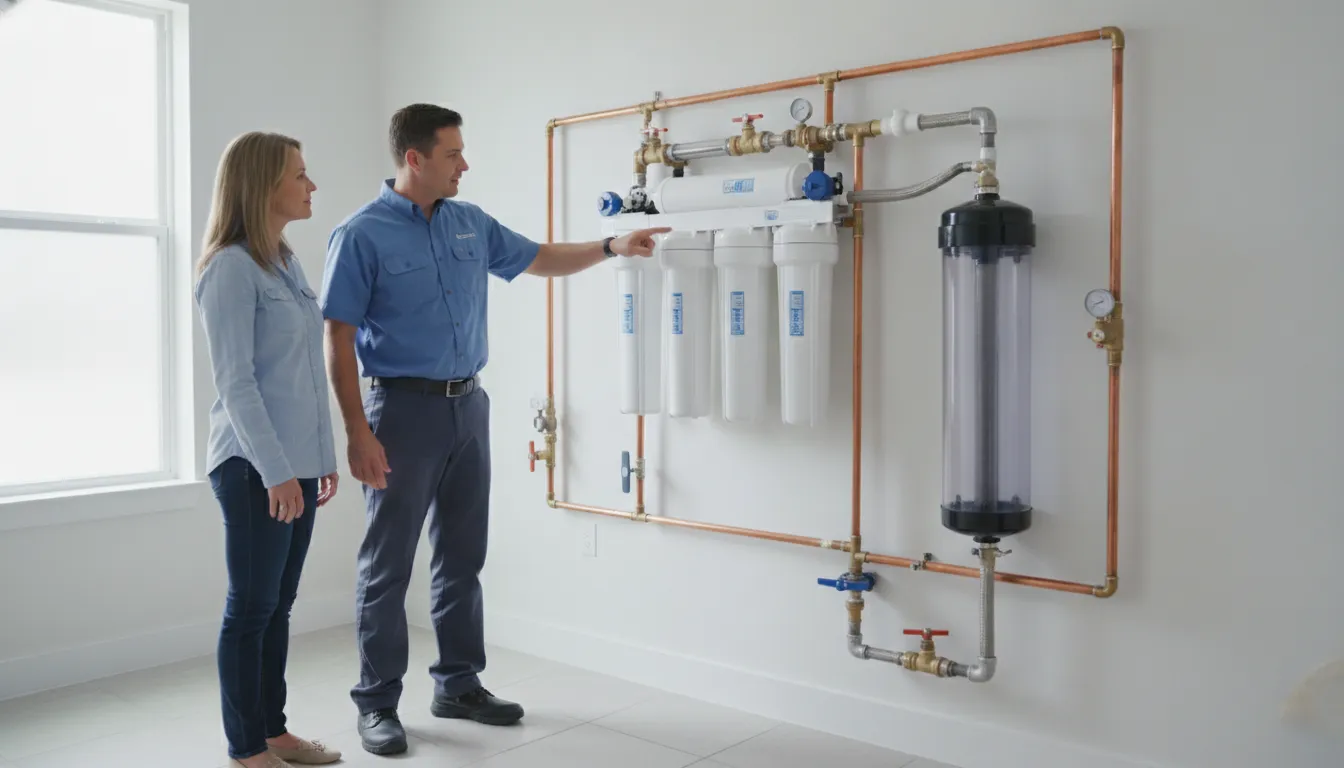
Equipment scope is another major factor. A point-of-use system treats water for one tap, such as a kitchen sink. A whole-home, or point-of-entry, system treats most or all of the water entering the home. Those different scopes affect system size, capacity, placement, and the amount of water the equipment must handle. If more than one water-quality concern is present, multiple treatment stages may be appropriate because no single unit removes every drinking-water contaminant.
Installation conditions then determine how the equipment can be connected. An installer may need to evaluate available space, shutoff access, pipe routing, drainage or waste connections when applicable. Electrical requirements when applicable, and whether walls, cabinets, or other finished areas limit access. Labor accounts for the time and skill required to make those connections, test the installation, and leave the work area clean. Plumbing by Bishop provides component and complete-system installations for renovations and new construction, so the right scope depends on the home and project.
Finally, consider ownership after installation. Replacement cartridges, media changes, monitoring, leak checks, and manufacturer-specific service can affect the long-term commitment. EPA cost guidance separates equipment installation, labor, monitoring, replacement, and maintenance into distinct cost categories. A clear estimate should explain those categories so you can compare an appropriate system with its ongoing responsibilities, rather than focusing only on the initial installation.
Point-of-Use vs. Whole-Home Filtration: Which Changes the Scope?
The biggest scope question is whether you want treated water at one fixture or throughout the home. The CDC defines point-of-use systems as treating water in batches for a single tap, such as a kitchen sink. Whole-home, also called point-of-entry, systems treat most or all water entering the home. That difference affects equipment location, plumbing work, flow requirements, and maintenance. These factors matter when reviewing the cost to install water filtration system.
Neither approach is automatically right for every household. Start with the water-quality concern and the fixtures that need treatment. The CDC recommends testing your water and confirming that the selected system addresses the specific chemicals or germs of concern. A filtration system should not be sized or selected simply because it is labeled whole-home.
| Scope. | Common placement. | Likely installation considerations. | Fit. |
|---|---|---|---|
| Point-of-use. | Under a kitchen sink, at a faucet, on a countertop, or at a refrigerator dispenser. | Often focuses on one connection and the selected fixture. Available cabinet space, faucet compatibility, drainage requirements, and access for cartridge changes may matter. | A practical fit when the priority is drinking or cooking water at one location. |
| Whole-home or point-of-entry. | Where the main water line enters the home or in a suitable utility area. | May require space for larger equipment, main-line connections, shutoff access, flow planning, and maintenance access. The treatment scope may include multiple indoor fixtures, while outdoor taps may be handled differently. | A potential fit when the treatment goal applies to most household water, not only one tap. |
Why the system boundary matters to an estimate
A point-of-use installation can be more contained, but it may not address water used at other fixtures. A whole-home system can cover a broader portion of the plumbing system. Yet the assessment must account for available space, the incoming line, household flow needs, and how the equipment will be serviced. If more than one water-quality concern is present, more than one treatment stage may be appropriate. There is no single unit that removes every contaminant.
For a closer look at equipment placement, connections, and preparation, review the water filtration system installation guide. Then discuss which fixtures you want treated, what testing or utility information is available, and where equipment could be installed. A professional assessment can turn that scope into a more useful estimate without assuming that a larger system is automatically better.
Source: CDC guidance on home water treatment systems.
How Do Water Testing and Filtration Goals Affect the Plan?
Water testing helps determine whether a filtration system addresses a documented concern or an assumption. The CDC recommends testing tap water and choosing a system that removes the specific chemicals or germs of concern. It also notes that a treatment system may not be needed for a particular purpose if testing does not show harmful chemicals or germs. You can review the CDC’s home water treatment guidance before discussing options.
For homes connected to a public water utility, the EPA says the Consumer Confidence Report can provide state-certified laboratory results about the utility’s water quality. Homeowners who use a private well should periodically have the water tested through a state-certified laboratory. If your concern involves taste, odor, appearance, or how the water feels, describe those symptoms clearly as well. They can help define the treatment goal, even when the concern is aesthetic rather than a known contaminant.
Filtration is not the same as softening
Filtration and softening solve different water problems. A filter is selected for a specific substance or water-quality concern, and no single filter removes every contaminant. Depending on the results and the goals, a home may need one treatment stage or a combination of technologies. The EPA’s home water treatment guide recommends identifying treatment goals before purchasing a unit.
Hard water is a separate concern related to dissolved minerals. If you are noticing scale on fixtures, spotting, dry-feeling skin, or changes in how soap performs, review these signs of Florida hard water. A softener may be more relevant than a drinking-water filter when hardness is the primary issue. Our Treasure Coast water softener guide provides additional context for that distinction.
These decisions affect the estimate because the treatment target, system technology, capacity, and number of stages all influence the project scope. A kitchen drinking-water goal may call for a different plan than treating water throughout the home. Sharing test results, a utility report. Or a clear description of the problem gives the installer a more useful starting point and helps avoid recommending equipment for a concern that has not been established.
Which Plumbing and Site Conditions Can Add Work?
The equipment itself is only one part of an installation plan. The home’s layout and existing plumbing can determine how straightforward the work will be. An onsite assessment should clarify several practical questions before the system and installation scope are finalized.
Where can the equipment be installed?
Is there enough room at the preferred location for the unit, filter changes, and future service? A point-of-use system may fit beneath a sink or near one faucet. While a larger system may need space near the incoming water line, in a utility area, or in another suitable location. The distance from the water entry point to the proposed equipment can also affect how much accessible piping is needed.
Can the existing plumbing be reached and routed?
An installer may need to determine whether supply lines are exposed, concealed behind a wall, inside a cabinet, or located beneath a finished surface. The route from the existing line to the treatment equipment, and from the equipment to the fixtures it serves, should be considered before work begins. Cabinet layout, crawl-space conditions, tight mechanical areas, or finished walls can change the amount of preparation and restoration involved.
Are shutoffs and drainage connections available?
Ask whether there is a usable shutoff near the proposed installation area and whether the system requires a dedicated drain, waste connection, or other discharge route. Not every filtration system has the same connection requirements. A drain connection may be relevant for certain equipment, while other systems may not need one. Confirming the requirements for the selected unit helps prevent surprises during installation.
Does the system need electrical service?
Some treatment equipment may require power for controls, pumps, or other components. The assessment should identify whether a suitable outlet is available, whether it is positioned safely, and whether any additional electrical coordination is needed. This is a system-specific question, not a requirement for every water filtration installation.
Plumbing by Bishop documents both component and complete-system installation capabilities for renovations and new construction. That full-service perspective can help keep the equipment, connections, access work, and cleanup in one coordinated scope. The final plan should still be based on the selected system and the conditions found at the property, not on a generic installation assumption.
What Maintenance Costs Should Homeowners Plan For?
The installation is only the beginning of owning a water filtration system. A useful plan accounts for the routine work that keeps the equipment performing as intended. Depending on the system, that may include replacing cartridges, changing filter media, checking connections for leaks, inspecting valves and housings, monitoring water quality, and arranging manufacturer-specific service.
Replacement timing is not identical for every home. Water conditions, household usage, system capacity, and the type of treatment all affect how quickly a filter or media reaches its service limit. EPA explains that cartridges wear out and become less effective with use. The agency also recommends using a replacement cartridge that is compatible with the filter and following the manufacturer’s instructions when changing it. Review those instructions before you make a maintenance plan, rather than assuming every filter uses the same schedule.
What ongoing work can include
- Replacement filters or media: Budget for the consumable parts your system requires and confirm which products are approved for that equipment.
- Inspections and leak checks: Look for dampness around housings, fittings, shutoff valves, drain connections, or the area where the system enters the plumbing.
- Water-quality monitoring: Retesting may be appropriate when your water source changes, the system is serviced, or the original concern returns.
- Disposal: Some filters create disposal-related expenses or require special handling. EPA notes that maintenance and disposal costs vary between filters.
These ownership items are part of the long-term cost to install water filtration system planning, even though they may not appear on the initial installation proposal. The EPA’s water filter fact sheet distinguishes product cost from maintenance and disposal expenses, which is a useful reminder to evaluate the full lifecycle instead of focusing only on installation day.
Filtration maintenance should also be kept separate from water-softener service. Plumbing by Bishop provides North Star Water Softener warranty service and repairs in that specific context. That does not mean every filtration brand or product is covered by factory-authorized service. Keep the equipment model, installation records, warranty terms, and manufacturer instructions together so the right service path is clear.
For related upkeep guidance, review these water softener maintenance needs. A professional can also help identify whether a missed filter change, restricted flow, or visible leak calls for inspection before a small maintenance issue becomes plumbing damage.
How Can You Prepare for a More Useful Installation Estimate?
A little preparation can make a water filtration installation estimate more accurate and more useful. Whether you live in Stuart, Jensen Beach, Palm City, Hobe Sound, Port St. Lucie, or another Treasure Coast community, organize the information below before the appointment. The goal is to help the plumber understand what you want treated, where the equipment may go, and what ownership will involve.
- Write down the symptoms and your treatment goals. Note what you have observed, such as an unusual taste, odor, appearance, or feel. Also record which fixtures you want treated. You may want filtered water at the kitchen sink, several drinking-water fixtures, or treatment for most of the water entering the home. Being specific helps distinguish a point-of-use project from a whole-home plan. A system should be selected for the water-quality concern it is intended to address, rather than assuming one filter handles every concern.
- Gather water-quality information. Bring a recent utility report, Consumer Confidence Report, laboratory results, or other test documentation if you have it. Homes on private wells should consider keeping current results from a state-certified laboratory. If you do not have testing information. Mention that when scheduling the estimate so the treatment discussion can account for what is known and what still needs to be confirmed. The EPA recommends identifying treatment goals using test results, utility information, or documented experience with the water supply.
- Identify possible installation locations. Take a quick look under the kitchen sink, near the main water entry point, or in any utility area where equipment could be installed. Note whether the space is crowded, difficult to reach, or already used by other plumbing equipment. Do not move pipes or disconnect anything yourself. Simply showing the installer the available space and preferred locations can make questions about access, routing, drainage, and treated fixtures more concrete.
- List your maintenance expectations. Ask what routine ownership may involve, including filter replacement, media changes, inspections, leak checks, and disposal of used cartridges. Exact schedules depend on the equipment and water conditions. Have everyone who will maintain the system consider whether they prefer a simple under-sink unit or are prepared to manage a larger system with more components.
- Collect equipment and warranty information. If you already own a filter, softener, or related treatment equipment, photograph its model and serial labels and gather manuals, installation records, and warranty documents. This information can help clarify whether the project is a replacement, an expansion, or a repair. Plumbing by Bishop provides warranty service for North Star Water Softeners, but authorization is brand-specific and should not be assumed for every filtration product.
With these details ready, the estimate can focus on the right system scope and the actual conditions of your home instead of starting from guesswork.
Frequently Asked Questions
How do I know whether I need a point-of-use or whole-home system?
Start with which fixtures need treated water. A point-of-use system treats water for one tap, such as a kitchen sink. A whole-home, or point-of-entry, system treats most or all water entering the home. The right scope also depends on your treatment goal, water use, available space, and maintenance expectations. The CDC explains these system types.
Should I test my water before choosing a filtration system?
Yes. Testing or reviewing reliable water-quality information helps identify the concern you want to address. Whether that is a specific contaminant or an issue with taste, smell, appearance, or feel. Choose equipment that is designed to address the identified concern. If testing does not show a harmful chemical or germ, treatment may not be needed for that purpose. The CDC recommends testing water and checking the system label.
What site conditions affect the installation estimate?
An onsite review may need to consider the equipment location, available room, pipe routing. Shutoff access, drainage or waste connections, electrical needs when applicable, and access through walls or cabinets. These conditions determine how straightforward the installation will be and whether additional plumbing work is needed.
What ongoing costs should I plan for after installation?
Plan for the equipment’s required replacement filters or media, inspections, leak checks, and manufacturer-specific service. The timing and cost depend on the system, water conditions, and household use. Ask which maintenance tasks are homeowner responsibilities and which require a service visit before choosing equipment.
Can one filter remove every water-quality problem?
No. Treatment systems address different chemicals, germs, or aesthetic concerns, and more than one treatment stage may be appropriate when the water or goals involve multiple concerns. Match the system to test results and verify its stated capabilities instead of assuming that one filter handles every issue. TCEQ notes that no single unit removes every contaminant.
Ready to Discuss Your Water Filtration Project?
A project-specific review can help match your filtration goals with the right system scope, testing needs, plumbing access, and ongoing maintenance expectations. Plumbing by Bishop can discuss your home’s needs and prepare an estimate based on the installation details rather than a one-size-fits-all assumption.
Contact Plumbing by Bishop to request your water filtration installation discussion and estimate.