
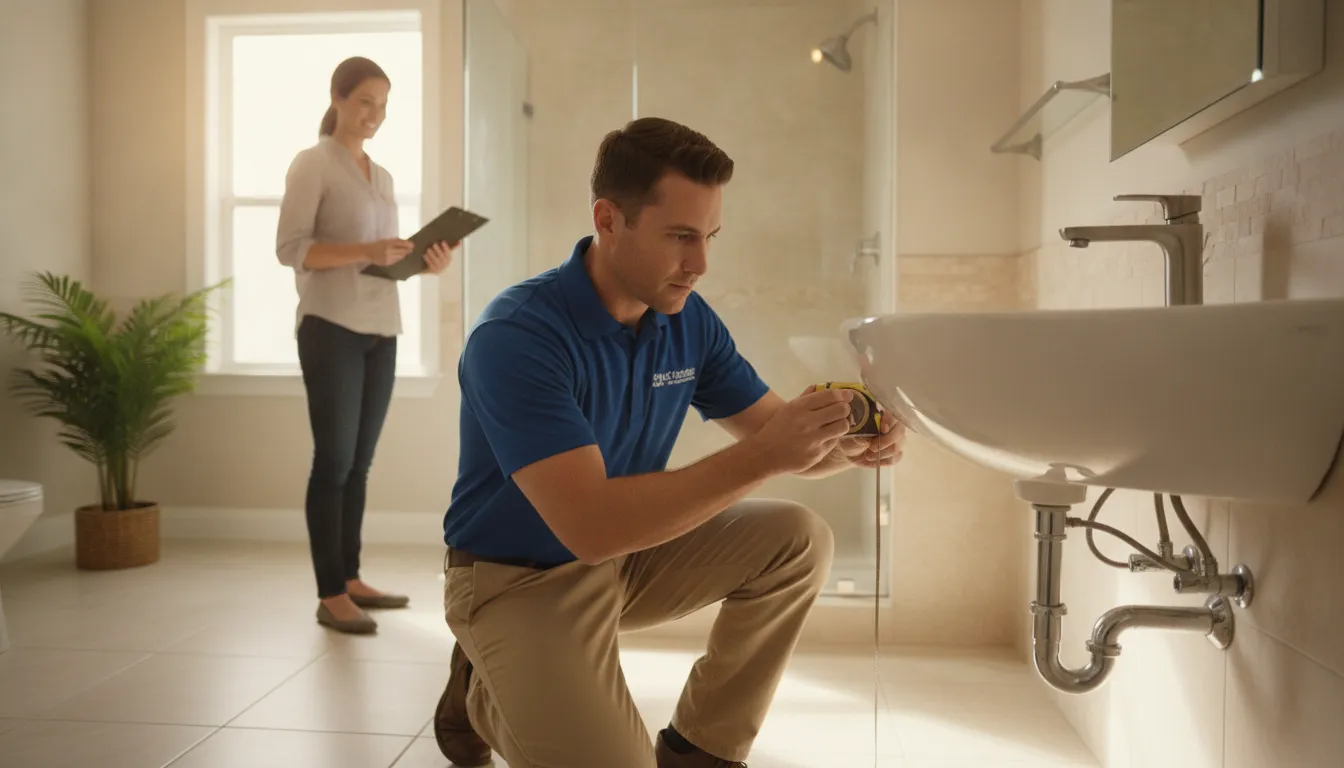
A bathroom sink can look like a simple fixture. But replacing one is not always a matter of removing the old basin and setting a new one in place. The existing sink style, cabinet or countertop fit, faucet and drain compatibility, shutoff condition, access, and cleanup requirements can all change the work involved.
The cost to replace bathroom sink depends on the fixture you choose and whether the new sink fits the existing space. The condition of the supply and drain connections also matters. Related plumbing or surface work can change the scope. A project-specific estimate is the best way to understand the actual work without relying on a generic price.
For Treasure Coast homeowners in Stuart, Jensen Beach, Palm City, Hobe Sound, or Port St. Lucie, the clearest estimate starts with an inspection of the whole setup, not just the visible sink. Here is what a plumber will look at and what to ask before replacement begins. Ask about bathroom sink replacement or discuss your project.
What Determines the Cost to Replace a Bathroom Sink?
There is no single answer to the cost to replace a bathroom sink because the fixture and the work around it can vary substantially. A simple like-for-like replacement may have a different scope from a change that requires a new mounting method, countertop adjustment, faucet, or plumbing connections.
Sink style and material also influence the project. Pedestal, drop-in, console, porcelain, acrylic, and stone fixtures can bring different fit and installation considerations.
The estimate should reflect the actual bathroom, not just the sink shown in a product listing. Total project costs depend on the fixtures selected and the scope of the work. Project estimates are also affected by unique site conditions, requirements, labor options, and material choices. Those are useful reasons to discuss the details with a service provider rather than rely on a generic online figure.
- Sink type and material: A lightweight drop-in sink may involve different support and fitting requirements than a pedestal or heavier stone fixture. The selected dimensions, mounting method, and manufacturer instructions all matter.
- Like-for-like replacement: Replacing one sink with another of the same type and a compatible size often limits the amount of installation work. Changing from one style to another can require additional planning, adjustments, or labor.
- Site conditions: The condition and accessibility of the existing plumbing, drain connections, shutoff valves, cabinet, and countertop can affect the work. These conditions should be inspected rather than assumed.
- Labor and material choices: A sink purchase may not include a faucet or installation. The estimate may need to account for selected fixtures, connectors, fittings, and mounting hardware. It may also cover removal, protection, and cleanup, depending on the project scope.
| Scope area | What to confirm | Why it matters |
|---|---|---|
| Fixture | Style, size, material, and mounting method | Different fixtures may need different support or fitting work. |
| Connections | Faucet holes, supply lines, shutoffs, drain, and trap | Compatibility and condition can change the plumbing work. |
| Surrounding surfaces | Cabinet, countertop, wall support, and clearances | A new shape or layout may require adjustments before installation. |
| Removal and cleanup | Protection, old-fixture removal, disposal, and debris cleanup | These tasks should be assigned clearly before the project starts. |
Plumbing by Bishop provides fixture installations and replacements for kitchen and bathroom plumbing. A clear conversation about the sink, faucet, existing connections, and desired result helps establish what work is actually needed. The company describes its model as paying by the job rather than by the hour. Service-specific pricing still depends on the details of the replacement.
How Sink Style and Fit Change the Work
The sink you choose affects more than appearance. Its shape, mounting method, and relationship to the vanity or wall can determine whether the replacement is a straightforward fixture swap or a broader bathroom change. Sink style and material are factors in the cost to replace bathroom sink. The practical issue is the work required to make the new fixture fit safely and look finished.
Like-for-like replacement is usually the simpler path
Replacing one drop-in sink with another drop-in sink may allow the existing cabinet opening and countertop cutout to remain useful. The new sink still needs to be measured, leveled, fitted, and secured, and the rim or mounting surface must seal properly. Even with a similar replacement, the exact dimensions and mounting hardware matter.
Changing the sink type can expand the scope. For example, replacing a drop-in sink with a pedestal model may remove the vanity cabinet from the design entirely. An undermount sink is secured below the countertop, so the countertop edge, support, and cutout must be suitable for that installation. A console sink may require different wall or leg support and may leave more of the plumbing visible. These are layout decisions, not simply changes in finish.
Check the surrounding space before choosing a fixture
A sink must work with the room around it. Clearances from finished walls and other fixtures are regulated by code. A wider basin or deeper front edge may affect nearby walls, mirrors, doors, or the person using the bathroom. Manufacturer rough-in sheets and installation instructions provide the dimensions and requirements for most fixtures. Having those documents available helps a plumber evaluate the choice before removal begins.
- Measure the opening: Record the existing countertop cutout, cabinet width, wall location, and available depth.
- Identify the mounting style: Confirm whether the replacement is drop-in, undermount, pedestal, console, wall-mounted, or another design.
- Review support needs: Ask whether the cabinet, countertop, wall, or floor needs reinforcement or alteration.
- Confirm clearances: Check the distance to walls, the toilet, shower, doors, and other fixtures before selecting a larger or differently shaped basin.
- Bring the product information: Share the manufacturer rough-in sheet and installation instructions so fit and connection requirements can be reviewed.
Like-for-like replacement and layout changes should be discussed separately in an estimate. Plumbing by Bishop handles fixture installations and replacements, including kitchen and bathroom plumbing work. A project-specific review can clarify whether the selected sink fits the existing space or whether cabinet, countertop, wall, or clearance work should be included in the plan.
How Do Faucet, Drain, and Shutoff Conditions Affect the Estimate?
The fixture itself is only one part of a bathroom sink replacement. The faucet, supply connections, shutoff valves, drain assembly, trap, and existing rough-in all have to work together. A like-for-like replacement may be straightforward when those components are accessible and compatible. A different faucet layout or worn connection can change the scope, so these conditions should be inspected rather than assumed.
Faucet holes, mounting, and supply lines
Start with the faucet mounting pattern. A sink may have one center hole, three holes, or no faucet holes if the faucet is mounted through the countertop. The replacement faucet must match the available arrangement, or the countertop and sink may require additional work. The faucet also needs adequate clearance from the wall and backsplash so the handle can move and the water stream lands properly in the basin.
Faucet choice is another separate decision. A sink purchase does not necessarily include a new faucet or its installation. Homeowners may keep a compatible faucet, replace it with a new model, or choose a water-efficient option. WaterSense-labeled bathroom sink faucets use no more than 1.5 gallons per minute at 60 psi and are independently certified to EPA criteria. See the EPA WaterSense bathroom faucet guidance for selection details.
The supply lines connect the faucet to the hot and cold water supplies. Their length, condition, and connection type should be checked during the visit. Reusing an old line may not be appropriate if it is corroded, kinked, or incompatible with the new faucet. The shutoff valves below the sink also need to close properly. A valve that will not operate or does not fully stop the water can require attention before the faucet or sink can be safely disconnected.
Drain, trap, and existing rough-in
Below the basin, the drain assembly must connect to the trap and then to the existing drain rough-in. Those connections are not always positioned the same way after a change in sink style, cabinet, or basin depth. The installer may need to confirm alignment, available clearance, and the condition of fittings rather than assuming the old arrangement will transfer unchanged.
Visible leaks, staining, corrosion, movement, or limited access are useful details to mention when requesting an estimate. They do not automatically define the repair, but they tell the plumber where to look more closely. A careful inspection helps separate the fixture replacement from any necessary work on supply or drainage connections. That project-specific review is the best way to discuss the scope clearly, without treating every bathroom sink job as identical.
Does Removal and Cleanup Change the Project Scope?
Replacing a bathroom sink is not always limited to disconnecting one fixture and attaching another. The condition of the existing sink, the way it is secured, and the space around it can determine how much preparation and protection the work requires. Removal and cleanup should be discussed as part of the scope when you are comparing the cost to replace a bathroom sink. Do not assume those tasks are included in exactly the same way for every project.
First, confirm how the old fixture will be detached. A sink may be secured to a countertop, cabinet, wall, or other adjacent surfaces. Removing it carefully can require separating sealants, fasteners, connected plumbing, or nearby components without damaging surfaces that will remain. If the replacement has different dimensions or mounting requirements, the plumber may also need to assess access and clearance before the old sink is taken out. Those conditions can be especially important when a bathroom update involves more than one fixture. For broader planning, see these bathroom remodel plumbing considerations.
Ask whether the work area will be protected during removal. Covering nearby flooring, cabinets, walls, and other finished surfaces can help reduce the chance of damage from tools, water, dust, or debris. Access may also involve temporarily moving items from beneath the sink or working around a tight vanity opening. The exact preparation depends on the bathroom layout and the condition of the existing installation, so it should be confirmed during the project discussion.
Disposal is another scope question. The old sink may need to be carried out of the home and disposed of according to applicable requirements, or the homeowner may choose to handle it separately. Clarify who is responsible for removal from the property and disposal before work begins. The same applies to packaging and other job debris.
Finally, confirm the expected cleanup standard. Plumbing by Bishop describes its service approach as leaving homes as clean or cleaner than they were found. That clean-service focus is useful to discuss upfront, along with what cleanup includes for your particular replacement. The company calls itself The Cleanest Plumbers in the Business. The practical question remains the same: which protection, removal, disposal, and cleanup steps are included in this project?
What Should You Ask for in a Sink Replacement Estimate?
A useful estimate should make the planned work clear before replacement begins. Ask the plumber to describe the sink, connections, access requirements, and cleanup rather than assuming a new fixture includes every related task. The following questions can help you compare project scopes and understand what may affect the cost to replace a bathroom sink.
- What exact sink and mounting type are we installing? Confirm the sink style, dimensions, material, color, number of faucet holes, and mounting method. A like-for-like replacement may involve different work from changing between a drop-in, undermount, pedestal, or console sink. Fixture type and material are project variables, and changing the type can alter the labor required.
- Are the faucet, drain, and shutoff connections included in the proposed scope? Ask whether you are supplying the faucet and drain assembly, whether the existing faucet can be reused, and whether supply lines, the trap, or shutoff valves need attention. A sink purchase does not necessarily include a faucet or installation, and the existing drain rough-in and water connections should be evaluated rather than assumed.
- Will the cabinet or countertop require modifications? Ask how the new sink will fit the opening and whether adjacent surfaces, supports, mounting hardware, clearances, or rough-in requirements could change the work. This is especially important when replacing one sink type with another or when the new fixture has different dimensions.
- Who handles removal and disposal of the old sink? Confirm whether detaching the existing fixture, removing it from the home, and disposal are included or treated as separate work. Ask how the work area, cabinet, flooring, and nearby surfaces will be protected during removal.
- How are parts and labor described? Request a clear distinction between the fixture and other materials, such as fittings, connectors, mounting hardware, supply lines, or drain components. Ask how labor is presented and whether the estimate is based on the conditions observed at your home.
- What happens if hidden conditions or access problems are found? Ask how the plumber will notify you if damaged plumbing, difficult access, an incompatible opening, or an unsuitable rough-in is discovered. The best process explains the added work and obtains your approval before the scope changes.
- What cleanup and workmanship terms apply? Confirm the expected cleanup, removal of job debris, warranty or workmanship terms, and any manufacturer warranty responsibilities. A written estimate should also state what is excluded, so there is less confusion at the end of the job.
Project-specific conditions, material choices, labor options, and requirements can all affect an estimate. Treat it as a starting point for a detailed conversation, not as a guaranteed standard scope. Plumbing by Bishop provides bathroom fixture replacement and installation services for homeowners across the Treasure Coast. Ask about your bathroom sink replacement project.
When Should You Call a Plumber for Bathroom Sink Replacement?
A bathroom sink replacement can look like a straightforward fixture swap, but the surrounding plumbing and surfaces may change the work required. It is usually time to call a plumber when you see water under the cabinet. The shutoff valves will not turn, the drain connection is corroded, or the new sink does not match the existing opening.
Leaks deserve prompt attention, especially if the cabinet base, wall, or countertop has already absorbed water. A plumber can help determine whether the problem is limited to the sink or whether supply lines, the trap, drain connection, or nearby plumbing also need attention. Do not force a seized shutoff valve. Breaking the valve or supply connection can turn a planned replacement into an unexpected repair.
Look beyond the fixture itself
Professional help is also worthwhile when the replacement involves a different sink style, a new faucet arrangement, or a countertop and cabinet that may need modification. Drop-in, undermount, pedestal, and wall-mounted sinks each have different support and clearance considerations. An attractive sink that does not fit the existing opening can require more than disconnecting the old fixture and attaching the new one.
Drain problems are another reason to stop and schedule service. Slow drainage, recurring clogs, unpleasant odors, or visible corrosion can indicate that the drain assembly or trap deserves inspection before the new sink is installed. The same applies when you are unsure which connections are compatible or cannot confidently shut off the water.
This article focuses on recognizing when replacement scope may affect the estimate. For general fit and installation planning, see the bathroom sink installation guide. Plumbing by Bishop provides fixture replacement and installation services for homeowners across the Treasure Coast, including Stuart, Jensen Beach, Palm City, Hobe Sound, and Port St. Lucie. A professional assessment can clarify the work before you commit to a fixture or assume the project is only a simple swap.
Frequently Asked Questions
How much does a plumber charge to replace a bathroom sink?
There is no single cost to replace a bathroom sink because the scope depends on the sink style, material, fit, access, and condition of the existing plumbing. A like-for-like replacement may require less work than changing from a drop-in sink to a pedestal or undermount model. Ask for project-specific pricing after the plumber inspects the installation.
Does replacing the faucet change the scope?
Yes. A new faucet may be purchased separately from the sink and may have different hole spacing or supply-line requirements. The plumber may need to confirm compatibility, replace worn connectors, or address shutoff valves that do not operate properly. If you want a new faucet, include it in the initial discussion rather than treating it as an assumption.
What should be included in a bathroom sink replacement estimate?
An estimate should explain the proposed sink and faucet work, removal of the old fixture. Connection of the drain and water supplies, required mounting or fit adjustments, disposal, and cleanup. It should also identify conditions that may change the scope, such as hidden leaks, damaged shutoffs, limited access, or countertop and cabinet modifications.
Will the drain and plumbing connections need to be replaced?
Not always. Existing connections may be reusable when they are compatible and in good condition. The drain, trap, supply lines, and shutoff valves should be inspected instead of assumed to work with the new fixture. Ask the plumber to identify which parts can remain and which repairs or replacements are recommended before work begins.
Get Started With a Clear Bathroom Sink Replacement Scope
The right estimate should reflect your actual bathroom, not a generic replacement assumption. Discuss the sink type, faucet and drain changes, fit, shutoffs, access, removal, and cleanup so the work can be planned around your home and preferences. Plumbing by Bishop can help you review the replacement scope and discuss service-specific pricing for your Treasure Coast home.