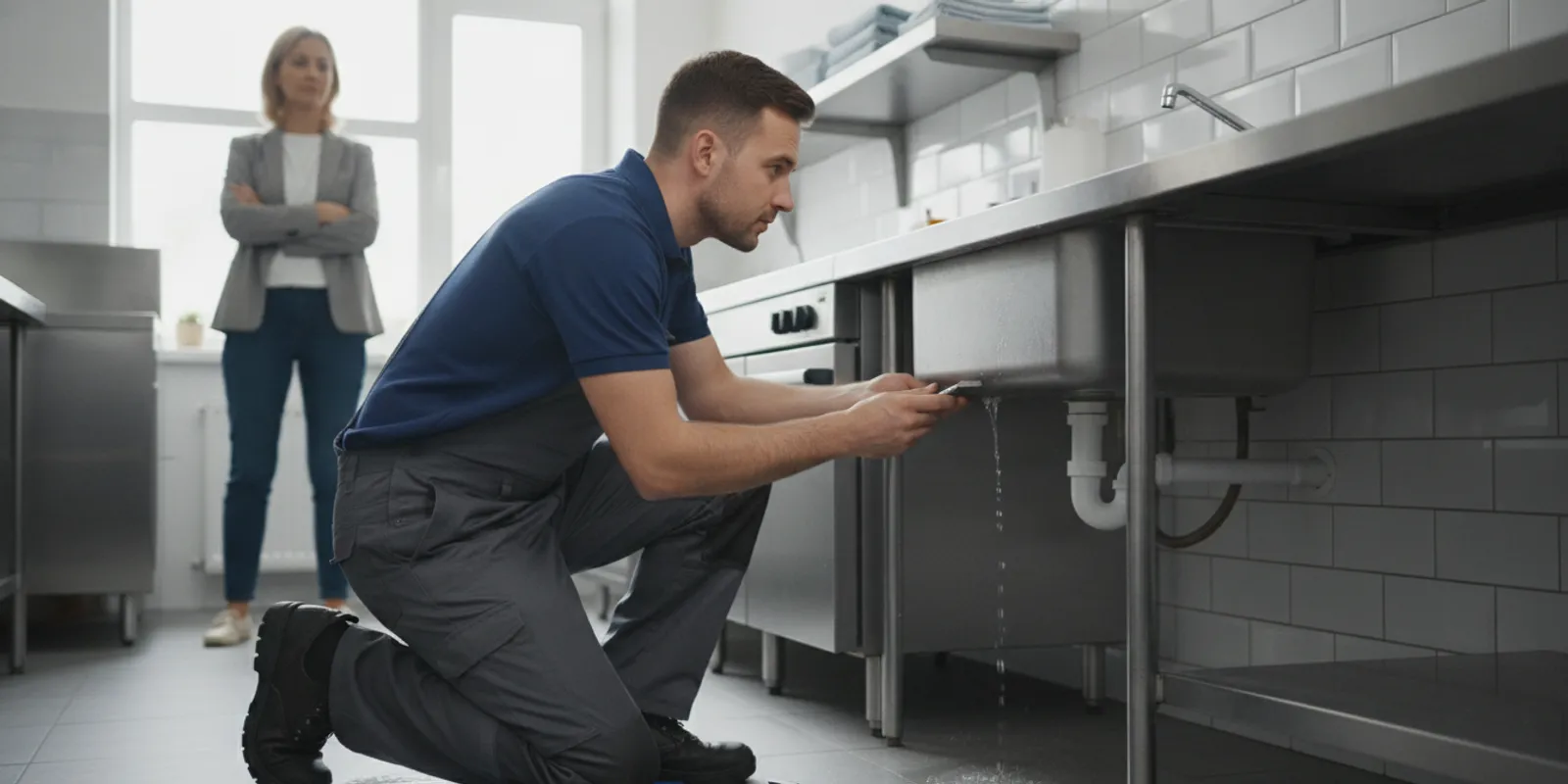
A plumbing problem at a business can disrupt staff, customers, tenants, and daily operations. If you need an emergency commercial plumber, first protect people, stop water from spreading if you can do so safely, and gather clear details before requesting service.
Contact Plumbing by Bishop for plumbing service
What should you do first when a commercial plumbing emergency starts?
Take a moment to identify the immediate risk. Is water flowing onto the floor? Is a fixture overflowing? Are several fixtures backing up? Is water near electrical equipment, stored goods, or a public area? The answer helps you decide what needs attention first and what information to give the plumber.
- Protect people first. Keep staff and visitors away from slippery floors, contaminated water, damaged ceilings, or any area that may be unsafe. Use signs, barriers, or a staff member to guide people around the affected space.
- Stop or limit water if it is safe. If you know the correct shutoff and can reach it without entering standing water or approaching an electrical hazard, close it. Do not try to operate equipment that is wet, damaged, or unfamiliar.
- Call emergency services when there is an immediate threat to life or safety. A plumbing contractor is not a substitute for fire, medical, or utility emergency response. If there is a suspected gas leak, leave the area and contact the appropriate emergency service from a safe location.
- Notify the person responsible for the property. Tell the owner, property manager, facilities contact, or designated decision-maker. Make sure someone with authority can approve access and next steps.
- Request plumbing help. Explain what is happening, where it is happening, and whether the flow has been stopped. Ask about service availability and expected next steps rather than assuming a particular arrival time.
For urgent plumbing issues on the Treasure Coast, Plumbing by Bishop handles emergency service calls as part of its plumbing work. You can also review the company’s emergency plumbing information and its broader commercial plumbing services to understand the available service areas.
How can you limit damage without making the problem worse?
Once people are clear of the affected area, focus on practical containment. Avoid trying to repair a pipe, drain, or fixture if you do not know what is wrong. A quick but incorrect repair can make the leak worse, hide the source, or create a new problem.
- Use the right shutoff, if known. Some fixtures have a local valve; a larger leak may require the building’s main water shutoff. Do not force a stuck valve. If the shutoff is not clearly identified, tell the plumber and ask for guidance.
- Keep water away from electrical hazards. Do not walk through standing water to reach a panel, appliance, or shutoff. Keep occupants away and contact the appropriate qualified professional if electrical equipment may be affected.
- Protect movable items only when safe. Move merchandise, paper records, electronics, and other property out of the path of water if the route is dry and unobstructed. Do not lift heavy or wet items if doing so could cause injury.
- Contain small amounts of clean water. Towels or a bucket may help with a minor drip, but do not use them to manage sewage, unknown water, or a fast-moving leak. Keep people away from wastewater and avoid direct contact.
- Do not pour chemicals into a blocked drain. Drain chemicals may create a hazard for occupants or the person who later works on the plumbing. Report what has already been used.
- Leave ceiling leaks alone. Do not poke or cut a sagging ceiling. Keep the area clear and report the location and any visible change to the property contact and plumber.
Only attempt simple steps that you can perform safely and confidently. If the water is spreading, the source is unknown, or the affected area cannot be isolated, keep people clear and wait for qualified help. For a problem involving a visible leak or damaged plumbing, the company’s plumbing repair and leak service page provides more information about that type of work.
Which commercial plumbing problems need prompt attention?
Any plumbing failure that threatens people, property, or essential operations deserves prompt assessment. A small drip in an unused area may be less urgent than water near electrical equipment or a backup in a space used by customers. Use the conditions at your property—not a generic label—to set priorities.
| What you notice | What to do now | What to tell the plumber |
|---|---|---|
| Water flowing from a pipe, fixture, or ceiling | Keep people clear; close a known, safe shutoff if possible. | Where it is, how fast it is flowing, and whether a shutoff changed it. |
| Toilet, floor drain, or other fixture overflowing | Stop use of the affected fixture and restrict access to the area. | Which fixture is affected, whether other drains are involved, and whether water appears clean or contaminated. |
| Several drains slow or backing up | Pause water use in the affected area and watch for further backups. | Which fixtures are affected, when it began, and whether the issue is spreading. |
| No water at one or more fixtures | Check whether the interruption is limited to one area; do not dismantle plumbing. | Which fixtures have no water and whether other parts of the property are affected. |
| Water near electrical equipment or a public walkway | Keep people away; do not cross standing water or touch wet equipment. | The location, nearby hazards, and steps taken to restrict access. |
| Persistent odor or discolored water | Stop use of the affected fixture and keep occupants away if there may be a health concern. | When it started, which fixtures are involved, and any recent plumbing work or changes. |
This table is a communication aid, not a diagnosis. A plumber may need to inspect the system to determine the source and appropriate repair. Do not assume that one affected fixture means the issue is limited to that fixture.
How can you tell whether one fixture or a larger area is affected?
Look for patterns without taking plumbing apart. If a single sink is slow but nearby fixtures drain normally, note that difference. If multiple fixtures in separate rooms are backing up, or the same symptom appears on more than one floor, report that pattern instead of describing each event as unrelated. Several symptoms at once can help the plumber decide what to inspect first, but they do not prove where the blockage or failure is located.
Make a quick, safe check of the affected area:
- Identify each fixture or room with a problem. Use a simple list or mark locations on a basic floor plan if you have one.
- Ask staff whether the issue was noticed elsewhere, but do not ask them to test fixtures by running more water.
- Record whether the condition is constant, intermittent, or appeared after a particular use, such as a restroom becoming busy.
- Stop use of affected fixtures and share the observations with the property contact and plumber.
A short description is more useful than a guessed diagnosis. For example, say, “The two sinks and floor drain in the back restroom are slow, and the problem began this morning,” rather than naming a suspected pipe or assuming a particular cause. If wastewater is present, keep people away and avoid any cleanup that involves direct contact.
What information should you give an emergency commercial plumber?
A concise, accurate description helps the service team understand the situation and prepare for the visit. You do not need to know plumbing terminology. Describe what you see in everyday language.
- Property address and access details: Include the business name, suite or unit, entrance instructions, gate or loading access, and a contact who can meet the plumber.
- Exact location: Say whether the issue is in a restroom, kitchen, utility area, tenant space, or another part of the building. Identify the floor if relevant.
- Symptoms: Explain what is leaking, overflowing, backing up, making noise, or not working. Mention how many fixtures or areas are affected.
- Timing and changes: Tell the team when you first noticed the problem and whether it is getting worse, stopping and starting, or changing after water use.
- Actions already taken: Report any shutoff, cleanup, chemical drain product, or prior repair attempt. This helps avoid repeating steps or encountering an unexpected hazard.
- Safety and operating concerns: Mention standing water, restricted access, nearby equipment, customer areas, or an important business process affected by the issue.
- Decision-maker and billing contact: Identify who can authorize work and who should receive service and estimate information.
If possible, take a few photographs from a safe, dry location. A photo can show the leak’s location or the affected fixtures, but it should never delay getting people away from an unsafe area or requesting help. Do not send sensitive customer or payment information in photos.
How should you manage staff, customers, tenants, and business operations?
One person should coordinate communication while another handles safe, simple steps if staffing allows. This reduces confusion and helps keep occupants away from the problem area. Choose a single point of contact who can answer questions and meet the plumber.
Give a short, factual update. For example: “The restroom on the east side is closed because a fixture is overflowing. Please use the other restroom while we arrange service.” Avoid guessing at the cause, repair time, or reopening time before the issue has been assessed.
For a business with tenants or multiple work areas, notify the affected people directly and describe the route or fixture they should avoid. If the problem is in a shared area, consider whether people need a temporary alternate entrance or pathway. Keep the notice current as conditions change.
Do not reopen an area simply because visible water has been removed. The source may still be active, and flooring, ceilings, or nearby equipment may need attention. Ask the property manager and relevant qualified service providers what needs to happen before the space is used again.
How can you keep the response organized while service is arranged?
During a busy day, several people may notice different symptoms or take different actions. A simple incident note helps keep those details together. Assign one person to record the time the issue was first reported, the locations involved, any changes, and the steps already taken. Add the name of the person who contacted the plumber and who will meet them. This is especially useful when a shift changes or a property manager is not on site.
Keep the note factual and brief. Separate what someone directly observed from what they think might be causing it. For example, “water appeared near the service-room doorway at 10:15” is more useful than a conclusion about a hidden pipe. If a staff member shut a valve, record which valve they operated only if they know it, and whether the visible flow changed. Do not send employees back into a hazardous area to gather more information.
For a tenant property, keep one contact responsible for updates to the owner or manager, and provide occupants with a clear route around the affected space. This avoids conflicting instructions and repeat entry into a closed area. Keep access paths clear for the service visit without moving objects through standing water or compromising the safety boundary.
What should you expect when the plumber arrives?
Be ready to explain the timeline, show the affected area, and point out shutoffs or access limits that you know about. The plumber can assess the reported symptoms, identify what can be inspected, and discuss the next step. The exact work depends on the cause and condition of the plumbing.
Before work begins, clarify the scope. Ask what issue the plumber has found, what work is proposed, whether there are options, and what the estimate covers. Plumbing by Bishop uses flat-rate pricing as a general pricing approach, but the cost depends on the job. Contact the company for service-specific pricing or an estimate; do not assume a particular total or discount.
For work that may affect business operations, ask what areas need to remain clear, whether water needs to be shut off, and what must be checked before normal use resumes. If your property has special access or approval procedures, share them before work starts. The company’s background and service approach can also help you understand who you are contacting.
Permits and emergency procedures are local matters. For example, New York City’s Buildings Department describes an emergency work notice for certain hazardous conditions, but that process is specific to its jurisdiction and is not Florida guidance. Check with the local building department or ask the contractor about applicable requirements for your property. See the NYC Buildings utility service restoration information for that local example.
How can you prepare before a plumbing emergency happens?
A short plan can make the first few minutes less stressful. Keep the plan where staff responsible for opening, closing, or facilities can find it. Review it when the person in charge changes or the property layout changes.
- Identify the person authorized to contact a plumber and approve work.
- Locate and label accessible water shutoffs; tell staff not to force valves or enter unsafe areas.
- Keep the property address, access instructions, property manager, and service contact information together.
- Set a simple process for closing an affected restroom or work area and notifying occupants.
- Know where to find the building’s emergency and utility procedures.
- Record recurring plumbing symptoms and prior service visits so useful context is available.
Routine attention can also help you notice changes before they interrupt operations. Report persistent leaks, recurring clogs, unusual odors, or fixtures that stop working as expected instead of waiting for a more disruptive failure. For general service information, see Plumbing by Bishop’s Treasure Coast plumbing services.
Request plumbing service for your property
Frequently asked questions
Should I shut off the building’s water during a plumbing emergency?
Only if you know which valve controls the affected area and can reach it safely. A local fixture shutoff may limit disruption, while a main shutoff may affect the whole property. If you are unsure, do not force a valve; keep people clear and ask the plumber or property manager for guidance.
What if a drain or toilet is backing up at a business?
Stop using the affected fixture and restrict access to the area. If more than one drain is involved, tell the plumber which ones and whether the problem is spreading. Avoid chemical drain products and do not handle wastewater directly.
Can my staff clean up water before the plumber arrives?
Staff can move people away and contain a small amount of clean water only when it is safe. They should not enter standing water near electrical equipment, handle sewage, or attempt a repair they are not qualified to perform. Follow the property’s safety procedures.
How quickly will an emergency commercial plumber arrive?
Availability and timing depend on current conditions, location, and the details of the problem. When you contact a plumbing company, explain the risk and ask what service options and next steps are available. Do not rely on an assumed arrival time to manage a safety concern.
Keep the response focused on safety and clear information
When plumbing disrupts a business, protect occupants, limit water only when safe, and give the plumber a clear account of what is happening. A practical response helps the service team assess the problem and gives your staff a clear plan while repairs are arranged.