
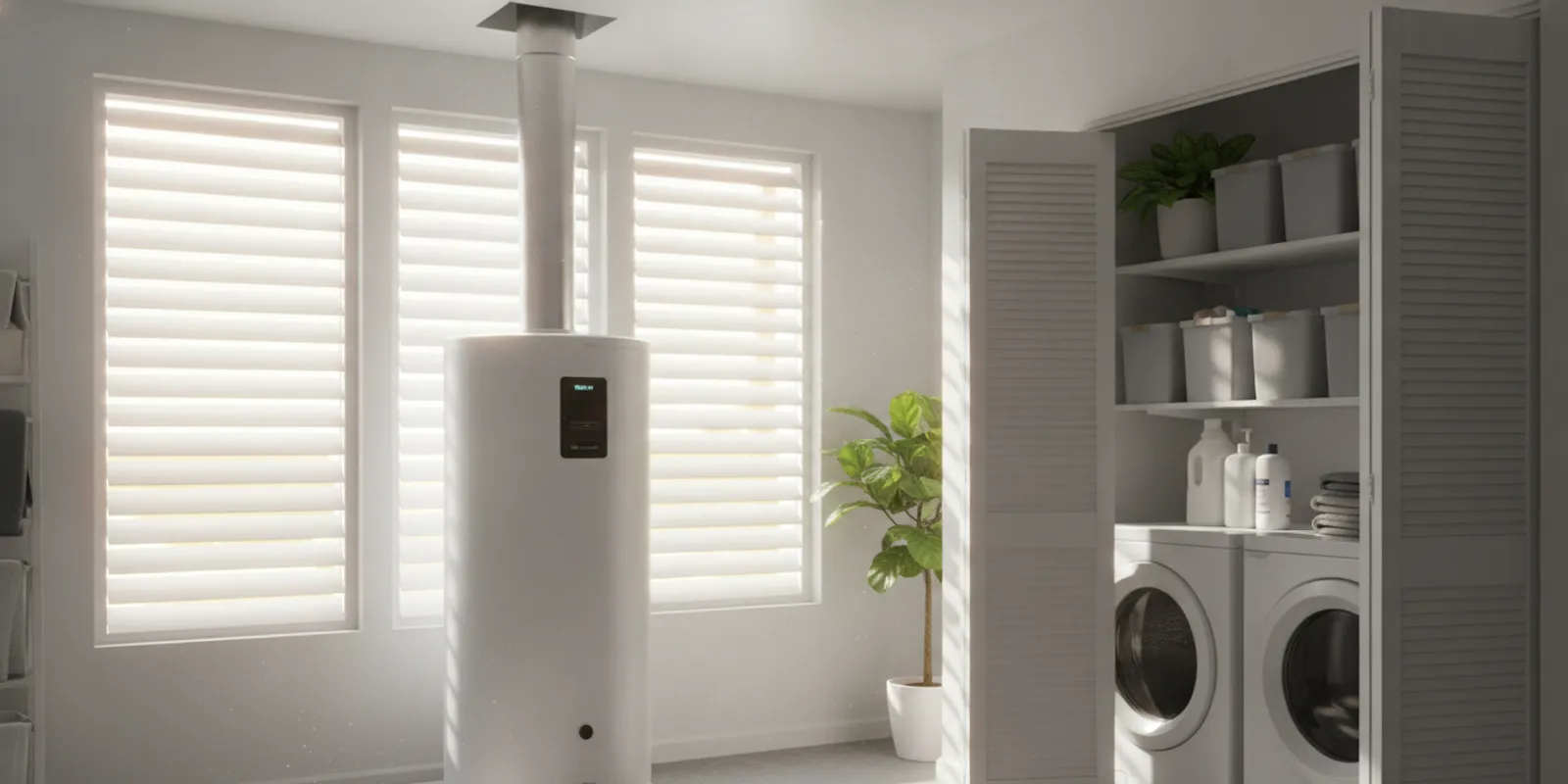
If you are considering a heat pump water heater, begin with the hot-water pattern in your home and the space available for the unit. It can be an alternative to a standard electric tank, but it needs suitable airflow, room, drainage, and planning. This guide explains what to check before comparing models for a Treasure Coast home.
Contact Plumbing by Bishop to discuss your water heater options
How does a heat pump water heater work?
A heat pump water heater moves heat from the surrounding air into water stored in its tank. It uses electricity to run the heat-pump system, rather than relying only on electric resistance elements to create heat. Many models also have resistance elements for backup or periods of higher demand.
A refrigerator moves heat out of its interior. A heat pump water heater works in the opposite direction: it collects heat from nearby air and transfers it to the tank. As a result, the room around the unit may feel cooler during operation, and moisture can form as the air is cooled. The size of these effects depends on the model, the location, and ventilation.
This is not a tankless water heater. It stores hot water, so the amount available depends on tank capacity, recovery, settings, and how much water the household uses. For a broader comparison of system types, see our guide to heat pump and tankless water heaters.
What should you check before choosing one?
Efficiency alone does not determine whether a system is a good fit. The home must support the equipment’s operating needs, and its location should not create avoidable inconvenience. Before choosing a model, consider the following:
- Available air and clearance: The unit needs air around it. A tight closet may not meet the clearances or airflow described in the installation instructions. Do not assume that a space suitable for a conventional tank is suitable for a heat pump model.
- Room use and comfort: The unit can cool the air nearby while it operates. Consider whether that change would matter in a frequently occupied room or a space that already feels cool.
- Sound and placement: The heat-pump components produce operating noise. Think about nearby bedrooms, living spaces, and work areas, and ask how the proposed location may sound during normal operation.
- Condensate handling: Moisture may collect during operation. The installation needs a suitable drainage plan that follows the equipment instructions and applicable local requirements.
- Electrical setup: Check the model’s power requirements and whether the existing circuit and electrical arrangement are suitable. Have qualified professionals evaluate work beyond your expertise.
- Household demand: Note when showers, laundry, and dishwashing overlap. A tank should be selected for actual use, not just the number of people in the home.
- Existing equipment: Record the current heater’s type, approximate age, capacity, and symptoms. These details help compare replacement options on a like-for-like basis.
- Service access: Leave a practical route to reach the unit for inspection and future maintenance. A location that technically fits but is difficult to service can complicate routine care.
The U.S. Department of Energy’s Building America Solution Center provides a selection and quality installation guide for heat pump water heaters. General guidance cannot replace the requirements for a specific unit, so review the model’s installation and owner instructions.
How does it compare with other water heaters?
Each system has different installation and operating considerations. Use this table to frame questions, then compare the specifications of the actual models being considered. Suitability depends on the home, the equipment, and household use.
| Option | How it heats water | Key planning considerations | May suit |
|---|---|---|---|
| Heat pump water heater | Transfers heat from surrounding air into a storage tank; some models include resistance backup. | Airflow, room, drainage, sound, electrical needs, and tank size. | A home with a suitable location where a tank-style heat-pump system meets demand. |
| Standard electric tank | Uses electric resistance elements to heat water in a storage tank. | Tank capacity, recovery, installation location, and existing connections. | A household that prefers a familiar tank format and can select a capacity for its use. |
| Tankless water heater | Heats water as it flows through the unit rather than storing a full tank. | Fuel or electrical capacity, flow rate, installation requirements, and simultaneous use. | A home where an on-demand arrangement and its installation requirements are a good fit. |
Do not compare systems on a single general savings claim. Operating costs vary with the equipment, installation, usage, utility rates, and conditions in the home. A fair comparison includes the work needed to connect and drain the unit, the space it uses, and whether it can serve peak household demand. Plumbing by Bishop offers water heater repair and replacement, where you can discuss options for an existing setup.
How can you map your household’s hot-water demand?
Before requesting a recommendation, make a simple record of when hot water is used. The busiest hour matters more than an average day if several activities happen together. For several days, note shower times, laundry loads, dishwashing, and any occasions when someone runs out of hot water. You do not need special equipment; a short written log is enough to explain your routine.
For example, a household might find that two showers are followed by a dishwasher cycle, while laundry usually runs later. Another home may have one shower at a time but frequent back-to-back showers in the morning. Those patterns raise different questions about storage capacity and recovery. They do not by themselves determine a tank size; the installer should compare them with each model’s specifications and the home’s conditions.
Also note whether hot water runs short all the time or only during occasional high-use periods. A persistent issue could involve the existing heater’s condition or settings, while a peak-period shortage may point toward a mismatch between demand and capacity. Do not assume that replacing a unit with the same nominal size will resolve a problem without understanding its cause.
What does installation planning involve?
Installation is more than placing a tank in the former heater’s location. A professional needs to consider the manufacturer’s clearances, air supply, plumbing connections, condensate disposal, electrical requirements, access, and any applicable local requirements. If a new location is proposed, include the additional work in the comparison rather than judging only the appliance price.
Ask the installer to walk through the location with you. Where will air enter and leave? How will condensate be drained? Will the operating sound be noticeable in adjoining rooms? Is there sufficient clearance for access and service? What changes, if any, are needed to electrical or plumbing connections? Clear answers help you see whether the proposed plan addresses the home rather than merely fitting the equipment into a corner.
Do not block openings or reduce the required clearance to make storage easier. Keep the area accessible and use the manufacturer’s instructions as the source for model-specific requirements. If the current location is enclosed or crowded, ask whether that situation can be corrected or whether another system should be compared. A different technology may be the more practical choice if the home cannot provide appropriate conditions.
How should you compare costs and performance?
Request a home-specific comparison, not a generic promise of savings. Equipment cost is only one part of the decision. Installation changes, electrical work, condensate routing, location, and any needed removal or relocation can affect the project. Ask what is included in the proposed work and what assumptions are being used.
- What equipment and installation tasks are included in the estimate?
- Does the existing location meet this model’s airflow, clearance, drainage, and electrical requirements?
- Would a different location add plumbing, electrical, or other work?
- What tank size and recovery characteristics correspond to our busiest use periods?
- What should we expect regarding sound and cooling in nearby rooms?
- What maintenance does the manufacturer require, and what warranty terms apply?
- Which alternatives should we compare if this location is unsuitable?
Published performance information can help with product comparisons, but it is not a forecast of a particular household bill. A Department of Energy laboratory report modeled a heat pump water heater and estimated potential annual savings compared with an electric resistance unit under the report’s stated assumptions. That result belongs to that model and those conditions; it should not be treated as a promise for every home. You can review the Department of Energy report on heat pump water heater performance and ask that any projection for your home use assumptions relevant to your equipment, use, and utility rates.
What maintenance and troubleshooting should you expect?
Maintenance needs vary by model. Follow the owner’s manual for inspections and service intervals rather than assuming the routine is identical to a standard electric tank. Keep the area around the unit clear, preserve required airflow, and make sure the condensate route remains unobstructed if the instructions identify it as an owner-check item.
If you notice water near the equipment, reduced hot water, an unusual sound, or a warning indicator, consult the manual and arrange an appropriate inspection. Note when the issue began and whether it happens during a particular cycle or time of day. Avoid opening electrical compartments or sealed components yourself. A written description and the model information can help a service professional understand the symptom.
Keep the model and serial numbers, installation paperwork, warranty information, and maintenance instructions together. Ask the installer which checks are appropriate for an owner and which should be handled by a qualified service professional. If the unit is covered by a manufacturer warranty, confirm the applicable process and service requirements for that specific brand and model.
What should you prepare before asking for an evaluation?
A focused conversation can start with a few useful details. Gather a photo of the current heater and its surrounding space, the model label if readable, and approximate age. Note whether the equipment is leaking, making noise, or failing to keep up. Describe how many people use hot water and when uses overlap. If you have a preferred location for replacement, mention what is nearby and whether the space is enclosed.
Then ask for the reasons behind the recommendation, not just the model name. Ask what constraints the home presents, how the system will meet peak demand, what installation work is included, and what routine care will be expected. If a heat pump model is ruled out, ask which specific condition is the obstacle. This helps distinguish a fixable location issue from a basic mismatch between the technology and the home.
Plumbing by Bishop serves residential and light commercial customers across the Treasure Coast. Learn about its local plumbing background, review the service areas, or explore the company’s water heater services. The company is an authorized warranty service provider for Rheem, GE, Ruud, Bradford White, and North Star Water Softeners. That authorization should not be read as factory authorization for other brands.
Frequently asked questions
Does a heat pump water heater need a tank?
Yes. It heats and stores water in a tank. The amount available depends on tank capacity, recovery, settings, and household demand.
Will it cool the room where it is installed?
It can cool nearby air as it draws heat from it. The effect depends on the model, room, and ventilation, so consider comfort when selecting a location.
Can it go where my current electric tank is?
Possibly, but the existing location needs to meet the selected model’s clearances, airflow, drainage, and electrical requirements. Have those conditions assessed before assuming the replacement will fit.
Will it always cost less to operate?
No single operating-cost outcome applies to every home. Equipment, use, utility rates, installation, and operating conditions all affect the result. Compare estimates based on clearly stated assumptions.
What if the household runs out of hot water?
Record when it happens and what other hot-water uses occurred at the time. A professional can compare that pattern with the unit’s capacity and recovery characteristics and assess whether there is an equipment issue.
Contact Plumbing by Bishop to plan a water heater evaluation
Make the choice based on your home’s needs
A heat pump water heater may be worth considering when the location suits its operating needs and the tank can meet the household’s demand. Compare installation details, expected operating conditions, maintenance instructions, and alternatives before deciding. A home-specific assessment can clarify the tradeoffs and help you choose a system that fits your household.