
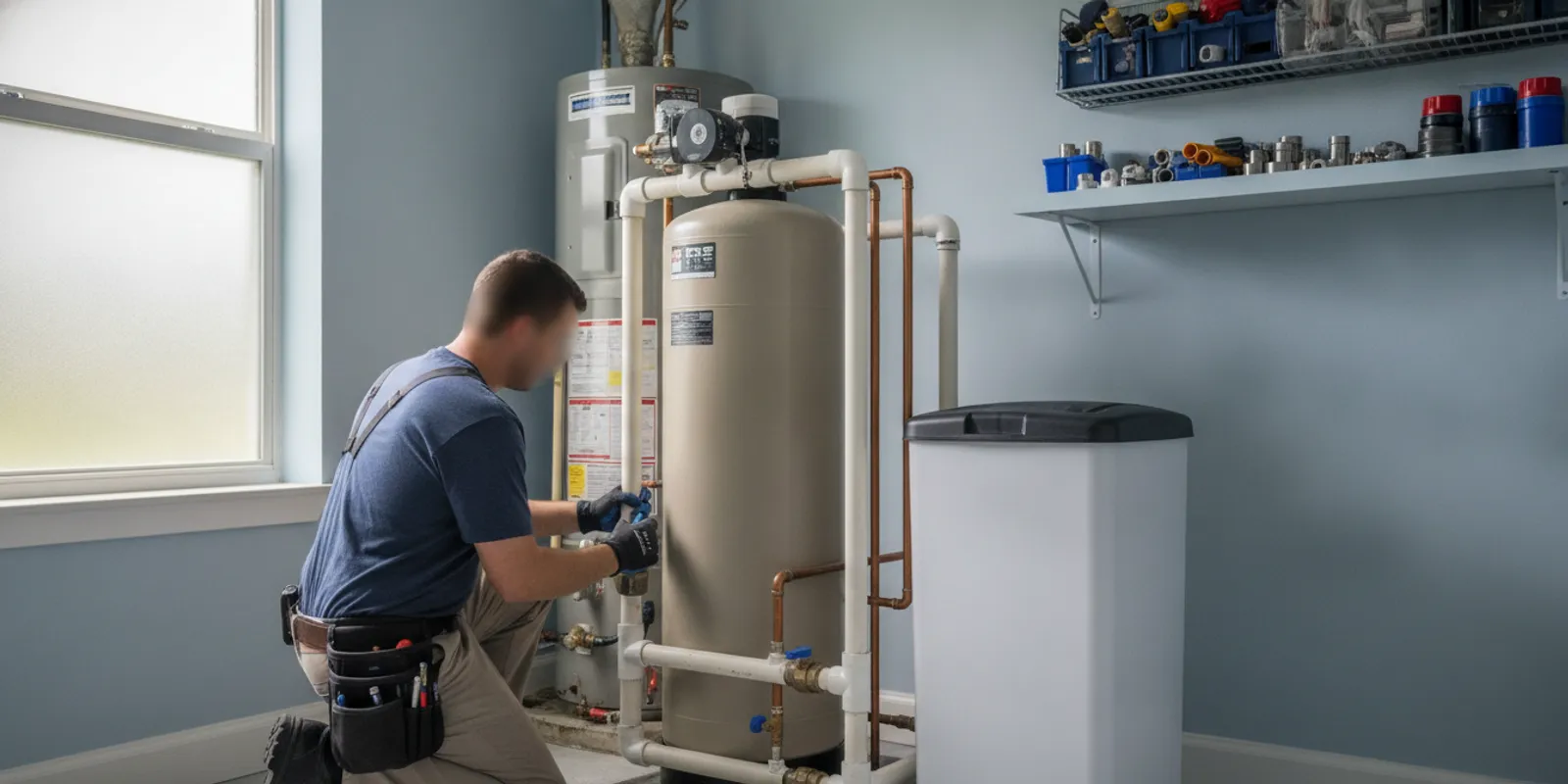
When you ask, “how much does it cost to install a water softener,” the honest answer depends on both the equipment and the work needed to connect it to your home’s plumbing. System capacity, installation location, drain access, and existing piping can all change the scope. This guide explains the main estimate factors so Treasure Coast homeowners can compare proposals and ask useful questions without relying on a one-size-fits-all price.
Request help planning your water softener installation
What does a water softener installation estimate include?
A complete estimate should make clear what is being supplied, what plumbing work is included, and what conditions could change the plan. The system itself is only one part of the project. A plumber may need to connect the softener to the home’s water line, provide a way to discharge regeneration water, and set up a bypass so the household can isolate the equipment when needed.
Ask whether the estimate covers the softener, brine tank if separate, control valve, fittings, labor, startup, and initial settings. If any of these are not included, ask who is expected to provide them. Also clarify whether disposal of an old unit, changes to nearby piping, permits if applicable, or repair of concealed problems are included or would be priced separately.
Some estimates are based on a straightforward replacement, while others assume a new installation where no softener connection exists. These are not equivalent jobs. A replacement that can use existing plumbing may require less alteration than adding a unit where the main water line, drain, or power source is inconvenient. A site visit helps identify the actual conditions rather than guessing from the equipment name alone.
Which factors have the biggest effect on the cost?
System capacity and design
A softener needs to be matched to household water use and the hardness of the incoming water. A larger household or higher demand may call for a different capacity than a small household. The type and controls of the selected system also influence equipment cost and the installation requirements. Avoid choosing a unit based only on the lowest advertised purchase price; a system that is poorly matched may use more salt or water than needed, or may not provide the service the household expects.
Before settling on a size, ask how the recommendation was reached. Useful inputs include the number of occupants, typical water use, any known water test results, and whether there are times of unusually high demand. If the water source or quality is uncertain, ask whether testing or additional pretreatment should be considered before selecting equipment.
Where the softener will go
The location affects labor and the materials needed. A unit placed near the main water entry point may be easier to connect than one located far from the main line. The installer also needs room to access the controls, refill salt if the system uses it, and service the equipment later. Measure clearances and think about how a full bag of salt will be brought to the spot before committing to a location.
In Florida homes, equipment may be located in a garage, utility area, or another service space, but the right location depends on the home’s layout and the equipment instructions. Consider heat exposure, possible water leaks, storage use, and whether the floor area can be kept accessible. A tight or cluttered area can add time to installation and later maintenance.
Condition and layout of existing plumbing
A straightforward connection to accessible, serviceable piping is different from one that requires rerouting lines or replacing corroded, damaged, or incompatible sections. The water softener also needs to be positioned in relation to the plumbing so the installer can connect it correctly and preserve access to shutoff and bypass controls. If pipes are concealed behind a wall or ceiling, the estimate may need to account for limited access or state that additional work could be needed if a hidden issue is found.
Ask the plumber to point out any visible conditions that are not included in the base scope. Plumbing repair or leak work is a separate consideration from supplying a softener; details about the company’s plumbing repair and leak services can help you understand where those needs fit.
Drain and electrical access
Many conventional softeners discharge water during regeneration. The unit therefore needs an approved route for that discharge, installed in line with local requirements and manufacturer instructions. The distance to an appropriate drain, the route available, and any required air gap or other protective measure can affect the work. Do not assume an existing hose or floor drain is suitable; have the installer confirm the arrangement.
Depending on the model, the control valve may need an electrical outlet nearby. If the right connection is not available, ask who is responsible for providing it and whether electrical work is outside the plumbing estimate. Clearly separating plumbing work and other trade work makes the proposal easier to compare.
Removal, preparation, and cleanup
Replacing an old softener may involve disconnecting and removing the existing unit, handling old fittings, and preparing the connection point for the new equipment. If the old system has leaked or the surrounding area is damaged, the repair may need to be addressed before installing a replacement. For a new unit, clearing stored items and making the planned location accessible can help the installation proceed efficiently.
Ask whether the quote includes hauling away the old equipment and whether cleanup is part of the job. A clear scope should state what the installer will leave in place, what will be removed, and how the system will be tested before the work is considered complete.
How should you compare equipment and installation options?
Equipment prices found online are not the same as the installed price. For example, Tucson Water’s home treatment overview lists retail prices for home softeners of approximately $400 to $1,200 depending on size and type. That is an example from another market, not a Treasure Coast installation quote; it does not establish the price of labor, plumbing changes, delivery, or other site-specific work. Use such figures only to understand that equipment can vary, then compare local written scopes rather than treating an equipment range as a finished-project budget.
| Option or condition | What it may involve | What to ask about the estimate |
|---|---|---|
| Replacement using a suitable existing connection | Disconnecting the old unit and connecting a compatible new system to existing plumbing and drain arrangements. | Does the scope include removal, new fittings, startup, and testing? Are the existing drain and connections confirmed suitable? |
| New installation with nearby accessible plumbing | Adding a water line connection, bypass, drain route, and any required equipment connections. | Which materials and connections are included? Is there an appropriate outlet and drain at the proposed site? |
| Installation requiring piping changes | Rerouting or updating piping, moving the equipment, or addressing access constraints. | What changes are necessary, and are they included as a fixed scope or subject to additional approval? |
| System selected for higher household demand | Equipment capacity and design suited to household use and water conditions. | What household and water information supports the selected size? What maintenance and operating needs should be expected? |
The table is a planning aid, not a promise that every installation falls neatly into one category. A good estimate explains the actual work at your home and lists any assumptions. If two proposals differ substantially, compare their equipment, included labor, drain arrangement, removal, startup, and exclusions line by line before focusing on the total.
How can you choose the right system without paying for the wrong fit?
Begin with the water problem you want to address. Hard water can contribute to mineral scale and spots, but a softener is not a universal water purifier. It does not automatically address every taste, odor, or water-quality concern. If you are not sure what is in the water, ask whether testing is appropriate and whether a softener is designed to address the particular issue.
Then share practical household details: how many people live in the home, whether water demand fluctuates, where a system could fit, and whether a unit is already installed. Ask the installer to explain how those details affect capacity and operation. Minnesota’s health department notes that setting a softener too high can increase operating cost and waste water, which is a reason to ask how settings will be selected and adjusted for actual conditions. Its water softening FAQ is useful background, though local water and installation conditions may differ.
Consider how easy it will be to maintain the equipment as well as what it costs to install. Conventional salt-based systems need periodic salt replenishment and occasional attention to the brine tank and controls. The frequency depends on household use, water conditions, and the system. Ask what routine checks the manufacturer recommends, which supplies the system uses, and whether there are any special instructions for a home that is vacant for part of the year.
Also ask about the warranty in plain terms. What warranty applies to the equipment? What coverage applies to installation labor? Who should you contact if a covered issue arises? Plumbing by Bishop is an authorized warranty service provider for North Star Water Softeners. For other equipment, verify the precise manufacturer and service arrangements rather than assuming every brand has the same coverage. The company’s water softener installation and repair information is a useful starting point for discussing service needs.
What should a clear written estimate explain?
Before approving work, look for enough detail to understand what is being installed and how the system will be connected. An estimate does not need to be complicated, but it should be specific enough that you can tell what the quoted work covers.
- Equipment: Identify the proposed system and included components, such as a separate brine tank or bypass, if applicable.
- Location: State where the equipment will be installed and note any access assumptions.
- Connection work: Describe the water line, bypass, drain, and electrical requirements included in the scope.
- Existing equipment: Confirm whether disconnection and removal of an old unit are included.
- Startup: Ask whether initial settings, testing, and an explanation of basic operation are part of the job.
- Exclusions: Identify electrical work, concealed damage, extra piping, or other work that may require separate approval.
- Warranty and service: Clarify equipment coverage, labor coverage, and whom to contact for service.
- Pricing terms: Confirm the price applies to the described scope and ask how additional work would be approved and priced.
Plumbing by Bishop uses flat-rate pricing as a general approach, but the final amount depends on the job and its confirmed scope. Contact the company for service-specific pricing rather than relying on an unsupported general figure. Its plumbing services overview and Treasure Coast service areas can help you check whether your home is within its service territory.
What can you do before requesting an estimate?
A few details can make the conversation more productive and help the plumber determine whether an on-site assessment is needed. You do not need to diagnose the plumbing yourself. Simply describe what you observe and share what you know.
- Note the reason for considering a softener. For example, explain if you see scale, spots, or have a softener that no longer seems to work as expected. Avoid assuming that every water concern has the same cause.
- Gather information about the current system. If there is already a unit, take a photo of its label and connections if it is safe to do so. Note approximate age, service history, and any visible leaks.
- Describe the household. Share how many people use water regularly and any known high-demand periods. This helps with equipment selection.
- Show the proposed location. Clear access to the main water line, existing unit, drain, and nearby outlet. Do not move heavy equipment or disconnect piping.
- Ask about testing and operating costs. Find out whether water testing is recommended and what supplies, salt, or routine maintenance the selected equipment requires.
- Request the scope in writing. Review included work, exclusions, warranty details, and the process for approving any change before work begins.
For additional homeowner guidance, Plumbing by Bishop’s plumbing tips and articles cover a range of plumbing topics. A professional can also assess whether an existing softener needs repair, adjustment, or replacement rather than assuming a new system is the only option.
What happens during a professional installation?
The precise sequence depends on the equipment and plumbing, but a typical job begins with confirming the proposed location and the water, drain, and power connections. The installer isolates the relevant water supply, prepares the piping, and connects the softener with the required bypass and discharge arrangement. The system is then set up according to its instructions and checked for leaks and proper operation.
The U.S. Department of Energy’s Building America Solution Center provides a water softener resource guide that describes the equipment and installation topic. Manufacturer instructions and local requirements still govern the specific installation. Ask the installer to show you how to put the system into bypass if needed, how to recognize when it needs attention, and where to find the operating instructions.
Keep the service area accessible after the work. Do not stack heavy items against the equipment or block the controls and salt access. If you notice a leak, unexpected discharge, or a sudden change in water service after installation, contact the installer for guidance rather than adjusting unfamiliar settings.
Frequently asked questions
Can I get an exact installation cost without an in-home assessment?
A rough discussion may be possible if you can provide clear details, but an exact estimate depends on the equipment and the conditions at the installation site. Existing piping, drain access, electrical needs, and removal of an old unit can change the scope. A site assessment can confirm what is required.
Is the equipment price the same as the installed price?
No. Equipment pricing does not necessarily include delivery, plumbing labor, fittings, drain work, removal, startup, or other site-specific work. Ask for a written estimate that separates or clearly describes the system and installation scope.
Does every home need a water softener?
No. Whether a softener is useful depends on water conditions and the household’s goals. A softener is not a general-purpose solution for every water-quality concern. If you are uncertain what is causing a problem, ask about testing and the appropriate treatment before buying equipment.
Will a bigger softener always work better?
Not necessarily. The unit should fit household demand and water conditions. An oversized or incorrectly set unit may waste resources, while a unit that is too small may not meet the home’s needs. Ask the installer to explain the sizing and settings recommendation.
How do I know whether to repair or replace an existing unit?
That depends on the condition of the unit, the problem, parts availability, age, and repair scope. A plumber can inspect it and explain whether adjustment or repair is practical compared with replacement. Do not assume that a symptom such as low water pressure or a leak is caused by the softener alone.
Contact Plumbing by Bishop to discuss your water softener estimate
Plan around the home, not a generic price
The most useful answer to “how much does it cost to install a water softener” comes from a clear description of the system and work your home actually needs. Compare equipment, connections, drain access, startup, upkeep, and warranty coverage, then ask how changes would be handled before approving the job. A written, site-specific estimate gives you a sound basis for deciding what fits your Treasure Coast home.