If you are researching leaky shower repair cost, the first thing to know is that a drip at the showerhead and water escaping behind a shower wall are not the same repair. The source of the water, the condition of the valve, how the plumbing can be reached, and whether tile or waterproofing needs attention all affect the work involved. A clear estimate starts with finding where the water is coming from.
Contact Plumbing by Bishop to discuss your shower leak
Why Does Leaky Shower Repair Cost Vary?
A shower is a set of connected parts, not one single fixture. Water travels through the supply pipes, mixing valve, control handle and shower arm or handheld connection before it reaches the showerhead. The drain and the waterproofed shower enclosure are separate parts of the system, but a leak in either can look like a plumbing leak from outside the shower.
That is why an estimate depends on diagnosis as well as repair. A worn component that can be reached from the front of the shower may call for a focused repair. A leak inside a wall, a damaged pipe connection or water passing through a failed shower enclosure may need more investigation and different trades or materials. The visible symptom does not always show the full scope. If you are unsure what information will help describe the problem, share the symptoms with Plumbing by Bishop when requesting service.
Also, the same symptom can have different causes. A showerhead that drips after shutoff could be releasing water left in the fixture, or it could point to a valve that is not closing fully. Water on the floor might come from a loose shower arm, a drain connection, a door or curtain gap, or a breach in the enclosure. Inspection helps separate these possibilities before a repair is priced.
What Is the Source of the Shower Leak?
Identifying the source is the first major cost variable. A plumber may ask when the water appears, where it shows up, and whether it continues when the shower is off. Those details help narrow the possibilities, but they do not always confirm the cause without an inspection.
A drip at the showerhead
If drops continue from the showerhead after use, the problem may involve the valve or a replaceable valve component. A small amount of water can drain from the showerhead shortly after the water is shut off. A drip that persists or returns well after use deserves closer attention, because the valve may not be stopping the flow as intended. The repair scope depends on the fixture and valve design, the condition of the parts, and whether compatible replacement parts are available.
Do not assume that tightening the showerhead will fix every drip. If water is coming from the connection at the shower arm, that is different from water passing through the showerhead because the valve is not fully shutting off. Wiping the area dry and observing exactly where the next drop forms can provide useful information.
A leak around the handle or trim
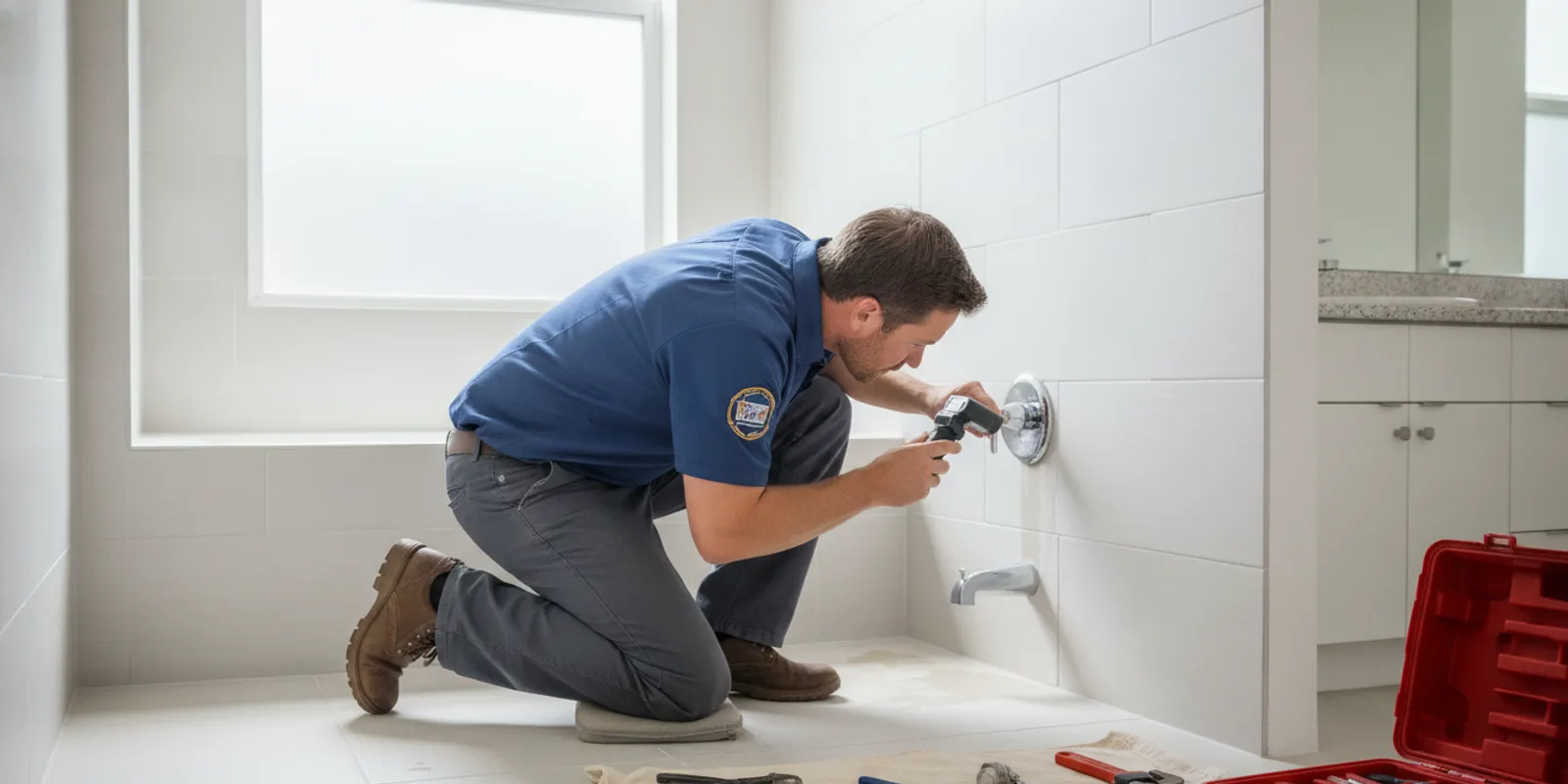
Water appearing around the control handle during a shower may point to a seal, cartridge, valve body or connection behind the trim. The trim plate can conceal the opening in the wall, so water around it should not automatically be treated as a cosmetic issue. Depending on the valve, a repair may be possible from the front after removing the handle and trim. Other conditions can require more access.
Tell the plumber whether the water appears only while the shower is running, whether the handle feels loose or difficult to turn, and whether the temperature or flow has changed. These clues help explain the symptom. They do not replace testing, and it is better not to force a stuck handle or dismantle an unfamiliar valve.
Water showing up outside the shower
Water on a bathroom floor or ceiling below a bathroom needs a careful diagnosis. It could come from a supply pipe, a drain, a shower arm connection, a door or curtain gap, or water moving through a failed grout, caulk or waterproofing area. The location where water becomes visible may be some distance from where it first escaped.
Notice whether the floor gets wet only during a shower, whether it stays damp afterward, and whether the problem occurs when water drains without spraying the enclosure. Those observations can help distinguish a water-supply issue from a drain or enclosure issue. Do not assume that re-caulking the most visible joint will solve a leak that has another source.
How Does the Valve or Cartridge Affect the Estimate?
The valve mixes hot and cold water and controls flow. Inside it, a cartridge or other components help regulate water and shut it off. If a valve is not closing correctly, replacing a serviceable component may be one possible repair. The actual scope depends on the valve model, age and condition, access, and whether the valve body itself is damaged.
A repair estimate may change when the valve is obsolete, a matching cartridge is difficult to identify, or parts are corroded or damaged. Sometimes the trim can be removed and the valve serviced from the shower side. In other installations, the surrounding wall, a nearby access panel or another route may affect how the work is reached. The plumber should explain what is known and what remains uncertain before work expands.
Share any brand or model information you can find, but do not remove the trim just to search for it. A photo of the handle and trim can be useful when asking about service. If you have prior repair paperwork or know when the valve was installed, pass that along too. Ask about an inspection and service-specific estimate rather than relying on a guess based on a photo.
How Does Access Behind the Wall Change the Work?
Access is a major difference between a contained plumbing repair and work that involves opening or restoring a wall. Some shower valves are designed to be serviced from the front. Other repairs may require access behind the shower or through an adjacent wall. The route depends on the home’s layout, the location of the plumbing and the type of enclosure.
If wall access is needed, the estimate should make clear what plumbing work is included and what is not. Opening a wall and repairing a pipe are not the same task as replacing tile, painting, or restoring a finished surface. Ask who is responsible for each part of the work and how the opening will be closed. Do not assume plumbing service includes a complete tile or wall finish unless the written scope says so.
A professional may need to inspect before confirming whether an access panel or opening is appropriate. In some homes, a closet or another room shares the wall; in others, the valve is surrounded by tile or a prefabricated enclosure. The least disruptive access route is not always obvious from the bathroom side.
When Can Tile or Waterproofing Affect the Repair Scope?
If the leak is caused by water escaping through the shower enclosure, plumbing work alone may not address it. Tile, grout and caulk are visible parts of a shower finish, while the waterproofing behind them is what helps protect the structure from moisture. A crack or failed joint can be a clue, but it does not prove where water is traveling or whether the waterproofing has been affected.
Likewise, replacing a valve may require removing or disturbing some surrounding finish, depending on the installation and the access available. Matching older tile can be difficult, and tile repair or enclosure rebuilding may fall outside a plumber’s scope. Ask the service provider to describe any expected disturbance and whether finish restoration is included, excluded or needs a separate specialist.
Persistent dampness, peeling paint, a musty smell or staining near the shower are reasons to take the issue seriously and arrange an inspection. These signs do not establish the precise cause or extent of damage. Avoid covering them with fresh caulk or paint before the leak has been identified, because that can hide useful evidence without stopping water behind the surface.
What Does a Shower Leak Estimate Usually Compare?
Use a written estimate to compare scope rather than relying on a single label such as “shower repair.” A useful estimate describes what has been identified, what the proposed repair addresses, and what conditions could require additional work. The table below shows common scope distinctions; it is not a price list, and the final work depends on the actual inspection.
| Observed issue or scope | Work that may be considered | What can change the estimate |
|---|---|---|
| Drip from showerhead after use | Check whether water is residual drainage or the valve is passing water; inspect serviceable valve components. | Valve type, part availability, condition and whether the drip continues after normal draining. |
| Water around handle or trim | Inspect the handle, seals, cartridge and valve area; determine whether service can be done from the front. | Corrosion, damaged valve body, access route and the need for replacement parts. |
| Leak behind wall or at a pipe connection | Locate the leak, reach the affected plumbing, repair it and test the repaired area. | Where the pipe is located, how the wall is accessed, extent of damage and wall restoration responsibilities. |
| Water escaping through the enclosure | Assess whether the issue is plumbing, drainage, spray containment or the shower finish and waterproofing. | Whether tile, grout, caulk, enclosure or waterproofing work is needed and who will perform it. |
| Several symptoms or intermittent water | Gather observations and inspect or test likely sources before agreeing on a repair plan. | How often the leak occurs, whether it can be reproduced, and whether more than one source is present. |
What Should a Clear Estimate Explain?
Before approving a repair, ask for a plain-language explanation of the diagnosis and proposed work. A clear estimate helps you understand what the contractor believes is causing the leak, what parts of the system will be repaired, and what is outside the quoted scope. This is especially important when the source is concealed or the visible damage could have more than one explanation. You can contact Plumbing by Bishop to discuss a shower repair estimate and the details to clarify before approving work.
- What was observed? Ask where water was found and what inspection or testing supports the diagnosis.
- What exactly will be repaired? Clarify whether the work involves a showerhead connection, valve component, valve body, supply pipe, drain or another area.
- What access is expected? Ask whether work is planned from the shower side, behind a wall or through another area.
- Are parts included? Find out whether the specified replacement parts are included and what happens if the part is unavailable or a different failure is found.
- What finish work is excluded? Confirm whether tile, drywall, paint, caulk or waterproofing restoration is included or requires a separate provider.
- How will the repair be tested? Ask what checks will be made to confirm the repaired plumbing is not leaking under the conditions tested.
- How are additional findings handled? Agree that any change in scope and related pricing will be explained before additional work is authorized.
Plumbing by Bishop uses flat-rate pricing as a general pricing approach, but the charge depends on the service and work required. No specific shower repair price should be assumed before the leak is diagnosed and the scope is explained. Contact the company for service-specific pricing and an estimate.
What Can You Do Before the Plumber Arrives?
Take practical steps to limit further water exposure without making the problem harder to diagnose. If water continues to flow when the shower is off, stop using the shower. If you know how to shut off the relevant fixture or home water supply safely, you may do so; do not operate a valve that is stuck or unfamiliar. If water is reaching electrical equipment or creating an immediate safety hazard, keep clear and seek appropriate emergency help.
- Dry the visible area, then note where water reappears and when.
- Take a photo or short video of the symptom if it can be done safely.
- Record whether the leak happens during shower use, after shutoff, or when the drain is used separately.
- Keep bath mats and stored items away from damp surfaces so you can see whether moisture spreads.
- Avoid repeated testing that puts more water into a suspected leak area.
- Do not cut into a wall, force a handle or use sealant as a substitute for finding the source.
Household leak guidance from the City of Monterey Park notes that fixing leaky faucets and plumbing joints can save water, and the Town of Southwick’s water-leak information specifically advises checking showerheads for leaks. These general reminders support prompt attention to leaks, but they do not diagnose a particular shower or establish the repair needed in your home. The U.S. Environmental Protection Agency’s Fix a Leak Week material also discusses household leaks as a water-waste issue.
Sources: City of Monterey Park: Inside the House; Town of Southwick: Water Leaks Information; U.S. Environmental Protection Agency: Fix a Leak Week campaign summaries.
Frequently Asked Questions
Can a dripping showerhead mean the valve is leaking?
It can, but not every drip proves a valve failure. A showerhead may release water left inside it shortly after use. If dripping continues, returns later, or is accompanied by other symptoms, have the source checked rather than assuming the showerhead itself needs replacement.
Does every shower leak require opening a wall?
No. Some components can be serviced from the front of the shower, while other leaks require a different access route. The location of the problem, valve design and surrounding construction determine whether a wall opening is necessary. Ask what access is planned and whether wall restoration is included in the estimate.
Will replacing caulk stop a shower leak?
Only if failed caulk is actually the source of water escaping, and even then the surrounding surfaces should be suitable for resealing. Water can also come from a valve, pipe, drain or damaged waterproofing. Applying new caulk over a symptom without finding the source can delay the right repair.
Why can’t a plumber quote the final amount from a photo?
A photo can show the visible fixture and sometimes help identify a valve brand, but it usually cannot reveal a concealed pipe leak, the condition of internal parts or the access required. The contractor can explain what information is possible from a photo and whether an inspection is needed to provide a service-specific estimate.
Get Help Identifying the Leak Source
A shower leak does not always mean a major repair, but the right scope depends on locating the source and understanding what access and restoration may be needed. If water keeps returning, spreads beyond the shower or appears near a wall or ceiling, arrange an inspection and avoid using the shower if doing so adds water to the affected area.
Contact Plumbing by Bishop to request an estimate
Plumbing by Bishop serves residential and light commercial customers across the Treasure Coast, and a service-specific evaluation can help clarify the next step for your shower.