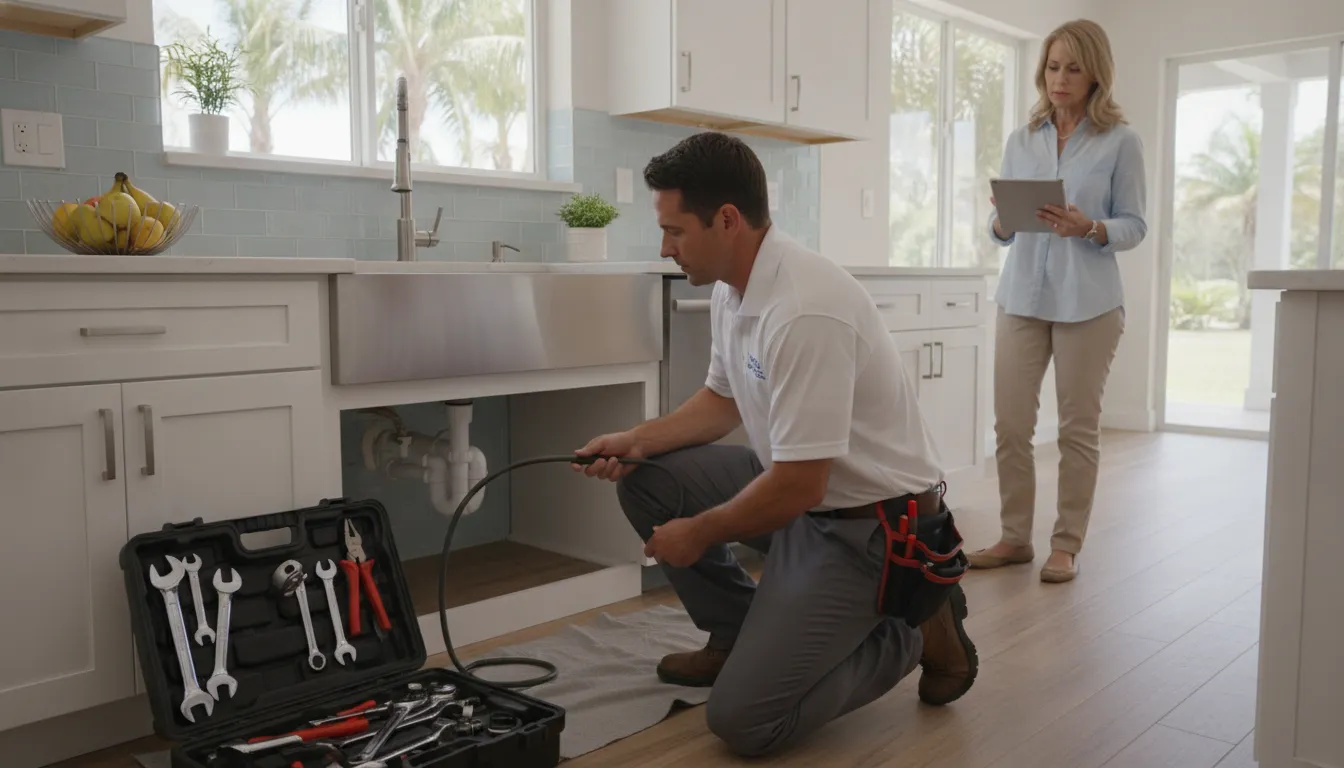
A kitchen sink that drains slowly, holds standing water. Or starts to smell is giving you useful information: something is restricting the drain, and adding more water may only make the mess worse. Food solids and grease are common contributors, but the blockage may also sit farther down the line.
The safest first step for a plumber for kitchen sink clog search is to stop using the sink, remove visible debris, and try a careful kitchen-sink plunger if no chemical drain opener is present. If the clog returns, affects another fixture, causes sewage backup, or will not clear safely, professional drain service is the better next step.
Whether you are in Stuart, Jensen Beach, Palm City, Hobe Sound, or Port St. Lucie, you do not need to guess at the cause or reach for harsh products immediately. A few simple observations can help separate a manageable fixture-level clog from a deeper drainage problem. Start by checking the sink, disposal, and nearby fixtures without putting your hands or tools into an energized disposal.
What should you check before calling a plumber for a kitchen sink clog?
Start with the symptom, not the tool. Is the sink draining slowly, holding standing water, producing an odor, or making a gurgling sound? Note whether the problem began after washing greasy dishes, rinsing food scraps, or using the garbage disposal. A slow drain can be an early sign of buildup, while a sink that will not drain at all needs more careful handling. Reduce water use until you know where the blockage is. Running the faucet, dishwasher, or disposal can add water to a sink that has nowhere to go and increase the chance of an overflow.
Make a few low-risk observations
Remove the stopper or strainer if it lifts out easily and check for visible food debris. Do not reach into a garbage disposal or place a tool inside it while power is connected. If the disposal is involved, switch it off at the wall. For a hardwired unit, turn off the controlling switch or circuit breaker before any troubleshooting. A disposal that only hums, will not start, or leaves the sink draining slowly may have a mechanical problem rather than a simple surface clog. Potato peels and other starchy scraps can form a thick paste that interferes with disposal operation, so mention what went down the drain when you request service.
Try a plunger without adding chemicals
If there is enough water to cover the plunger cup, use a flat-bottomed sink plunger rather than a toilet plunger. On a double sink, seal the opposite drain with a wet rag or stopper so pressure is directed toward the clogged side. Use controlled plunges instead of forceful movements that could splash contaminated water or loosen a connection. If the sink does not improve after a reasonable attempt, stop and reassess rather than repeatedly forcing water into the line. A pan under the sink can help protect the cabinet if you inspect the trap.
Removing plumbing connections releases trapped water and is best left to someone comfortable with the task.
Do not pour commercial drain opener into a clogged sink as a first response. The University of Colorado advises against drain cleaners for a clog or slow drain. Chemical residue can create additional handling concerns if the line later needs to be opened. Never combine products. For a clearer overview of practical boundaries, see our safe DIY drain cleaning guide.
Contact Plumbing by Bishop for safe kitchen sink clog help.
Call for professional guidance if the clog returns, affects another fixture, causes a sewage backup, or will not clear safely. Those symptoms can point beyond the sink trap and may require a more complete drain evaluation.
What should you never pour down a clogged kitchen sink?
When water is already standing in the basin, adding another product usually does not solve the reason it stopped draining. It can also leave an unknown substance in the trap for the next person who has to inspect or clear the line. Pause before reaching for a bottle, and keep the sink isolated until you know what is in the drain.
Keep grease, oil, and fat out of the drain
Cooking grease may be liquid while it is hot, but it can cool inside the pipe, build up, and trap other debris. That makes a partial restriction worse over time. Oils and liquid fats can contribute to the same type of buildup, even when they appear thin enough to rinse away. Pinellas County explains how fat, oil, and grease can build up inside plumbing and restrict wastewater flow.
Instead of pouring grease, oil, or fat into the sink, let it cool in a container and put the container in the garbage. Do not use running water to push it farther down the line. If a pan has a light coating, wipe it with a paper towel before washing it.
Do not send food scraps through a clogged drain
Food solids belong in the garbage or composting system, not in a sink that is already slow or blocked. Scraps can collect around the strainer, settle in the trap, or add to grease and residue farther down the pipe.
Be especially careful with starchy scraps. Iowa State University Extension notes that potato peels can form a thick paste when mixed with water. That paste may stall a garbage disposal and contribute to a clog. Learn more about potato peels and disposal clogs.
Never reach into a disposal to remove scraps while it has power. If the disposal is involved, turn it off completely before any inspection. When you are unsure whether the problem is a disposal jam or a drain blockage, stop experimenting and follow the safe DIY drain cleaning guidance.
Use caution with commercial drain openers
Repeatedly pouring commercial drain opener into the same clogged sink is not a reliable substitute for finding the blockage. A product may fail to clear the obstruction, leaving standing water and an uncertain chemical residue behind. The University of Colorado advises against using drain cleaners for a clog or slow drain. If you have already used one, do not add vinegar, baking soda, another cleaner, or any other product. Iowa State Extension specifically warns against using a baking soda and vinegar method when commercial drain opener is present in the standing water: review the disposal troubleshooting guidance.
Do not mix products, and tell a plumber exactly what was used before service. If the clog returns, affects more than one fixture, or will not clear safely. A plumber for kitchen sink clog service can diagnose the line instead of adding another substance to it.
How can you tell if the blockage is deeper than the sink?
A kitchen sink clog is more likely to be beyond the stopper, strainer. Or immediately accessible trap when the same symptoms keep returning after the sink appears to clear. A one-time slow drain may involve buildup close to the fixture. A recurring clog suggests that water is still meeting resistance farther along the drain pipe. Continuing to force water through it can leave you with another backup and less time to protect the cabinet or flooring below.
Watch for symptoms beyond one basin
Pay attention to what happens elsewhere in the kitchen and home. If both sides of a double sink fill or drain slowly together, the restriction may be farther into the shared drain path rather than limited to one opening. Plunging one side without covering the other can also reduce the pressure reaching the blockage, so the result may not tell you much about where the obstruction is.
Multiple affected fixtures are a stronger reason to stop repeating sink-level checks. For example, a kitchen sink problem that appears along with a slow bathroom drain, a backed-up laundry drain. Or another fixture that is not draining normally may point to a larger section of the drainage system. That pattern does not identify the exact cause by itself, but it does justify professional diagnosis instead of treating each fixture as a separate clog.
Do not ignore backup, gurgling, or a clog that will not clear
Water backing up into the sink, especially after another fixture is used, deserves prompt attention. Sewage backup or wastewater appearing where it should not is an urgent plumbing condition, not a sign to add more cleaner or keep plunging. Plumbing by Bishop lists sewer backups and drain emergencies among situations that may require urgent service.
Gurgling can also be a useful warning sign when it occurs with slow drainage, odors, or recurring standing water. It may mean air and water are not moving normally through the drain system. Gurgling alone does not prove that a main line is blocked, so avoid declaring the location of the problem from that sound alone. Record when it happens and whether another fixture was running.
If safe basic checks produce no improvement, or the sink clears only briefly before slowing again, it is time to stop escalating DIY attempts. A clog can occur in the pipe between the sink trap and the main sewer line, where a household plunger may not resolve the underlying restriction. A professional can evaluate the pattern and choose an appropriate clearing method rather than having you guess at the blockage location.
For help distinguishing a localized kitchen sink issue from a deeper drain problem, review the signs of professional kitchen drain cleaning. If water is backing up or the situation is worsening, see the guidance on clogged drain emergency help and reduce water use until the drain is assessed.
When is it time to call a professional drain service?
A kitchen sink clog does not always require an emergency plumber. If water drains after a safe, basic check and the problem does not return, you may have cleared a fixture-level obstruction. Professional help becomes the sensible next step when the sink remains blocked, the clog returns soon after clearing, or the problem affects more than one fixture. Plumbing by Bishop's service guidance specifically identifies recurring clogs, multiple affected fixtures, sewage backup. And a clog that cannot be safely cleared as reasons to request professional drain service.
Pay attention to the pattern, not just the amount of water in the basin. Standing water that will not move, foul odors, gurgling, or backup into another sink can indicate that the obstruction is farther along the drain system. A sewer backup or other drain emergency deserves prompt attention because reducing water use can help limit additional mess while you arrange service. You do not need to keep pouring products into the drain or repeatedly dismantle plumbing when the cause is unclear.
What a plumber may evaluate
A professional can start by identifying whether the issue is limited to the sink. Related to a garbage disposal or connected fixture, or part of a larger drain-line problem. The evaluation may include the visible drain opening, stopper or strainer, trap, nearby fixtures, and the path toward the main line. That distinction matters because a local kitchen sink blockage and a deeper obstruction call for different approaches. Plumbing by Bishop provides drain cleaning and unclogging for kitchen plumbing, including emergency drain services, rather than treating every symptom as the same repair. Learn more about professional kitchen drain cleaning and the warning signs that can point to a localized or main-line clog.
For homeowners in Stuart, Jensen Beach, Palm City, Hobe Sound, Port St. Lucie, and nearby Treasure Coast communities, local service can also make the process easier to plan. Plumbing by Bishop has served the area since 1983 and uses a flat-rate model described as paying by the job, not by the hour. That does not mean every job costs the same, so ask for the service details and applicable charge before work begins.
Clean workmanship matters when a drain problem is inside your home. Plumbing by Bishop emphasizes keeping appointments on time, drug testing and background checking employees, and leaving homes as clean or cleaner than they were found. Those standards are especially useful when standing water, cabinet access, or a messy blockage is involved.
Contact Plumbing by Bishop to schedule professional drain service.
How to prevent the next kitchen sink clog
Prevention starts with what enters the drain. A sink strainer is a simple first barrier that catches food scraps before they collect in the trap or farther inside the drain line. Empty it into the trash when it is full, and rinse it rather than pushing the residue through the drain. If your sink has a stopper or removable screen, clean that part regularly as well. Grease and food residue are common contributors to kitchen drain clogs, so small daily habits can reduce buildup over time.
Keep solids out of the drain
Scrape plates, pans, and cutting boards into the garbage or compost before rinsing them. Do not rely on running water to carry scraps away. Rice, pasta, flour, coffee grounds, eggshells, fibrous vegetable pieces, and similar material can collect in the drain instead of passing through cleanly. Even when a garbage disposal is installed, treat it as a way to handle small amounts of suitable scraps, not as a substitute for scraping dishes.
Potato peels deserve special caution. Iowa State University Extension explains that their starch can form a thick paste when mixed with water, which can interfere with disposal operation and contribute to a clog. The same source advises cutting power completely before troubleshooting a disposal. Never reach into the unit or place a tool inside while it can operate. If it only hums, leave it off and use a qualified professional when a safe basic check does not resolve the problem.
Handle grease before it reaches the pipe
Let cooking fat, oil, and grease cool in the pan. Pour it into a disposable container, allow it to solidify, and place the closed container in the garbage. Do not wash hot grease into the sink. Although it is liquid when warm, it can solidify inside the pipe and trap other debris. Wipe greasy pans with a paper towel before washing them, especially after cooking bacon, frying food, or preparing sauces.
Avoid making prevention harder with repeated chemical treatments. If a commercial drain opener has already been used, do not add baking soda, vinegar, or another product to the standing water. Chemical combinations can create a safety problem, and a recurring clog is better evaluated than repeatedly treated. If the sink keeps slowing despite these habits, or the disposal problem returns, review the kitchen sink repair guide and arrange professional help before the blockage becomes more disruptive.
| Sink symptom | Best next step |
|---|---|
| One-time slow drain | Stop adding water, remove visible debris, and try a careful sink plunger without chemicals. |
| Clog returns or affects multiple fixtures | Stop repeated DIY attempts and schedule professional drain evaluation. |
| Backup or sewage odor | Reduce water use and seek prompt professional plumbing guidance. |
- Stop using the sink and note the symptoms.
- Check the strainer and disposal only with power fully off.
- Try a sink plunger without chemical drain opener.
- Schedule professional service if the clog returns, spreads, or backs up.
Frequently Asked Questions
How do plumbers unclog kitchen sinks?
A plumber first looks at the symptoms, tests how the sink drains, and checks accessible parts such as the trap, disposal, and nearby drain line. The goal is to locate the blockage rather than push it farther into the system. Depending on the cause and location, the technician may clear the fixture drain or recommend a more thorough drain service. Keeping the area clear and telling the plumber what you have already tried can make the visit safer and more efficient.
How do you unblock a badly blocked kitchen sink?
Stop adding water, remove standing water only if you can do so safely, and try a properly fitted sink plunger if no chemical drain opener is present. In a double sink, cover the other drain to help direct pressure toward the blockage. Do not reach into a garbage disposal or take apart a trap without first considering the water and equipment hazards. If plunging does not restore drainage, professional help is the safer next step.
What should you avoid pouring into a clogged kitchen sink?
Do not add grease, cooking oil, food scraps, or repeated chemical drain opener to the sink. Grease can harden inside the pipe and collect other debris, while food solids can add to the obstruction. Never mix drain products or combine a chemical cleaner with another DIY treatment. Tell the plumber if any product has already been used, since it may remain in the standing water.
When does a kitchen sink clog need professional service?
Call for professional drain service when the clog keeps returning, affects both sides of a double sink. Causes backups or sewage odors, or appears along with slow drainage at another fixture. Those patterns can point to a blockage farther down the drain system rather than a simple obstruction at the sink. A plumber can assess the broader line and recommend the appropriate repair or cleaning approach without relying on repeated guesswork.
Ready to Schedule Kitchen Sink Drain Service?
If your sink keeps draining slowly, backs up again, or shows signs of a deeper blockage. Professional service can help identify the problem and restore dependable drainage while minimizing mess in your home. Plumbing by Bishop serves Treasure Coast homeowners with practical drain solutions and clean workmanship. Contact Plumbing by Bishop to schedule professional kitchen sink clog and drain service.