
A higher water bill, a warm patch of flooring, or the faint sound of running water can be easy to dismiss. Together, however, these may be slab leak signs that deserve prompt attention. A slab leak occurs when a water line beneath or within a home's concrete foundation leaks. Because the pipe is hidden, homeowners usually notice indirect clues rather than seeing the damaged line itself.
Contact Plumbing by Bishop to request a professional plumbing evaluation.
No single clue confirms a slab leak. Air-conditioning condensation, irrigation problems, appliance leaks, and roof intrusion can create similar symptoms in Florida homes. The safest approach is to document what you notice, perform a few simple checks, and arrange a professional plumbing evaluation when the evidence points to a hidden water-line problem.
Slab leak signs Florida homeowners should notice
The strongest reason to suspect a hidden leak is a pattern of clues that cannot be explained by normal water use. Pay attention to changes in your home, water bill, and plumbing system.
An unexplained increase in the water bill
Compare recent bills with the same season in prior years when possible. A sudden or steady increase without more guests, irrigation, pool filling, or other known use can indicate water is escaping somewhere. It does not identify the leak's location, but it is a useful early warning.
The water meter moves when fixtures are off
Turn off faucets, showers, washing machines, dishwashers, ice makers, and irrigation. Ask everyone to avoid using water during the check. If the meter's leak indicator or reading continues to move, water may still be flowing through the system. A running toilet or outdoor leak can cause the same result, so inspect those common sources first. Plumbing by Bishop's full-service plumbing team can help evaluate unresolved water use.
Warm or unusually cool areas on the floor
A localized warm spot may suggest a leaking hot-water line beneath the slab. A cool or damp-feeling patch can also merit attention. Flooring materials and sunlight affect temperature, so compare the area at different times rather than treating one warm tile as proof.
Damp flooring, discoloration, or damaged finishes
Watch for darkened grout, lifting vinyl, warped wood, loose flooring, or moisture that returns after cleaning. Water can travel before it becomes visible. The wettest area is not always directly above the source.
Running-water sounds or reduced pressure
Hissing, trickling, or rushing sounds when every fixture is off may point to a hidden leak. A new pressure drop can be another clue, although clogged fixtures and supply issues can also reduce pressure. Plumbing by Bishop can evaluate these and other concerns through its professional plumbing services.
Musty odors or recurring indoor moisture
Florida humidity can make musty odors and moisture harder to interpret. Still, a persistent odor or recurring damp area that cannot be traced to the HVAC system, a roof leak, or an appliance deserves investigation. Address wet materials promptly to limit further damage. Learn more about the local company's standards on the About Plumbing by Bishop page.
What should you do if you suspect a slab leak?
A careful check can help you give a plumber useful information without opening walls or damaging the floor. Do not attempt to locate a hidden pipe by drilling or breaking concrete.
- Stop normal water use. Turn off faucets and water-using appliances. Pause irrigation and confirm toilets are not running.
- Check the meter. Record the meter reading or photograph it. Wait without using water, then check it again. Movement suggests a leak somewhere on the supplied side of the system.
- Inspect visible sources. Look beneath sinks, around toilets, near the water heater, behind accessible appliances, and around outdoor fixtures. Check the HVAC condensate area as well.
- Document the clues. Photograph damp areas, note unusual sounds and floor temperatures, and gather recent water bills. Write down when each symptom began.
- Protect the home. If water is actively spreading and you can safely reach the main shutoff, turn off the water. Keep away from wet electrical equipment and call for help if an electrical hazard may be present.
- Request professional evaluation. A plumber can separate a possible under-slab leak from other causes and discuss appropriate next steps.
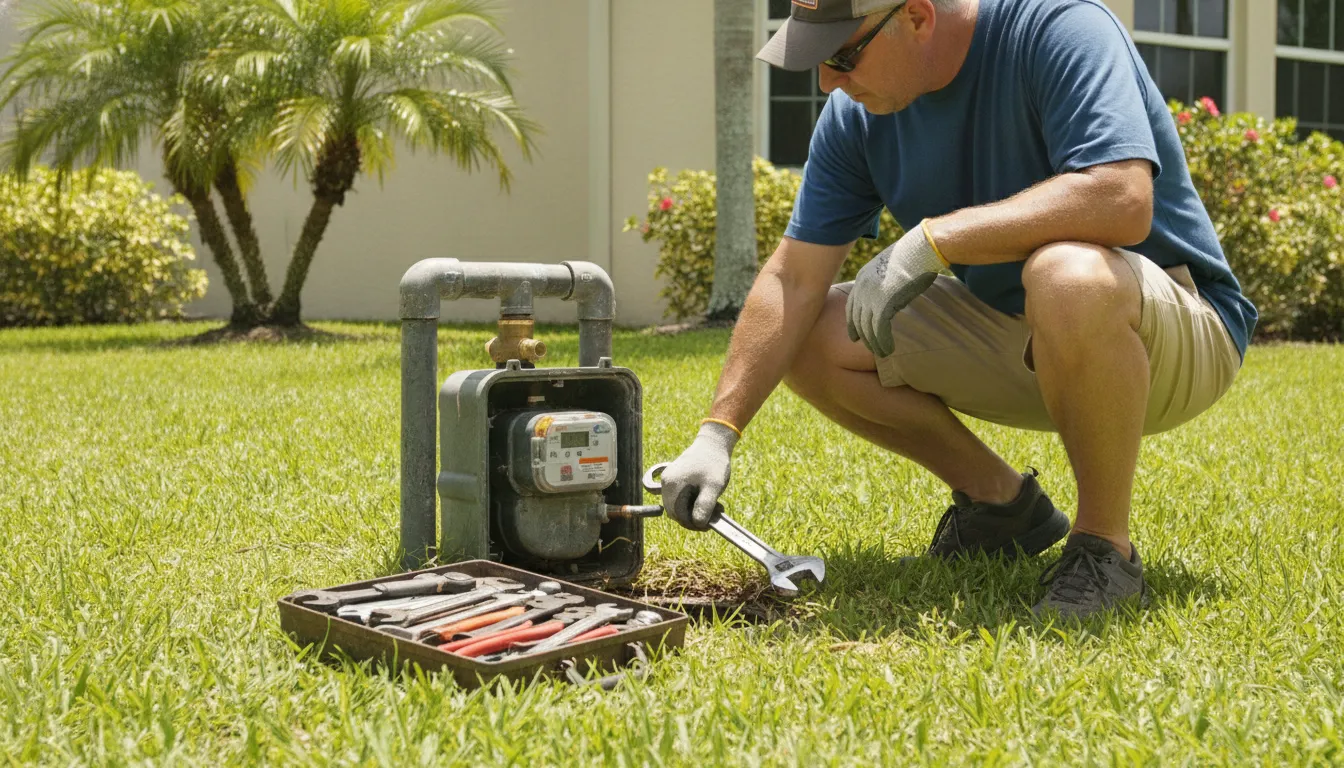
These checks can reveal abnormal water flow, but they cannot confirm the exact location or condition of an underground pipe. Avoid relying on a single do-it-yourself test to make repair decisions.
Why slab leaks deserve prompt attention in Florida
Many Florida homes use slab-on-grade construction, with water lines routed through or beneath the concrete. A hidden leak can continue unnoticed because the pipe is not readily visible. Prompt attention helps limit wasted water and gives homeowners a better chance to address affected flooring and finishes before the problem spreads.
Humidity can blur the warning signs
High humidity and air-conditioning condensation can make indoor moisture seem routine. That makes comparison important. Moisture that repeatedly returns in the same location, appears away from the HVAC system, or accompanies unexplained meter movement is more concerning than a single humid-day observation.
Outdoor water use can confuse meter checks
Irrigation systems, pool equipment, and outdoor hose bibs can create unexplained usage or wet areas. Shut these systems off during a meter check and inspect the yard for unusually soggy areas. Eliminating these possibilities helps a plumber focus the evaluation.
Different causes require different solutions
Pipe age, corrosion, pressure, movement, and installation conditions may contribute to hidden leaks. A professional should evaluate the actual plumbing before recommending repair. Avoid assuming that a leak automatically means the entire foundation must be opened or that one repair method fits every home.
How does a plumber evaluate a possible slab leak?
A professional evaluation begins with the symptoms you observed. The plumber may review water-use changes, inspect accessible plumbing, check pressure, isolate parts of the system, and use appropriate leak-location methods. The goal is to narrow the likely source while avoiding unnecessary disruption.
First, rule out accessible leaks
Running toilets, failing water heaters, appliance connections, hose bibs, and irrigation can waste substantial water. Finding an accessible source may prevent unnecessary investigation of the slab. A plumber can also determine whether the suspected leak is on a hot-water or cold-water line.
Then, narrow the hidden source
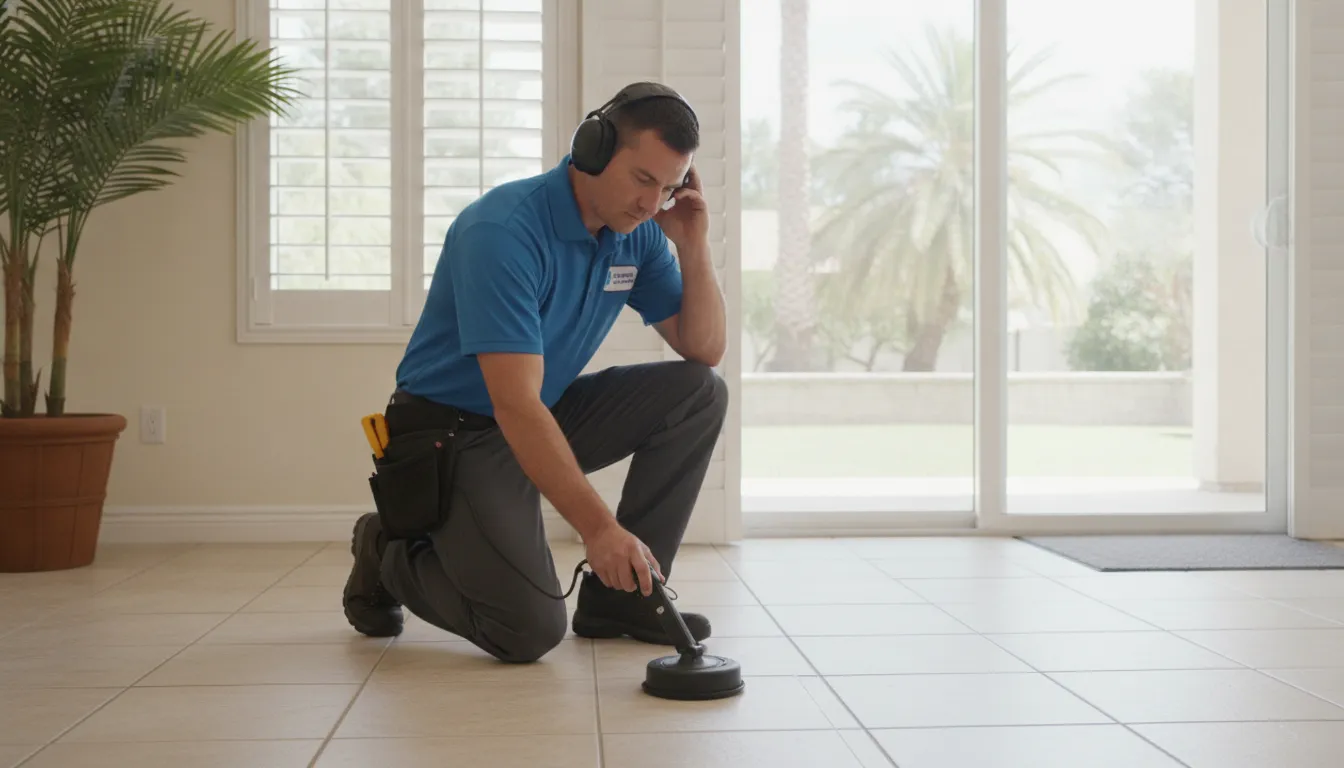
Depending on the home and symptoms, a plumber may use specialized listening, pressure testing, temperature comparison, or other diagnostic methods. Available methods vary by situation. An evaluation should distinguish evidence from assumptions and explain what the findings support.
Finally, discuss repair options
The right approach depends on the leak's location, pipe condition, accessibility, and the home's layout. Possible approaches may include a localized repair or rerouting a line. A qualified plumber should explain why an option fits the specific problem before work begins. For an evaluation, contact Plumbing by Bishop.
Slab leak clues versus common lookalikes
Several household problems resemble a slab leak. Use the comparison below as a starting point, not a diagnosis.
| Clue | Possible slab leak pattern | Common lookalike to check |
|---|---|---|
| Higher water bill | Increase persists without a change in normal use | Running toilet, irrigation schedule, pool filling, guests |
| Meter movement | Meter moves while all known water uses are off | Ice maker, irrigation valve, toilet, outdoor fixture |
| Warm floor area | Localized warmth returns consistently | Sunlight, appliance heat, HVAC duct location |
| Damp flooring | Moisture returns in the same interior area | Appliance leak, roof intrusion, HVAC condensate |
| Water sound | Sound continues when fixtures are off | Drain noise, HVAC operation, neighboring plumbing |
| Low pressure | New whole-home change with other leak clues | Clogged aerator, valve position, utility-side issue |
If one of the common lookalikes explains the symptom, address it and continue monitoring. If several clues remain or the meter still moves, review the company's plumbing repair services and arrange an evaluation.
When should you call a plumber about slab leak signs?
Call promptly when multiple warning signs occur together, when the meter moves with every known water use off, or when moisture repeatedly returns without an identifiable source. Early evaluation can reduce uncertainty and help you plan a measured response.
Situations that need immediate attention
- Water is actively spreading across floors or through walls.
- Water is near outlets, electrical panels, appliances, or exposed wiring.
- The home has a sudden major pressure loss along with running-water sounds.
- Flooring is rapidly lifting, buckling, or becoming saturated.
- You cannot safely stop active water flow.
If water is near electrical equipment, keep clear and seek appropriate emergency help. If safe, use the home's main water shutoff to limit active flow. Do not enter a wet area when electrical danger is possible.
Situations to schedule soon
Schedule an evaluation when bills rise without explanation, a recurring warm or damp spot appears, or you hear water with fixtures off. These symptoms may not require panic, but waiting for visible damage is not a sound strategy. Bring your notes, meter photos, and bills to help the plumber understand the pattern. You can use the contact page to request service.
Can you reduce the risk of future slab leaks?
Not every hidden leak is preventable. Homeowners can still improve early detection and reduce avoidable stress by understanding their plumbing and responding to changes.
Know the main water shutoff
Locate the shutoff before an urgent situation and make sure responsible household members know where it is. Do not force a stuck or damaged valve. Ask a plumber for help if you are unsure how it operates.
Track normal water use
Review water bills regularly and investigate unexpected changes. A quick meter check after receiving an unusual bill can reveal whether water continues flowing when it should not. Keep in mind that seasonal irrigation and guests affect normal use.
Respond to pressure and moisture changes
Ask a plumber to evaluate significant or recurring pressure problems. Repair accessible leaks and address damp materials rather than assuming they will dry on their own. These habits do not guarantee prevention, but they make hidden problems easier to recognize.
Keep a simple home plumbing record
Save photos of the water meter, the location of the main shutoff, and the labels for irrigation or pool controls. Note the home's usual water pressure if a plumber has measured it. Keep receipts from past plumbing work and record where lines were repaired or rerouted. This information can shorten the fact-finding process when a new symptom appears.
After any repair, continue watching bills and the affected area. A dry floor and stable meter reading provide useful reassurance, while recurring moisture or unexpected use deserves another call. Consistent monitoring is more useful than waiting for a dramatic symptom.
Homeowners should also avoid pouring harsh chemicals into drains as a response to unexplained moisture or low pressure. Drain cleaners do not repair a pressurized water-line leak and can create a separate safety concern. When the source is uncertain, stop and get professional guidance.
Frequently asked questions about slab leak signs
Can you have a slab leak without seeing water?
Yes. Water can remain beneath flooring, travel along hidden paths, or drain into the ground. An unexplained bill increase, meter movement, or running-water sound may appear before visible moisture.
Does a warm floor always mean a slab leak?
No. Sunlight, appliances, and HVAC features can warm flooring. A persistent localized warm area combined with meter movement or other clues is more concerning and should be evaluated.
Can a water meter confirm a slab leak?
A moving meter when all water uses are off suggests a leak somewhere on the supplied system. It does not confirm that the leak is beneath the slab or identify its location.
Should I turn off the water if I suspect a slab leak?
Turn off the main supply if water is actively spreading and you can safely operate the shutoff. For less urgent symptoms, contact a plumber for guidance and avoid using water during a meter check.
Will a plumber need to break the floor to find the leak?
Not necessarily. A plumber can first inspect accessible plumbing and use appropriate diagnostic methods to narrow the source. Repair recommendations depend on the confirmed location and the home's plumbing layout.
Get clear answers about a possible slab leak
Slab leak signs are reasons to investigate, not reasons to guess. Document the symptoms, protect the home from active water, and let an experienced plumber evaluate the system. Contact Plumbing by Bishop to request a professional plumbing evaluation.