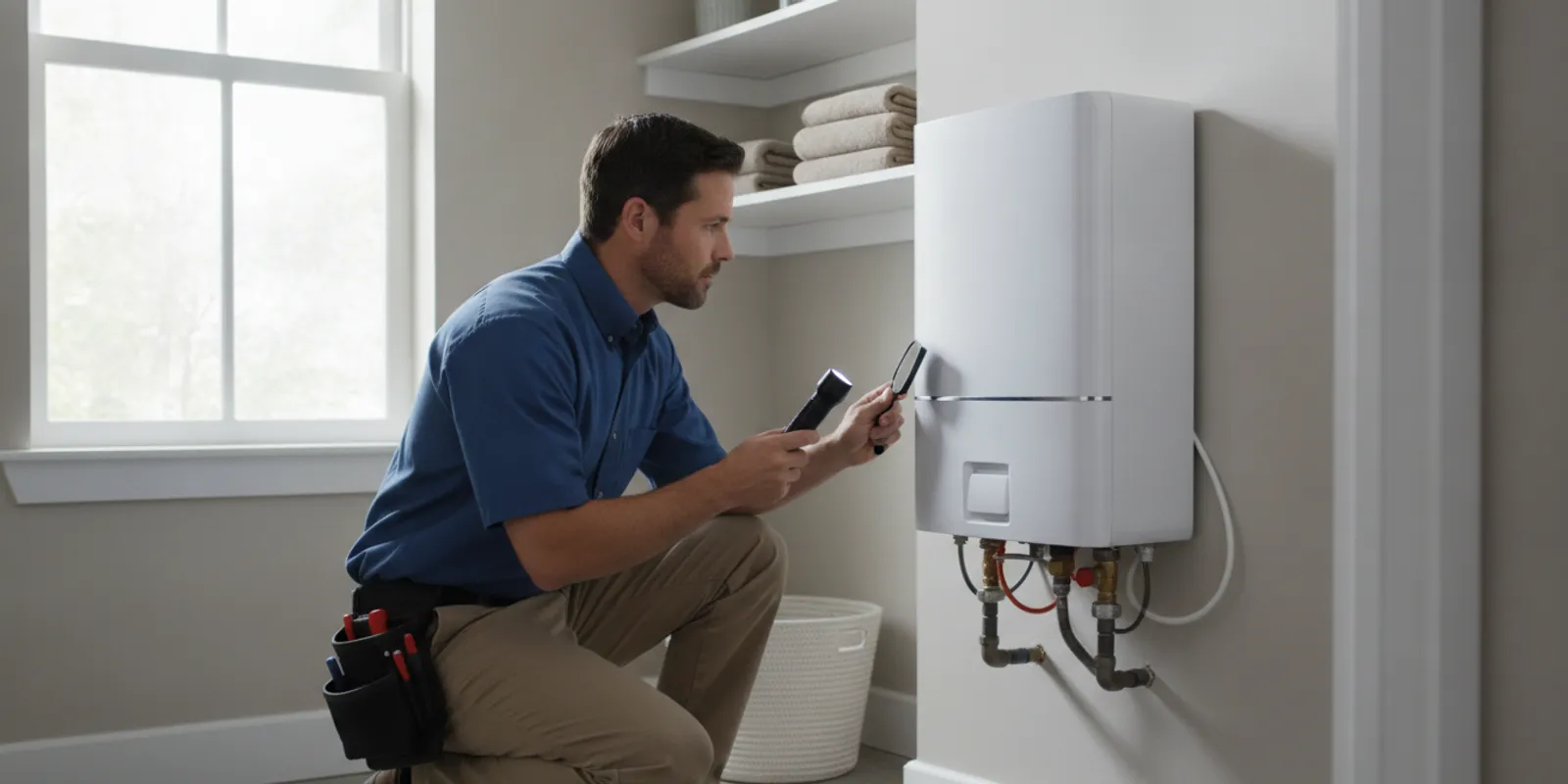
Tankless water heater maintenance helps keep hot water dependable and can reveal developing problems before they interrupt your routine. In Florida, mineral deposits, household water use, and the manufacturer's maintenance schedule all affect what care a system needs. A few checks are simple, but flushing a heater involves specific steps and should not be improvised.
Contact Plumbing by Bishop to discuss water heater service
What does tankless water heater maintenance include?
A tankless unit heats water as it flows through the appliance rather than storing a full tank. That design changes the maintenance routine, but it does not make the system maintenance-free. Water passes through a heat exchanger and small passages. Over time, minerals may collect inside those passages, while debris can gather at a water inlet filter. Combustion-powered models also rely on clear air intake and exhaust paths; some condensing models have a condensate drain that needs attention.
Maintenance generally means following the product manual, keeping accessible filters and vents clear as directed, checking for signs of leaks or unusual operation, and arranging periodic inspection or flushing when the model and water conditions call for it. The right procedure varies by brand and model. If you need to identify the equipment or available service, see Plumbing by Bishop's water heater service information.
Tankless water heater maintenance is different from troubleshooting a heater that has already stopped working. A recurring error code, no hot water, a gas smell, or a leak deserves diagnosis, not an attempt to solve everything with a flush. For a system that is already acting up, review the company's plumbing repair and leak services and arrange an assessment.
Why does mineral scale matter in Florida?
Water contains minerals in amounts that differ by supply and location. When water is heated, some minerals can settle on surfaces inside a heater. A tankless heat exchanger has narrow water passages, so deposits can affect heat transfer and water flow if they build up. Possible clues include hot water that varies unexpectedly, reduced flow at hot taps, unusual noises, or a maintenance indicator. These signs have more than one possible cause, so they do not prove that scale is the problem.
Do not assume that every Florida home has the same water conditions. A private well, municipal supply, treatment equipment, plumbing materials, and household usage can all influence what enters the heater. If you have a water softener or filtration system, make sure it is maintained according to its own instructions; its presence does not automatically eliminate the need to follow the heater manufacturer's schedule. Plumbing by Bishop provides water softener installation and repair information for homeowners evaluating water treatment.
A Northwest Energy Efficiency Alliance research report discusses maintenance issues encountered with tankless water heaters. It is useful background, but it is not a substitute for the instructions for your specific model. You can read the Gas Tankless Water Heater Combined Research Report.
How often should a tankless water heater be serviced?
There is no single interval that suits every tankless water heater. Start with the owner's manual and warranty terms for the exact model. The maker may specify a flushing interval, filter checks, or other maintenance, and local water conditions and use can affect how often attention is needed. A busy household that draws hot water frequently may put different demands on its equipment than a lightly used home.
When the manual gives a range or calls for inspection based on water quality, ask a qualified plumber how to apply that guidance to your installation. If the unit serves a rental property, small business, or a home that is vacant for part of the year, note the usage pattern and any long periods without operation. Keep the model and serial number, purchase or installation records, and prior maintenance receipts together. That information helps the service provider check the correct instructions and warranty requirements.
Do not use a generic online schedule to override a manufacturer's directions. Nor should a homeowner wait for a noticeable failure if the manual calls for routine care. When in doubt, contact the manufacturer or a qualified plumbing professional for model-specific guidance. Plumbing by Bishop has served residential and light commercial customers on the Treasure Coast since 1983; learn more about the company on its about page.
Which maintenance tasks can a homeowner check?
Homeowners can observe the system and take a few low-risk steps when the manual allows them. Do not remove covers, handle wiring, change gas components, or open water connections unless the manufacturer specifically identifies a safe procedure for the owner. If you are unsure, leave the task to a professional.
- Look for visible leaks. Check the floor and the accessible piping around the heater for moisture, corrosion, or staining. Do not touch wet electrical components. If you find water, note where it appears and arrange help.
- Notice changes in performance. Record whether hot water takes longer to arrive, the flow drops, the temperature fluctuates, or the unit shuts off. Check whether the issue affects one fixture or several. These observations help a plumber narrow down the next step.
- Read displayed alerts. Write down an error code exactly as shown and note when it appears. Use the manual to understand what the alert means, but do not repeatedly reset the heater to conceal a recurring warning.
- Keep the surrounding area accessible. Do not stack stored items against the heater or block manufacturer-required clearances. Keep the area dry and follow any instructions about combustible materials, ventilation, or access.
- Check visible air openings and vent terminations. For a gas unit, look from a safe location for obvious blockage or damage at accessible exterior terminations. Do not climb, dismantle venting, or insert tools. Arrange professional help if anything appears obstructed or damaged.
- Check the manual for owner-maintained filters. Some models have an inlet screen the manual describes as homeowner-serviceable. Follow only that model's directions, including any required shutdown and isolation steps. If access requires taking the unit apart or you cannot confidently identify the correct valves, stop and call a professional.
These checks are observations, not a replacement for service. Never ignore a gas odor, signs of combustion trouble, repeated shutdowns, or water near electrical equipment. Move away from a gas smell and follow the gas utility's emergency guidance; do not operate switches or attempt to repair the appliance.
What is involved in flushing and descaling a tankless heater?
Flushing, sometimes called descaling, circulates an approved cleaning solution through the heater's water passages to help remove mineral deposits. It is not the same as simply draining a tank. The process normally uses isolation valves and hoses, and it must be performed in the sequence and with the materials permitted by the manufacturer. A wrong connection, incompatible solution, incomplete rinse, or incorrect valve sequence can damage equipment or create a leak.
Some experienced homeowners may choose to perform this task when the manufacturer provides a clear procedure and the proper service valves are installed. But it is not a good first-time project if the shutoffs are unclear, the manual is missing, the heater is still under warranty, or you are uncertain about safe isolation. Gas and electrical components are not part of a homeowner descaling experiment. A plumber can confirm the model's requirements, inspect connections, and determine whether flushing is actually appropriate.
Do not pour vinegar or another cleaner into the unit through an improvised connection. Do not use a chemical because a video recommends it unless the manufacturer approves it for that model. If the heater has a recurring error, poor hot-water delivery, or a leak, a flush may not address the cause. A professional can distinguish scale from a flow issue, a sensor concern, a venting problem, or another condition that needs repair.
Which settings and system details should you review?
Temperature settings affect comfort and scald risk. Many households use a setting near 120°F, but the appropriate setting depends on the equipment, household needs, and applicable guidance. Check the manual before changing it, and consider that hotter water can increase burn risk, especially for children, older adults, or anyone with limited ability to sense heat. Avoid repeatedly raising the set point to compensate for inconsistent hot water; inconsistent delivery should be investigated.
Confirm what type of unit you have before seeking instructions. Tankless heaters may be gas-fired or electric, and some gas models are condensing while others are not. Their ventilation, power, drainage, and maintenance needs differ. Photograph the rating plate if it is safely accessible, and write down the brand and model. Do not remove a cover or move the unit to find the label.
If you use a recirculation feature, follow the manufacturer's instructions for its schedule and controls. A recirculation setup can affect how and when the heater runs, but the correct configuration depends on the installed system. Similarly, a whole-house filter or softener should be serviced on its own schedule. Neither feature is a reason to skip the tankless heater's required inspections.
When should you call a plumber instead of continuing maintenance?
Arrange professional evaluation when hot water becomes unreliable, the heater displays a persistent alert, flow drops across several fixtures, or you notice water around the appliance. A professional can assess the heater and the connected plumbing rather than assuming that scale is the only possibility. Prompt diagnosis can help limit disruption and identify whether the issue is maintenance, a repair, or a separate plumbing concern.
Stop using the appliance and seek qualified help if you notice a gas smell, soot, scorching, unusual combustion sounds, damaged venting, or water contacting electrical parts. Do not remove the cabinet cover or attempt to adjust gas pressure, electrical connections, or internal controls. For urgent plumbing concerns, review the company's emergency plumbing service information.
For a unit covered by a manufacturer warranty, check the warranty documents before authorizing work. Keep the purchase date, model and serial number, and service records available. Plumbing by Bishop is an authorized warranty service provider for Rheem, GE, Ruud, Bradford White, and North Star Water Softeners. Authorization depends on the appliance and service involved; verify the brand and warranty details when arranging service. See the guide to water heater warranty repair for questions to consider.
What should you compare when planning tankless water heater maintenance?
Use the table as a planning aid, not as a substitute for your owner's manual. The schedule and permitted tasks for your equipment take priority.
| Task or concern | Homeowner's next step | When to involve a professional |
|---|---|---|
| Owner's manual and warranty | Find the model-specific maintenance instructions and save a copy. | Ask for guidance if the manual is missing or the required interval is unclear. |
| Visible condition | Look for moisture, staining, blocked access, or an alert; record what you see. | Arrange an assessment for leaks, recurring alerts, damage, or unusual operation. |
| Inlet filter | Check whether the manual permits owner cleaning and follow its exact steps. | Call if the filter is inaccessible, stuck, or removal requires opening the unit. |
| Flushing or descaling | Confirm whether the manufacturer calls for it and what procedure is approved. | Use a plumber if valves, solution, warranty requirements, or safe steps are uncertain. |
| Gas, venting, or electrical concern | Do not adjust components; move away from immediate hazards. | Seek qualified service for suspected combustion, vent, wiring, or control problems. |
How can you prepare for a maintenance appointment?
A few details make it easier to plan the right visit. Before contacting a plumber, gather:
- The heater's brand, model, and serial number, if safely visible.
- When the symptoms started and whether they happen every time or only at certain fixtures.
- Any displayed error code, copied exactly, and whether it returns after a reset.
- Whether the unit is gas or electric, and whether you know it has a recirculation feature.
- Records of previous flushing, filter cleaning, repairs, or warranty service.
- Information about a water softener or filtration equipment connected to the home.
Describe what you have observed rather than guessing at a failed part. Tell the service provider if water is leaking, if hot water is unavailable throughout the home, or if there are signs of a gas or electrical hazard. Ask what the appointment includes, whether the model's maintenance instructions will be reviewed, and how service-specific pricing is determined. Plumbing by Bishop uses job-based pricing, but the service and final charge depend on the work needed; contact the company for details rather than relying on a generic price estimate.
To check whether service is available in your area, see the Treasure Coast service-area list. You can also browse the company's plumbing tips and videos for general homeowner information.
Contact Plumbing by Bishop to plan your water heater service
Frequently asked questions
Can I maintain a tankless water heater myself?
You can review the manual, observe the unit for leaks or alerts, and perform only tasks the manufacturer clearly identifies as safe for homeowners. Flushing, internal repairs, gas work, and electrical work require the correct procedure and equipment. If anything is unclear, arrange professional service.
Does a water softener mean I can skip descaling?
No. A softener may affect water treatment, but it does not cancel the heater manufacturer's maintenance requirements. Follow the instructions for both the heater and the water-treatment equipment, and ask a plumber or manufacturer how your specific setup affects the service interval.
Should I flush the heater as soon as hot water becomes inconsistent?
Not automatically. Inconsistent hot water can have several causes, and flushing may not correct the problem. Record the symptoms and any error code, then have the heater assessed if the issue persists or affects multiple fixtures.
How do I know how often to schedule service?
Use the maintenance schedule in the manual for your exact model, along with its warranty requirements. If the schedule depends on water conditions or you cannot find the instructions, ask the manufacturer or a qualified plumber for model-specific guidance.
Keep maintenance tied to your specific heater
The safest approach is to identify your model, follow its maintenance instructions, monitor changes in performance, and avoid improvised flushing or internal adjustments. If you notice a leak, persistent alert, or unreliable hot water, share the details with a qualified plumber so the right next step can be identified.