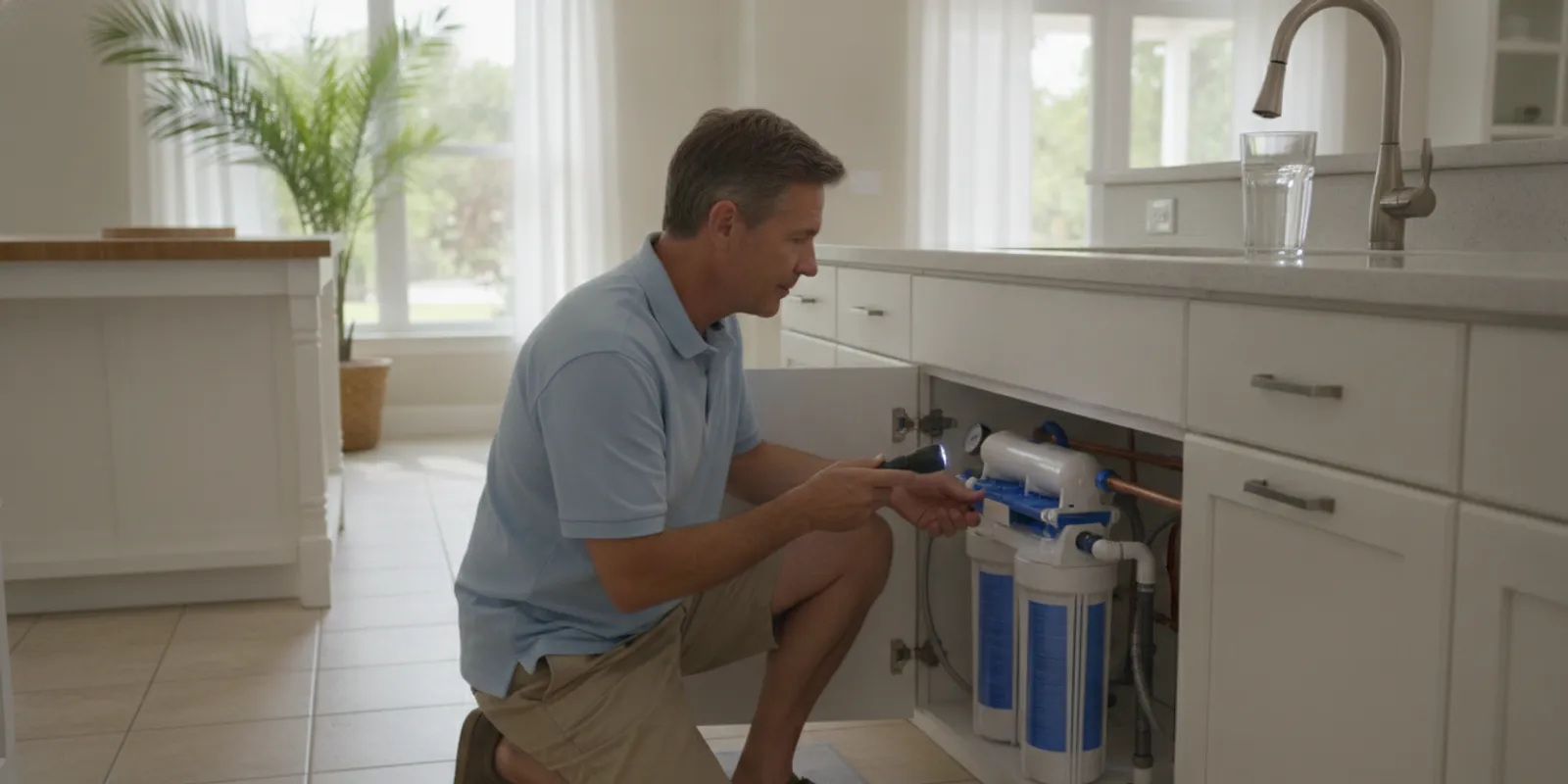
If your filtered water tastes different, comes out slowly, or you notice a drip near the equipment, you may need water filtration service. Start by checking what changed and when. A clear symptom can help you decide whether a simple filter check is appropriate or a plumber should inspect the system.
Contact Plumbing by Bishop to discuss your water filtration concern
A water treatment system can include a drinking-water filter, a whole-home unit, a softener, or more than one device. Each setup has different filters, media, valves, and maintenance needs. The right next step depends on the equipment and on the water problem you are trying to solve. This guide covers common warning signs, safe checks, service decisions, and what to have ready when you request help.
What changes suggest a water filtration system needs service?
Pay attention to changes from your system’s normal performance. A symptom does not prove that a filter has failed; it is a useful reason to check the equipment and, if needed, get professional guidance.
- Water tastes or smells different. A return of an unwanted taste or odor may mean a filter is due for service, but the cause could also be elsewhere in the plumbing or water supply.
- Flow is slower than usual. A clogged or exhausted filter can restrict flow. A closed valve, kinked line, or another plumbing issue can also reduce it.
- Water looks different. Cloudiness, discoloration, or particles deserve attention. Note whether the change occurs at one tap or throughout the home.
- There is moisture around the unit. A wet cabinet, damp floor, or visible drip can come from a loose connection, housing, tubing, or nearby plumbing. Do not ignore recurring moisture.
- The system cycles, makes unusual sounds, or shows an alert. Record the indicator or sound and check the product manual for its meaning rather than guessing.
- A scheduled filter or media change is overdue. Maintenance timing varies by system, usage, and water conditions. Use the manufacturer’s instructions for the specific model.
Consider whether the change is limited to the filtered faucet or appears at other fixtures too. A single point-of-use filter affects only the water it treats. If several taps change at once, the issue may involve the main supply, plumbing, or a whole-home treatment device. This distinction helps a service professional narrow down what to inspect.
What should you check before arranging service?
Start with checks that do not require opening a pressurized housing or taking apart plumbing. If you cannot identify the equipment or are unsure how to isolate it, stop and consult the product instructions or a qualified plumber.
- Identify the system. Look for a model label, installation paperwork, or maintenance record. Note whether it is under a sink, at the point where water enters the home, or connected to a softener.
- Check the filter schedule. Compare the date of the last change with the manufacturer’s stated schedule. Do not assume that every cartridge needs changing at the same interval.
- Look for a simple obstruction. Check accessible tubing for a sharp bend and make sure the relevant shutoff valve has not been turned off. Do not force a stuck valve.
- Inspect the area for moisture. Dry the outside of the cabinet or floor, then observe whether water returns. Keep water away from electrical equipment and protect stored items.
- Read the indicator and manual. A light, beep, or display can have a model-specific meaning. Write down the message or take a photo to share with the service provider.
- Compare affected fixtures. Check whether the change appears only at the treated outlet, at other cold-water taps, or throughout the home. Use a clean glass and note what you observe.
Do not remove a filter housing if you are not familiar with the unit’s shutdown and pressure-release procedure. A pressurized component can spill water when opened. Avoid mixing replacement cartridges from uncertain sources or forcing parts that do not fit. The system manual is the best starting point for model-specific maintenance.
If a leak is active, use an accessible shutoff only if you can do so safely and know which valve controls the equipment. If water continues to escape or the shutoff is not clear, arrange prompt plumbing help. For other plumbing symptoms that accompany the filtration problem, see Plumbing by Bishop’s plumbing repairs and leak detection information.
Why can water quality or flow change?
Several issues can look alike from the tap. A filter that has reached its service limit may affect taste or flow, but it is not the only possibility. Changes can also relate to a loose connection, a valve position, pressure, a separate fixture problem, or a change in the incoming water. Avoid assuming a particular contaminant based only on taste, odor, or appearance.
The U.S. Environmental Protection Agency’s Home Drinking Water Filtration Fact Sheet explains that treatment devices are designed around different treatment needs. A filter that addresses one concern may not address another. If you are concerned about a specific water quality issue, use appropriate testing and choose equipment based on that result rather than selecting a system by a general claim.
A treatment unit also needs upkeep. The New Jersey Department of Environmental Protection notes in its well water treatment guidance that poorly maintained treatment equipment may not work effectively and can create other water quality concerns. Although this resource is written for private wells in New Jersey and is not a Florida-specific water assessment, the maintenance point is useful: follow the instructions for your own equipment and do not leave required service indefinitely overdue.
For people comparing filter information, NSF offers a home water treatment overview with guidance on selecting treatment systems and replacing filters as required. Check the exact product’s performance claims and maintenance instructions. A certification or label should be matched to the specific treatment claim you need, not treated as proof that a device addresses every water concern.
When is a filter change enough, and when do you need a plumber?
A routine cartridge replacement may be straightforward when the system is known, the correct part is available, the manual gives clear steps, and there are no leaks or other symptoms. Follow the shutdown, installation, and flushing instructions exactly. If the filter change does not restore normal flow or water quality, do not keep replacing parts without diagnosing the cause.
Professional inspection makes more sense when a housing leaks, connections are corroded or difficult to reach, the system has several stages, the equipment is unfamiliar, or symptoms return soon after maintenance. A plumber can also help when a flow problem appears at several fixtures, when the installation ties into other plumbing, or when the system may need repair beyond a standard filter change.
Plumbing by Bishop provides plumbing services on the Treasure Coast, including water treatment or softener warranty service. The company is an authorized warranty service provider for North Star Water Softeners. Its manufacturer-authorized warranty service for Rheem, GE, Ruud, and Bradford White applies to those water-heater brands; it should not be read as factory authorization for every filtration product. If a system is under warranty, check its paperwork and ask about the correct service route before arranging work. You can learn more about water softener installation and repair or review the company’s broader plumbing services.
How do you decide between repair and replacement?
There is no single age or symptom that settles the decision for every system. A repair may be sensible when the unit is otherwise in good condition, replacement parts are available, and the equipment still fits the household’s water needs. Replacement may deserve consideration when the system has repeated failures, essential parts are no longer available, the unit cannot be maintained as directed, or the original treatment goal has changed.
Ask the service professional to explain what failed, what repair would address, and whether other components show wear. If replacement is suggested, ask how the proposed system matches the water concern, expected household use, available installation space, and maintenance needs. Request service-specific pricing or an estimate before authorizing work; costs depend on the equipment and the work required, so do not rely on a generic figure.
| What you observe | Reasonable first step | When professional service is useful |
|---|---|---|
| Filter is due and there are no other symptoms | Check the model instructions and correct replacement part | If the unit is unfamiliar or the prescribed change does not restore normal operation |
| Flow is reduced at the treated faucet only | Check the filter schedule and accessible valve or tubing | If flow remains low after the instructed maintenance or the housing is difficult to open safely |
| Water quality seems different at several fixtures | Note which taps are affected and whether cold water is also changed | To distinguish a treatment-system issue from a wider plumbing or supply concern |
| Water is leaking around the equipment | Protect nearby belongings and use a safe, known shutoff if appropriate | Promptly, especially if the leak continues or the source is unclear |
| Repairs are recurring or the system no longer fits the need | Gather service and maintenance history | To compare the condition and repair needs of the existing unit with replacement options |
What should you ask during a service assessment?
Ask the plumber to explain which part of the system appears to be involved and what observations support that conclusion. If the issue is low flow, ask whether it is limited to the treated outlet or points to a broader plumbing condition. If there is a leak, ask where it originates and whether the affected connection or component needs repair. The goal is to understand the finding, not to assume that every symptom calls for a new filter or a new system.
Before approving work, clarify what the proposed service includes, whether additional parts may be needed, and how the system should be checked after the work. Ask what maintenance is recommended for this model and which signs should prompt another call. If equipment is covered by a warranty, confirm whether the planned provider and repair route meet the warranty requirements. Keep the answer with the system records so the next service decision starts with useful history.
For replacement discussions, ask how the suggested equipment addresses the identified water concern and what maintenance it will require. A treatment choice should match the problem rather than rely on broad promises. If water composition has not been established, ask whether testing is appropriate before selecting equipment. These questions help you compare a repair with replacement on practical grounds: the fault, the treatment goal, the upkeep, and the work needed to connect the device safely.
What information helps a water filtration service visit?
A few details make it easier to discuss the problem and plan a useful inspection. Before contacting a plumber, gather what you can without dismantling the equipment:
- The manufacturer, model number, and approximate installation date, if known.
- The date and type of the last filter or media change, plus the part number if available.
- A short description of what changed and when it began: taste, odor, appearance, flow, noise, alert, or leak.
- Which taps are affected and whether the issue occurs with hot water, cold water, or both.
- Photos of the unit, label, display, and any visible moisture, taken from a safe position.
- Warranty documents, previous service notes, and any water-test results you already have.
Do not delay urgent plumbing attention to collect paperwork if water is actively escaping. When the issue is not urgent, these notes help the service conversation stay specific. They can also clarify whether the question concerns a drinking-water filter, a whole-home filter, a softener, or a different plumbing condition.
How can you prevent repeat filtration problems?
Keep the equipment manual and a simple service record in one place. Record the installation date, filter changes, model and part numbers, and any unusual symptoms. Set a reminder based on the manufacturer’s instructions rather than adopting a schedule meant for a different system.
Use the replacement components specified for the model. An incorrect cartridge can fit poorly or fail to deliver the intended performance. After maintenance, follow the instructions for flushing and checking for leaks. If the water does not return to normal or a connection remains damp, stop using the unit if the manual advises it and ask for assistance.
Review the treatment goal from time to time, especially if household needs change or you have new test results. A filter is not a substitute for testing when you need to identify a specific water concern. The EPA fact sheet and NSF overview linked above can help you understand why the treatment claim, equipment choice, and upkeep instructions need to match. A plumber can assess installation and plumbing concerns, while water testing may be needed to identify water composition.
For additional homeowner guidance, browse Plumbing by Bishop’s plumbing tips and news. The company serves residential and light commercial customers across the Treasure Coast; its service-area information outlines the communities it serves.
Frequently asked questions
How often should a water filter be replaced?
It depends on the filter and system. Follow the manufacturer’s instructions for the exact model and account for any indicator or stated capacity. Do not use a generic interval as a substitute for the product guidance.
Can a water filter cause low water pressure?
A clogged or overdue filter can restrict flow through the treated outlet. A closed valve, bent line, or separate plumbing issue can also cause low flow. If several fixtures are affected or the problem remains after recommended maintenance, have the plumbing checked.
Should I use a water filter if my water tastes or smells unusual?
First note where the change occurs and consider appropriate water testing if you are concerned about a specific water quality issue. Taste and odor alone do not identify a contaminant or establish which treatment is needed. Select any equipment for a clearly identified treatment goal.
Is it better to repair or replace an older filtration system?
Compare the actual fault, parts availability, condition of the remaining equipment, maintenance requirements, and whether the system still meets your needs. Ask for an explanation of the options and service-specific pricing before deciding.
Get a clear next step for your water treatment system
A change in taste, flow, or visible condition is a reason to investigate, not a reason to guess at the cause. Check the model guidance, note what is affected, and arrange professional help if there is a leak, a persistent problem, or a repair beyond routine maintenance. A focused inspection can help you understand whether the system needs maintenance, repair, or a different solution.
Contact Plumbing by Bishop to request water filtration service
With the system details and symptoms in hand, you can have a more useful conversation about the next step for your home or business.