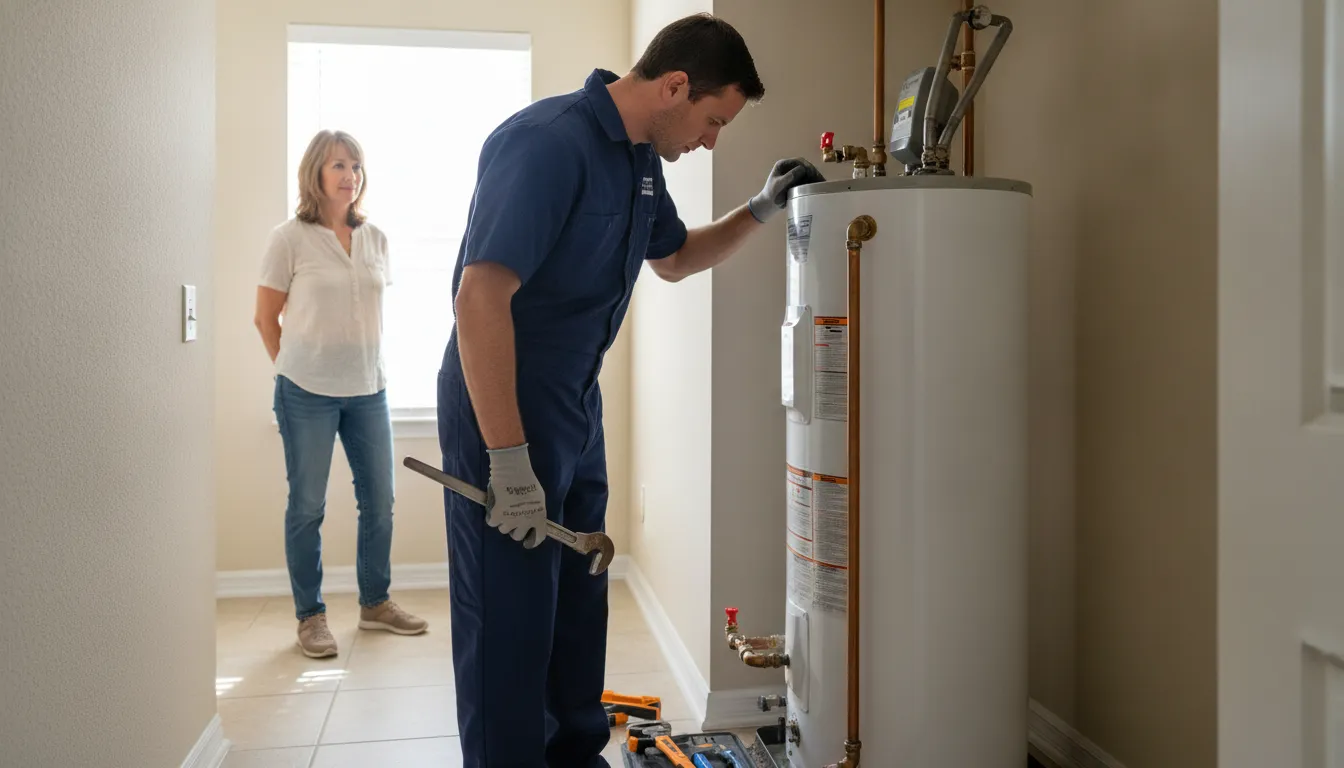
When a water heater stops keeping up, starts leaking, or sounds different, the safest first step is not taking the cover off. For homeowners in Florida's Treasure Coast, common water heater problems can involve water damage, fuel or electrical hazards, or a warranty path that depends on the unit's brand and records.
Contact Plumbing by Bishop for help assessing your water heater.
Common water heater problems are best handled by sorting what you can safely observe: no hot water, visible leaking, unusual noise, a gas smell, an electrical burning odor, or dangerously hot water. Stop using the unit and seek professional help when a safety concern or active leak is present. Otherwise, note the symptoms, identify the brand and model if accessible, and gather warranty paperwork before service.
A clear record of what happened, when it started, and what you can see without opening the unit helps a qualified plumber choose the right next step. In Florida's heat, humidity, and storm-prone conditions, that triage begins with understanding which signs need prompt attention.
How to Triage Common Water Heater Problems in Florida
A water heater symptom does not always tell you how quickly you need help. The same home may experience lukewarm water, a new sound, or a small puddle for different reasons. This guide uses a practical triage approach: decide whether you can monitor the observation briefly, whether you should stop using the unit, or whether you should contact a qualified plumber now.
Begin with what you can safely observe without removing covers, touching wiring, relighting equipment, or opening gas components. Note when the symptom began, whether it affects every fixture, and whether water is actively spreading. A photo taken from a safe distance can help a technician understand the situation before arriving.
| Symptom | Urgency signal | Next safe action |
|---|---|---|
| Less hot water | No leak or odor | Record timing; contact a plumber if it continues. |
| Dripping or pooling water | Active flow, spreading water, or water near electrical equipment | Stop using the heater if it is safe to do so, limit nearby damage, and contact a plumber promptly. |
| Rumbling, popping, or another new noise | Noise is persistent, worsening, or paired with reduced performance | Do not ignore it. Avoid opening the unit and arrange professional evaluation. |
| Gas smell, burning odor, or dangerously hot water | Immediate safety concern | Stop using the unit, move people away from the area, and seek professional help right away. |
Florida heat and humidity can make a small leak harder to notice until surrounding materials are damaged. When the observation crosses from performance trouble into water, odor, or temperature safety, treat it as a service decision rather than a repair project.
Which Water Heater Symptoms Need Same-Day Attention?
Some common water heater problems can wait for a scheduled evaluation. Others create an immediate safety or property risk. If you notice any of the symptoms below, stop using the heater as much as safely possible, keep people away from the area, and contact a qualified plumber for guidance.
Gas smell near the water heater
A gas odor is not a routine performance complaint. Do not operate switches, use an open flame, or investigate closely. Move away from the area and follow your gas utility's emergency guidance. Contact a qualified plumber once the immediate gas-safety concern has been addressed.
Active leaking or water collecting nearby
A small puddle can become a larger property-damage problem, especially when the heater is near finished flooring, stored belongings, or electrical equipment. Avoid using the heater and do not remove covers or reach into wet areas. From a safe location, note where water appears to be coming from and whether the flow is increasing. Same-day professional attention is appropriate for an active leak.
Electrical or burning odor
A burning smell, smoke, buzzing, scorching, or visible damage around an electric water heater calls for caution. Stay clear of the unit and do not touch wet electrical components or attempt to open the access panels. If there is smoke or an active fire risk, leave the home and call emergency services. Otherwise, arrange qualified plumbing or electrical evaluation promptly.
Water that is dangerously hot
Uncontrolled or suddenly scalding water can injure someone before the underlying issue is understood. Stop using hot water at affected fixtures, keep children and vulnerable adults away, and avoid adjusting internal controls unless a qualified professional directs you. Tell the plumber when the temperature changed and which fixtures are affected.
Sudden loss of hot water
A complete, sudden loss of hot water is more urgent when it occurs with leaking, unusual odors, electrical symptoms, or other changes. Do not keep cycling the equipment to force it to run. Record the brand and model if they are visible without removing panels, then request an evaluation. For a local warning-sign reference, review these water heater failure signs in Stuart.
Unusual noises also deserve attention rather than dismissal. Rheem notes that persistent noise can precede performance problems or system failure, so include when the sound began and whether it is getting louder when you contact a professional: Rheem's water heater warning-sign guidance.
What Should You Record Before Contacting a Plumber?
A few careful notes can make a water heater service visit more efficient. Before contacting a plumber, record what you can observe without opening panels, removing covers, or touching hot, electrical, or gas components. Your notes do not need to identify the cause. They simply give the technician a clearer starting point when reviewing common water heater problems.
- Brand, model, and serial number: Write down the information from the rating plate if it is safely visible. Do not move the unit or remove a panel to find it.
- Fuel type: Note whether the heater appears to use electricity, natural gas, or propane. If you are unsure, say so rather than guessing.
- Approximate age: Record the installation date if you know it. If not, an approximate year or the date you moved into the property can still provide useful context.
- Symptom timing: Note when the problem began, whether it is constant or intermittent, and what you noticed first. Include whether the water is cold, lukewarm, unusually hot, discolored, or unavailable.
- Leak location: If you see water, describe where it appears, such as near the tank, a connection, or the floor. Note whether it is a drip, a small puddle, or active flow.
- Photos from a safe distance: Take clear pictures of the unit, rating plate, visible connections, warning labels, and any water on the floor. Keep away from exposed wiring, gas components, steam, or hot water.
- Prior work: List recent repairs, installations, unusual noises, repeated shutoffs, or changes in water use that may be relevant.
- Warranty paperwork: Gather the original invoice, registration information, manuals, or previous service records if available. These documents may help with routing and documentation, but they do not guarantee coverage.
- Access details: Explain where the heater is located, whether a gate or alarm affects entry, and whether the technician will need access to a utility room, attic, garage, or other restricted area.
Accurate details help a plumber prepare for diagnosis, identify the appropriate service path, and discuss documentation or manufacturer requirements. They cannot replace an on-site evaluation, and you should not attempt a repair to collect more information.
How Do Warranty Terms Change the Next Step?
When common water heater problems lead to a service visit, the brand and available warranty records can help determine which service path makes sense. Gather the manufacturer name, model and serial number if they are safely visible, approximate installation date, and any warranty paperwork or prior service records. These details help a plumber document the situation and review the applicable terms without requiring you to open panels or handle components.
Plumbing by Bishop is an authorized service provider for Rheem, GE, Ruud, and Bradford White water heaters. If your unit is one of these brands, the team can follow the appropriate service process, which may include diagnosis, documentation, parts discussions, or other steps required by the manufacturer. For brand-specific context, see this Bradford White water heater guidance.
Authorization does not mean that every symptom, part, labor charge, or replacement decision will be covered. The manufacturer's current warranty terms control eligibility and requirements, and coverage can depend on the model, installation details, dates, and documented conditions. A service provider can explain what those terms appear to require, but should not promise approval or a particular outcome before evaluating the heater and reviewing the records.
One distinction matters for accurate expectations: Plumbing by Bishop's North Star authorization applies to water softeners, not water heaters. If the heater carries another brand, bring the same identifying information and ask about the available service route rather than assuming factory-authorized coverage. Clear records give the technician a better starting point and help keep the conversation focused on the unit's actual condition and the manufacturer's requirements.
Have questions about a water heater symptom? Contact Plumbing by Bishop for guidance.
What Should You Avoid Doing Before Service?
When a water heater is leaking, producing an unusual odor, or delivering dangerously hot water, the safest response is to limit contact and arrange professional help. Use this stop-actions checklist while you wait:
- Do not open gas, electrical, sealed, or safety panels. Internal components can expose you to gas, electricity, pressure, or very hot surfaces. Do not attempt to test wiring, adjust gas controls, or dismantle safety devices.
- Do not repeatedly reset a failing unit. A reset may not address the underlying problem. Repeated attempts can delay diagnosis and may allow a fault to continue. Leave the unit alone and tell the plumber what happened, including when it stopped working or began acting differently.
- Do not take the heater apart. Avoid removing covers, valves, heating components, insulation, or connections. Even if a part appears accessible, changing it can create a new hazard and make the original symptoms harder to evaluate.
- Keep children and pets away from hot water and the equipment. Do not investigate a discharge, puddle, or hot tap by hand. If water is scalding, leaking actively, or spreading toward electrical equipment, keep everyone at a safe distance and seek prompt professional help.
- Do not handle or consume questionable water while investigating. Tap water is not sterile, and the CDC notes that some germs can grow in household pipes when water sits still. This is a reason to avoid making assumptions about water quality, not a reason to open the heater or attempt an improvised flush. Read the CDC's waterborne germs guidance for the narrow water-safety context.
- Observe from a safe distance and document what you see. Note odors, sounds, visible water, temperature changes, and whether the issue is ongoing. Photograph the area only if you can do so without touching the unit or entering a hazardous space. Share those observations with a qualified plumber.
What Happens During a Professional Water Heater Evaluation?
A professional evaluation begins with observation, not assumptions. The technician considers what you have noticed, when it began, and whether the symptoms are consistent. That may include no hot water, changing temperatures, unusual sounds, visible moisture, discolored water, or another concern. Your description helps focus the visit without requiring you to diagnose the cause.
Next, a qualified technician performs safe checks appropriate to the equipment. This can include looking at the unit, connections, surrounding area, controls, venting where applicable, and signs of leakage or wear. The technician should work within the safety requirements for the heater's fuel type and design rather than asking a homeowner to open panels or handle gas or electrical components. If the concern involves a gas unit, our gas water heater repair guidance offers adjacent information, but it is not a substitute for an evaluation.
The goal is a diagnosis that explains what was observed and what it may mean. Depending on the findings, the technician can document appropriate options, which may involve repair, installation planning, or additional information before a decision is made. No responsible evaluation should promise a particular result before the equipment and conditions have been assessed.
If the heater may involve manufacturer coverage, have the brand, model information, and warranty paperwork available if you can access them safely. Plumbing by Bishop provides warranty-service paths for Rheem, GE, Ruud, and Bradford White water heaters, subject to the manufacturer's terms. Warranty operations can include diagnostics, documentation, parts discussions, and customer education about coverage. That does not guarantee approval or a covered outcome.
During the visit, protecting the home is part of professional service. Plumbing by Bishop's clean-service standards include background-checked, drug-tested technicians and an expectation of leaving the work area as clean as or cleaner than it was found. The evaluation should leave you with clear observations and documented next steps, not pressure to choose an outcome you do not understand.
Where Can Treasure Coast Homeowners Get the Right Water Heater Help?
For homeowners in Stuart, Jensen Beach, Palm City, Hobe Sound, and Port St. Lucie, the right next step is a clear evaluation based on what the heater is doing, not a guess about which part has failed. A qualified plumber can review the symptom, identify whether the unit needs repair, installation support, or warranty-service routing, and explain the available path before work begins.
Plumbing by Bishop serves residential and light commercial customers across the Treasure Coast. The team can help document the heater's brand, model information, fuel type, and visible symptoms, then use those details to guide the visit. If the unit is a Rheem, GE, Ruud, or Bradford White water heater, Plumbing by Bishop is an authorized service provider for those brands. Any warranty coverage still depends on the manufacturer's terms, so keep available paperwork and purchase information nearby.
Professional service should also protect the condition of your home. Plumbing by Bishop's service standards emphasize clean workmanship, background-checked technicians, and drug-tested technicians. That supports a more comfortable visit while the technician investigates the issue and discusses practical options.
If you are still deciding how urgent a symptom may be, review these water heater failure signs in Stuart. After the immediate concern is addressed, the guide to Florida water heater maintenance offers a separate next read focused on ongoing care rather than current symptom triage.
Contact Plumbing by Bishop for water heater help
Frequently Asked Questions
When should I stop using a water heater and seek service?
Stop using the unit and seek professional help when you notice an active leak, a gas smell, an electrical or burning odor, dangerously hot water, or signs of uncontrolled temperature. Move people away from hot water and document what you can from a safe distance. These observations help a plumber judge urgency without requiring you to open the unit.
What should I record before contacting a plumber?
Write down the heater brand, fuel type, symptom, when it started, whether hot water is still available, and where any visible water is coming from. If the model and serial numbers are visible without removing panels, photograph them along with the surrounding area. Note recent service, unusual noises, and any access details that could affect the visit.
Which warranty documents should I have ready?
Gather the original warranty paperwork, installation records, purchase information, prior service invoices, and clear photos of the rating plate if available. Plumbing by Bishop is an authorized service provider for Rheem, GE, Ruud, and Bradford White water heaters. Authorization does not guarantee coverage, because the manufacturer determines eligibility under its current terms.
What water heater observations are safe to make before service?
You can observe whether the unit is leaking, whether the water is hot or cold, where the controls and rating plate are located, and whether unusual sounds or odors are present. Do not open gas or electrical panels, dismantle components, repeatedly reset the heater, or handle hot-water connections. Share your notes and photos with the plumber instead.
Ready to Take the Next Step?
If your water heater symptom is difficult to interpret, a professional evaluation can help you understand the safest service or warranty path. Have your notes and any safely captured details ready, then contact Plumbing by Bishop for help with diagnosis or the next step.