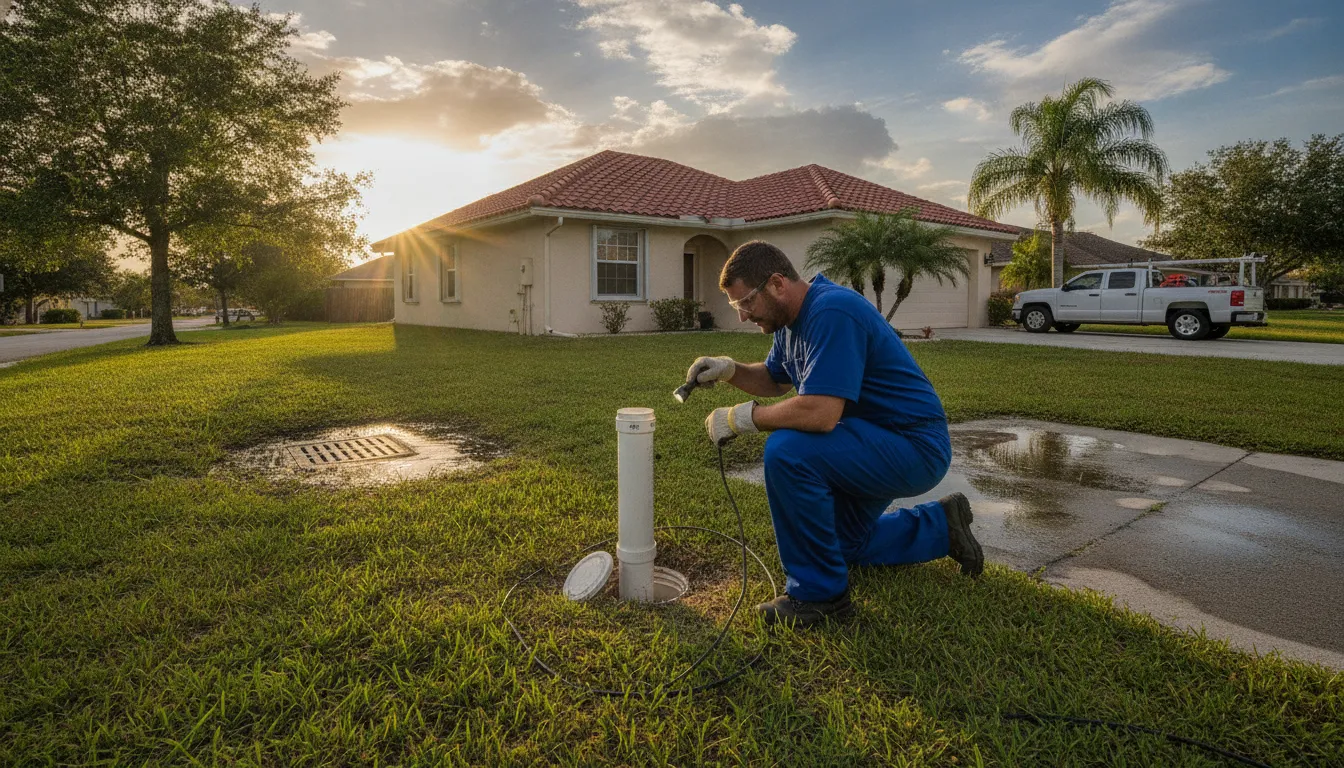
Emergency sewer line repair may be necessary when wastewater backs up repeatedly, floor drains overflow, or sewage appears inside or outside a property. Stop using unnecessary water, keep people and pets away from contaminated standing water, and arrange a professional assessment promptly. A backup does not automatically prove that the private sewer line has failed. The cause may involve a fixture, an accessible section of private piping, or a municipal main.
Contact Plumbing by Bishop about your sewer concern.
For Treasure Coast homeowners and light commercial property owners, the first priority is separating a genuine wastewater emergency from a smaller localized blockage while protecting the property and the people inside it. Understanding the warning signs can help you decide when the situation requires immediate attention and what information to share with a plumbing professional.
When Does Emergency Sewer Line Repair Become Necessary?
A sewer backup deserves prompt attention when wastewater is entering the home or business, multiple fixtures are affected, or water use could make the problem worse. That does not automatically mean the sewer lateral has failed. A lateral is the private pipe connecting a property to a municipal sewer main, and a backup can also result from a localized blockage, a fixture drain problem, or an issue beyond the property line.
The practical emergency threshold is the combination of active wastewater, health concerns, and the risk of additional property damage. If sewage or potentially contaminated standing water is present, keep people and pets away from it. The Centers for Disease Control and Prevention advises avoiding floodwater that may contain sewage because contact can cause illness. Heavy rain or flooding can also disrupt wastewater systems, so conditions outside the building may be part of the diagnosis rather than proof of a broken private line.
Reduce water use while arranging an assessment. Avoid unnecessary flushing, showers, laundry, and other activities that send more water into the affected system. Do not rely on repeated plunging or chemical drain products when several fixtures are backing up, especially if wastewater is already surfacing. Those steps may fail to address the actual location of the problem and can complicate safe service.
Plumbing by Bishop documents emergency coverage for sewer backups and drain emergencies for residential and light commercial customers across the Treasure Coast. A professional can help determine whether the concern is a drain blockage, a private sewer-line issue, or a problem requiring coordination with the municipality. For related service information, review the guidance on professional main sewer line service.
Prompt assessment is not about assuming the worst. It is about limiting water discharge, protecting people from contamination, and identifying the correct repair path before a manageable plumbing problem causes more damage.
Which Sewer Warning Signs Should Prompt a Call?
A single slow drain may be a fixture-level clog. The concern rises when several plumbing fixtures change at about the same time, or when wastewater appears where it should not. These patterns can point to a larger drainage or sewer problem, but they are clues rather than proof that a private sewer line has failed.
- Multiple slow drains: Sinks, showers, or tubs draining slowly together may indicate that wastewater is not moving freely beyond one fixture.
- Toilets draining slowly: A toilet that repeatedly struggles to clear, especially alongside other slow fixtures, deserves more attention than an isolated minor clog.
- Overflowing floor drains: Water or wastewater rising through a floor drain can signal a backup in a lower section of the drainage system.
- Visible sewage outdoors: Sewage surfacing in the yard or near an exterior cleanout is a reason to keep people and pets away and arrange professional assessment.
- Repeated backups: A problem that returns after temporary clearing should not be treated as resolved simply because fixtures work briefly again.
The Centers for Disease Control and Prevention lists slow-draining sinks, slow-draining toilets, overflowing floor drains, and sewage visible outside the home among signs that a wastewater system may not be working properly. These signs can also result from a localized blockage, a damaged private line, saturated ground, or another condition. A licensed plumber needs to identify the source before anyone can determine whether emergency sewer line repair is appropriate.
Responsibility is another important part of the diagnosis. Your private sewer lateral carries wastewater from the property toward the municipal main. A backup may be in that private section, or the issue may involve the public sewer system. Guidance from the City of Independence, Kansas, recommends contacting a licensed plumber first to determine whether the backup is on the private line, then notifying the city if the plumber identifies a possible municipal problem. Local procedures vary, but separating those possibilities helps direct the next call.
If several fixtures are affected or wastewater is present, review when to call an emergency plumber and limit further water use until the cause is assessed.
What Should You Do Before Help Arrives?
While you are arranging emergency sewer line repair, focus on limiting additional wastewater and keeping people away from possible contamination. These steps are precautions, not a substitute for professional assessment.
- Reduce water use throughout the property. Stop unnecessary dishwashing, laundry, showers, and other activities that send water into the drainage system. Flush toilets as little as possible. The CDC recommends reducing water use during wastewater emergencies, including limiting toilet flushing and other household water use. Read the CDC wastewater safety guidance for additional precautions.
- Keep people and pets away from standing water. Do not assume a puddle, overflow, or damp area is harmless if it may contain sewage. Avoid walking barefoot outdoors or through potentially contaminated areas. If someone must handle contaminated material, waterproof gloves and boots can reduce direct contact.
- Protect cuts, sores, and wounds. Keep sewage and contaminated water away from open skin. Cover wounds securely, and avoid entering an affected area if you can wait for trained help. Sewage-contaminated water may contain harmful bacteria, parasites, or viruses, so direct contact can make people sick.
- Wash your hands often. Use soap and clean water after contact with the area, after removing gloves, and before eating or preparing food. If clothing or shoes contact sewage, keep them separate from clean items until they can be washed. The DC Health sewage exposure guide provides general hygiene and protective-equipment advice.
- Document what you can observe from a safe location. Note when the problem began, which fixtures are affected, whether water is rising or receding, and whether recent rain or flooding may be relevant. Take photos or video only from dry, stable ground. Do not enter a flooded room, open a cover, move through contaminated water, or approach an unsafe area to collect better evidence.
- Share exposure concerns with a healthcare provider. If anyone becomes ill after direct sewage contact, or if contaminated water enters a wound, tell a healthcare professional about the exposure. Do not attempt to diagnose the cause yourself.
How Does a Professional Diagnose a Sewer Emergency?
A sewer backup does not automatically mean the entire sewer line has failed. A professional first narrows down where the problem is occurring and how broadly it is affecting the property. The starting point may be one fixture, the private sewer line that serves the building, or a municipal main beyond the property line.
Separating a fixture problem from a line problem
Be ready to describe what happened and when. Tell the plumber which fixtures are affected, whether they back up together, whether water rises when another fixture runs, and whether you have seen an overflowing floor drain or wastewater outside. Note any recent heavy rain, unusual odors, or changes in drainage. These observations can help distinguish a localized fixture issue from a blockage or failure farther along the system.
Access points also matter. If you know where the property’s cleanout is located, explain whether it is easy to reach and whether there is standing water around it. Do not open or handle a contaminated access point unless it is safe to do so. The goal is to provide useful information without exposing yourself to sewage.
Determining who may be responsible
One important diagnostic question is whether the backup is on the private line or connected to the municipal sewer system. A sewer department in Independence, Kansas, advises property owners to contact a licensed plumber first so the private line can be assessed. If that assessment points to a city sewer issue, the municipality should then be notified. The same responsibility split can be relevant for Treasure Coast properties, although local procedures vary. Review the municipal guidance on private-line and city sewer concerns for an example of how that handoff may work.
Ask what the professional found, which section appears affected, what evidence supports that conclusion, and what options should be considered next. Ask whether access, nearby surfaces, permits, or municipal involvement could change the repair plan. A professional inspection is appropriate when wastewater-system damage is suspected, as the CDC advises. For related service context, see professional main sewer line service. Clear answers help you make a sound decision about emergency sewer line repair without guessing at the cause or method.
Why Do Repair Options Depend on Line Location and Condition?
A sewer backup does not identify the failed component by itself. The right path depends on where the problem is, how much of the line is affected, what surrounds it, and whether the responsibility belongs to the property owner or a municipal system. Heavy rain and flooding can saturate the ground and interfere with wastewater-system operation. In some circumstances, flooding can also cause a septic tank to collapse or move out of position, according to the Centers for Disease Control and Prevention.
| What the assessment finds. | Why it matters. | What the next step may involve. |
|---|---|---|
| An accessible section has a localized problem. | The affected area may be easier to reach, but the line still needs to be evaluated in context. A visible symptom may not reveal the full cause. | A plumber determines the appropriate repair for that section and checks whether connected fixtures or line segments are also contributing to the backup. |
| The suspected damage is beneath a finished surface. | Flooring, concrete, landscaping, walls, and other finished surfaces can affect access, protection of the property, permitting, and restoration planning. | The repair plan accounts for safe access and for restoring the surrounding area after the plumbing work is complete. The method should be selected from the actual site conditions. |
| The line shows broader deterioration. | Age, repeated problems, shifting soil, flooding, or multiple damaged areas can make a single localized correction inadequate. | The professional explains whether the condition calls for a targeted repair or a broader solution. The recommendation should reflect the line’s condition, not just the latest backup. |
| The evidence points toward a municipal issue. | A property-side sewer lateral and a public main are different parts of the system, with different responsible parties. | The private plumbing should be separated from a possible municipal problem. A local government sewer department advises contacting a licensed plumber first, then notifying the municipality if the plumber identifies a city-system concern. |
That is why repair recommendations should not be based on a generic checklist or a promised method. Location, line condition, access, permits, surrounding surfaces, and responsibility all matter. Even the best-looking solution on paper may be unsuitable if the damaged section cannot be safely reached or if the issue lies beyond the private line.
Property owners can learn more about related questions in this guide to professional hydro jetting evaluation, but an educational article cannot determine the correct response for a specific emergency. A qualified plumbing professional must assess the situation and explain the available options for the home or business.
What Should Homeowners and Businesses Expect Next?
After you call about a sewer backup or another urgent drain concern, the first step is usually a clear description of what you are seeing. Be ready to explain which fixtures are affected, when the problem began, whether wastewater is backing up or standing outside, and what happened immediately before it. For a business, note which restrooms, kitchens, tenant spaces, or operating areas are affected.
A plumbing professional may also ask questions about responsibility and access. The issue could involve a fixture, a private sewer line, or a municipal main, and those situations can require different next steps. Share the location of cleanouts, affected rooms, exterior access points, and any areas that should remain closed. Do not enter contaminated water or an unsafe area simply to make access easier.
An estimate depends on what the assessment finds. Relevant variables can include the location of the problem, the condition of the line, access to the affected section, surrounding surfaces, permitting needs, and whether a public utility may be responsible. A professional can explain the available path after evaluating those conditions. There is no responsible way to promise a particular repair method or price before that information is known.
While work is being planned, keep people, customers, and employees away from sewage or standing wastewater. Limit water use if additional flow could worsen the backup, and tell the technician about any exposure, electrical concerns, or property damage. Clear communication helps protect the work area and supports a safer assessment.
For residential and light commercial customers across the Treasure Coast, Plumbing by Bishop handles sewer-backup and drain-emergency scenarios with professional, clean workmanship. Businesses that need broader planning can also review commercial plumbing service guidance.
Contact Plumbing by Bishop about your sewer concern.
Frequently Asked Questions
What is considered a sewer emergency?
A sewer emergency usually involves wastewater backing up into a home or business, an overflowing floor drain, multiple fixtures draining poorly, or sewage appearing outside. Stop or sharply reduce water use while arranging professional assessment. These symptoms can have different causes, so they do not automatically prove that the private sewer line has failed. A licensed plumber can help determine whether the issue is inside the property, on the private sewer line, or related to the municipal system. Plumbing by Bishop documents emergency coverage for sewer backups and drain emergencies across its Treasure Coast service area.
Can I repair a sewer line myself?
Most sewer-line repairs are not a safe do-it-yourself project because the problem may involve buried piping, contaminated water, structural damage, or a municipal connection. Avoid contact with sewage and contaminated standing water. If handling contaminated material is unavoidable, use waterproof gloves and boots, keep it away from cuts, and wash hands thoroughly. The CDC recommends professional inspection and service when wastewater-system damage is suspected: CDC wastewater guidance.
What should I do while waiting for a sewer emergency assessment?
Reduce water use throughout the property, including flushing toilets, showering, laundry, and dishwashing. Keep children, pets, and employees away from sewage or standing water, and avoid walking barefoot in affected areas. Note which fixtures are affected, when the backup began, and whether recent rain or flooding changed the symptoms. That information can help the plumber identify the likely source without assuming a repair method in advance.
Will homeowners insurance cover sewer line replacement?
Coverage depends on the policy, the cause of the damage, exclusions, and whether you have optional sewer or service-line protection. Do not assume that a backup or replacement is covered. Photograph damage when it is safe, keep invoices and written findings, and contact your insurer before authorizing non-emergency restoration work. A plumber can document the observed condition, but your insurer determines coverage under your policy.
Contact Us About a Sewer Emergency
A sewer backup can have more than one possible cause, so a professional assessment helps clarify the safest next step for your home or light commercial property. Plumbing by Bishop serves Treasure Coast customers with emergency sewer and drain service. Contact Plumbing by Bishop through the verified contact page to discuss the situation and arrange an assessment.