
A hidden plumbing leak rarely begins with a dramatic burst pipe. More often, a homeowner notices a water bill that climbs without a change in household use. A damp mark may keep returning. A faint sound of water may continue when every faucet is off. Finding the source can be difficult when a pipe is behind a wall, below a floor, or under a concrete slab.
A leak detection service helps identify where unexplained water loss is coming from. A professional plumber reviews the symptoms, checks accessible fixtures and lines, and uses tools such as acoustic listening equipment, thermal imaging, or moisture sensors when appropriate. The goal is to narrow down the source while avoiding unnecessary damage to walls, floors, or cabinets.
Contact Plumbing by Bishop to discuss your leak concerns
A leak detection service can help locate a hidden plumbing leak by combining symptom review, meter observations, and targeted tools. Acoustic equipment can help identify the sound of escaping water, thermal imaging can reveal temperature differences, and moisture meters can help confirm damp areas. The right method depends on the leak symptoms, the home's construction, and whether the problem involves a supply line, drain, sewer, or slab.
This guide explains the clues homeowners can observe and what happens during an inspection in Stuart, Palm City, Jensen Beach, Hobe Sound, Port St. Lucie, and nearby Treasure Coast communities.
How to Tell If You Need a Leak Detection Service
Plumbing leaks can be hidden for days or longer before they become obvious. A single clue does not always prove that a pipe is leaking, but an unexplained change deserves attention when it persists or appears alongside another symptom. Start with what you can see, hear, smell, or compare with your normal household pattern.
Common signs of a hidden plumbing leak
Plumbing by Bishop helps Treasure Coast homeowners connect everyday symptoms to the right inspection. The following clues are useful starting points, especially when more than one appears together.
- An unexplained water-bill increase: If your water use has not changed but your bill or meter activity rises, water may be escaping somewhere in the system. The Environmental Protection Agency says household leaks can waste nearly 1 trillion gallons of water nationwide each year and that fixing easily corrected leaks can save about 10 percent on water bills. See the EPA's leak guidance.
- Damp or discolored areas: Brown ceiling marks, bubbling paint, soft drywall, warped trim, or moisture inside a cabinet can point to water behind a finished surface. A stain can remain after a leak stops, so note whether it grows or returns.
- Musty odors or recurring mold: A persistent earthy smell or repeated mold in an area that should stay dry may indicate ongoing moisture. Cleaning the visible area without finding the source may not solve the underlying problem.
- Running-water sounds: Hissing, dripping, or rushing sounds can be easier to notice at night. Sound can travel through framing, so listening may suggest a problem without identifying the exact pipe.
- Changes in water pressure: A noticeable pressure change, especially when no fixture has been turned on, can be one sign of a supply-line issue. Other plumbing conditions can cause pressure changes, so testing is needed before drawing a conclusion.
- Warm floors or cracked tile: An unusually warm area on a concrete floor may be associated with a hot-water line leak. Cracked tile or damp flooring can also have other causes, but these symptoms are worth reporting.
A safe homeowner observation checklist
Use this short checklist before the appointment:
- Write down when the symptom began and whether it appears after using a particular fixture, appliance, or irrigation system.
- Check visible supply connections under sinks, around toilets, near the water heater, and beside appliances.
- Look for active drips, pooled water, corrosion, or damp cabinet material.
- Do not remove drywall or flooring to search for a pipe. Record what you observed instead.
If it is safe to do so, turn off faucets, toilets, appliances, and irrigation. Then watch the water meter briefly. Continued movement can help the plumber, but it is not a diagnosis. A hidden leak may be intermittent, so record what you observe and share it during the appointment.
Plumbing by Bishop starts with homeowner symptoms and explains what needs testing and which next steps are reasonable.
How Do Plumbers Find Hidden Water Leaks?
A professional leak inspection narrows the possibilities. The plumber considers the symptom's location and timing, then checks the system in a logical order. Technology supports that investigation, but no single device finds every leak.
Acoustic listening for escaping water
Water moving through a pressurized pipe can create vibrations or sounds. Acoustic listening equipment helps a plumber compare sounds at accessible points and focus attention on the area most likely to contain the leak. This can be especially useful when a pipe is behind a wall, beneath a floor, or below a paved surface.
Acoustic testing is more precise than putting an ear to the wall. Appliances, traffic, air-conditioning equipment, and normal plumbing activity can create background noise. The technician interprets the sound before recommending an opening or repair.
Thermal imaging for temperature differences
A thermal camera displays temperature patterns at a surface. A hot-water leak beneath a floor or inside a wall may create a warmer area. Evaporating moisture can sometimes produce a cooler pattern. Thermal imaging is a noninvasive way to gather information, but the image must be interpreted carefully. Sunlight, insulation, air movement, and building materials can also change surface temperature.
Thermal imaging is useful as part of a broader inspection. It may identify an area to investigate, but it does not confirm the pipe's condition or source by itself.
| Tool | What it can show | What to keep in mind |
|---|---|---|
| Acoustic equipment. | Sounds that may point toward escaping water. | Noise and building materials affect results. |
| Thermal imaging. | Surface temperature patterns. | Sunlight and airflow also change temperatures. |
| Moisture meter. | Differences between damp and dry materials. | A reading does not identify the plumbing source. |
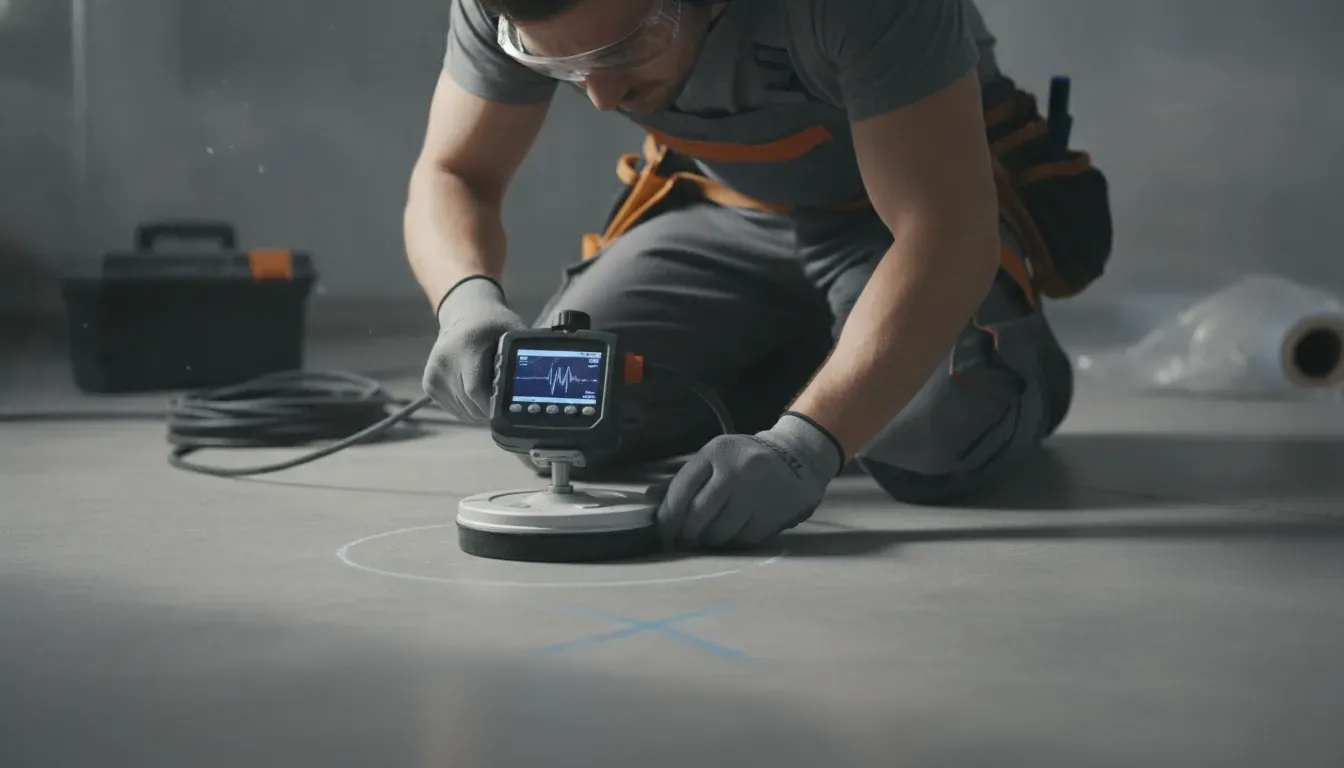
Moisture meters and targeted confirmation
Moisture meters can compare readings in a suspected damp area with nearby materials that appear dry. The results may show whether a wall, cabinet, ceiling, or floor contains unusual moisture.
A reading is evidence, not a final answer. Materials and conditions affect results, and the source may be some distance from the visible moisture.
Depending on the symptoms, a plumber may also inspect fixtures, supply lines, cleanouts, the water heater, sewer access points, and the slab area. The work should be targeted toward the actual concern rather than based on a generic checklist alone.
What Happens During a Professional Leak Inspection?
Finding a hidden leak does not always mean cutting into a wall or floor. A careful inspection begins with questions and accessible checks. The plumber needs to understand what changed and whether the symptom connects to part of the home.
1. Symptom review and system history
Be ready to describe the water-bill change, sound, odor, stain, pressure issue, or wet area. Mention recent plumbing work, a new appliance, irrigation activity, weather events, and previous repairs nearby. These details can help distinguish a fixture problem from a concealed pipe problem.
2. Accessible fixture and line checks
The inspection may include toilets, faucets, shutoff valves, visible supply lines, appliances, the water heater, and areas beneath sinks. A silently running toilet or loose connection may explain water loss. Checking simple sources first keeps the investigation focused.
3. Targeted testing
If the symptoms point to a concealed leak, the plumber may use acoustic equipment, thermal imaging, moisture readings, or other appropriate methods. The sequence depends on the property.
A slab leak investigation is different from a damp ceiling beneath a bathroom. A sewer concern also requires different observations from a pressurized supply-line issue.
4. Findings and practical options
At the end of the visit, ask what was confirmed, where the suspected source is, and which repair options are available. Ask whether an area needs to be opened and why. Clear explanations help you decide based on evidence.
Plumbing by Bishop serves Treasure Coast homeowners with a symptom-first approach, plain-language explanations, and clean work that respects the home. Read the company's home plumbing resources for related guidance.
Why Early Leak Detection Matters for Your Home
Early attention does not make every leak simple or guarantee that damage will be avoided. It gives the homeowner a better chance to understand the problem before ongoing moisture or wasted water creates a larger repair concern.
It can limit ongoing water loss
A leak that runs continuously can waste water even when it is not visibly damaging a room. Finding the source allows the homeowner to decide whether a fixture repair, pipe repair, or another service is appropriate. Prompt diagnosis can also help separate a plumbing issue from a normal change in household use.
It can help protect finished surfaces
Drywall, trim, cabinets, flooring, and other materials can be affected by repeated moisture. The right response depends on the extent and duration of the exposure. A plumber can focus the repair on the source, while any needed restoration can be considered separately after the plumbing problem is addressed.
Slab leaks need a focused approach
On a concrete slab, a leak may show up as warm flooring, dampness, an unusual sound, a pressure change, or unexplained meter activity. These signs are not conclusive on their own. A targeted slab leak inspection can identify the affected line and reduce guesswork.
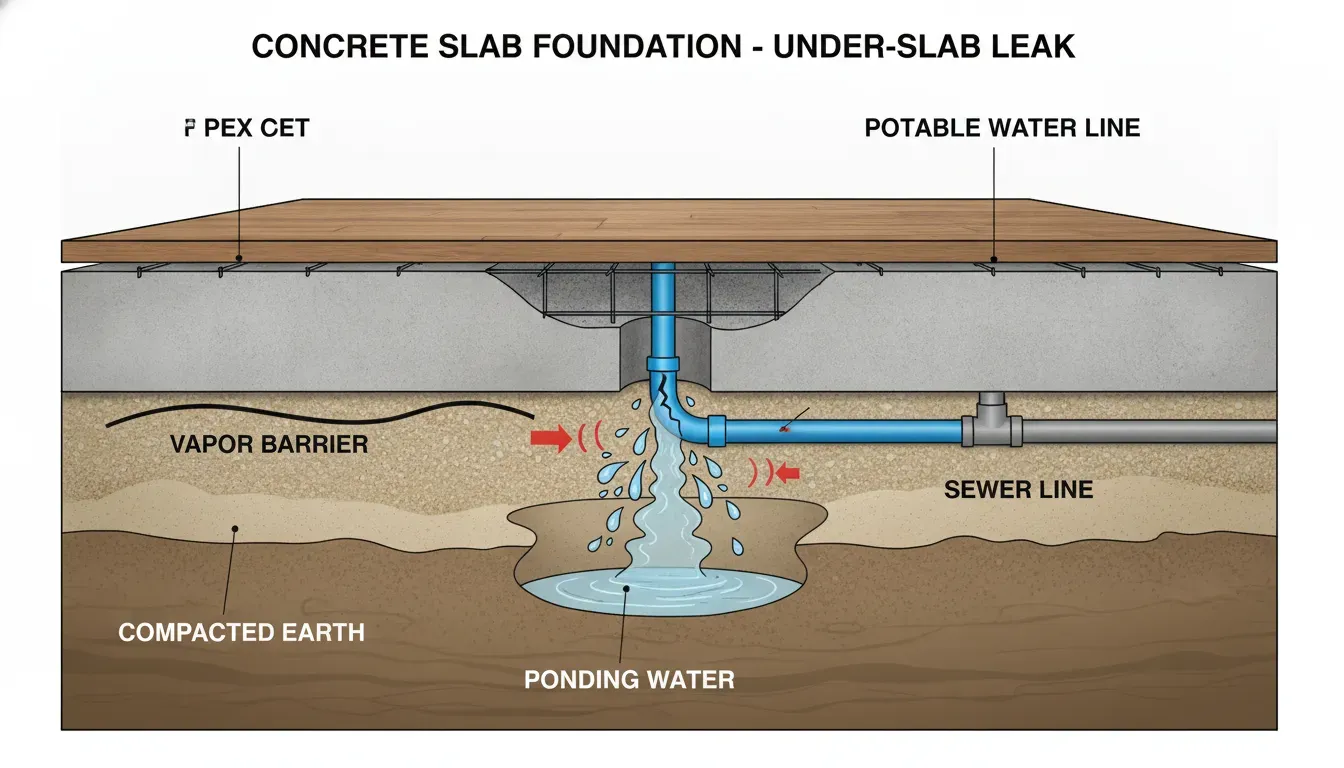
For background on the repair side of this issue, see Plumbing by Bishop's guide to slab leak repair and detection. If the concern involves a main sewer line or drain, the appropriate inspection may be different. Homeowners can also review the company's plumbing repair and leak services before scheduling an assessment.
Contact Plumbing by Bishop before a hidden leak becomes a bigger plumbing concern
When Should You Call for Slab or Sewer Leak Detection?
Call for professional guidance when a symptom is unexplained, persistent, or getting worse. A small visible drip may be straightforward, but moisture without a visible source deserves a closer look. The same is true when a water meter appears active while fixtures are off, or when a recurring odor or damp spot returns after cleaning. Plumbing by Bishop's plumbing services page explains broader repair options.
Possible slab-leak clues
Watch for warm flooring, damp carpet or tile, a new sound beneath the floor, unexplained pressure changes, or water use that does not match your routine. Cracks can have many causes, so do not assume every crack is a plumbing leak. Share the full pattern with the plumber so the inspection can start with the strongest evidence.
Possible sewer or drain concerns
Slow drains, repeated backups, unpleasant odors, wet patches in the yard, or several fixtures acting up together can suggest a drainage or sewer issue. These symptoms can also come from isolated fixture clogs. A professional can help determine whether the concern is local to one drain or connected to a larger line. For related maintenance, see the drain cleaning service page.
Do not use chemical drain products as a substitute for diagnosis when the cause is unclear. Follow product directions for any household maintenance product, keep children and pets away from treated areas, and tell the plumber what was used. Accurate information supports safer service.
How to Choose a Leak Detection Service on the Treasure Coast
When comparing plumbing companies, look for a clear process rather than a promise that one tool will solve every hidden-leak problem. A reliable provider should listen to symptoms and distinguish confirmed findings from possibilities.
Look for symptom-first communication
The first conversation should make room for the details you noticed. Ask how the company handles water-bill changes, damp areas, suspected slab leaks, and sounds behind finished surfaces. The answer should be understandable, not built around unexplained technical terms.
Ask how findings will be explained
Before service begins, ask what the inspection should determine. Afterward, ask where the suspected source is, what evidence supports it, and what repair options are available. Review this home plumbing inspection guide for related questions.
Consider the people entering your home
Homeowners deserve professional service from technicians who respect the property. Plumbing by Bishop emphasizes drug-tested and background-checked technicians, on-time appointments, and leaving homes clean. These standards matter when a plumber needs to work inside living areas, cabinets, walls, or floors.
Confirm service details before proceeding
Ask about the inspection scope, what is included, and how service-specific pricing or estimates are handled. Plumbing needs vary by property, so a responsible provider should discuss your symptoms rather than promise a universal fee.
Frequently Asked Questions
How do I know if I have a hidden water leak?
Look for an unexplained water-bill increase, meter activity when fixtures are off, damp or discolored surfaces, musty odors, recurring mold, unusual water sounds, pressure changes, or warm flooring. These clues do not prove a leak, but persistent or combined symptoms are good reasons to request professional guidance.
What technology is used to find a leak behind a wall?
A plumber may use acoustic listening equipment, thermal imaging, and moisture meters, depending on the symptoms and the home's construction. These tools help narrow the search and support a diagnosis. They work best when combined with a careful review of fixtures, visible lines, and water-use patterns.
Can a professional find a slab leak?
Professional testing can help investigate a suspected slab leak. Warm floors, unexplained water loss, sounds, damp areas, or pressure changes may guide the inspection. Because those signs can have other causes, a plumber should evaluate the complete pattern before recommending a repair.
Will leak detection require opening my wall or floor?
Not always. A professional may first use accessible checks and targeted tools to narrow down the likely source. If an opening is necessary for repair or confirmation, ask where it is needed and why. The inspection should be guided by evidence rather than unnecessary exploratory removal.
How much does a leak detection service cost?
Pricing depends on the property, symptoms, location of the suspected leak, and testing required. Plumbing by Bishop does not publish a universal fee for every situation. Contact the company to discuss your symptoms and ask about service-specific pricing or an estimate before proceeding.
Discuss Your Hidden-Leak Symptoms With Plumbing by Bishop
A damp spot, unusual water sound, or unexplained change in water use is worth documenting. Plumbing by Bishop can discuss the symptoms, help determine whether a professional inspection is appropriate, and explain practical next steps for your Treasure Coast home.