
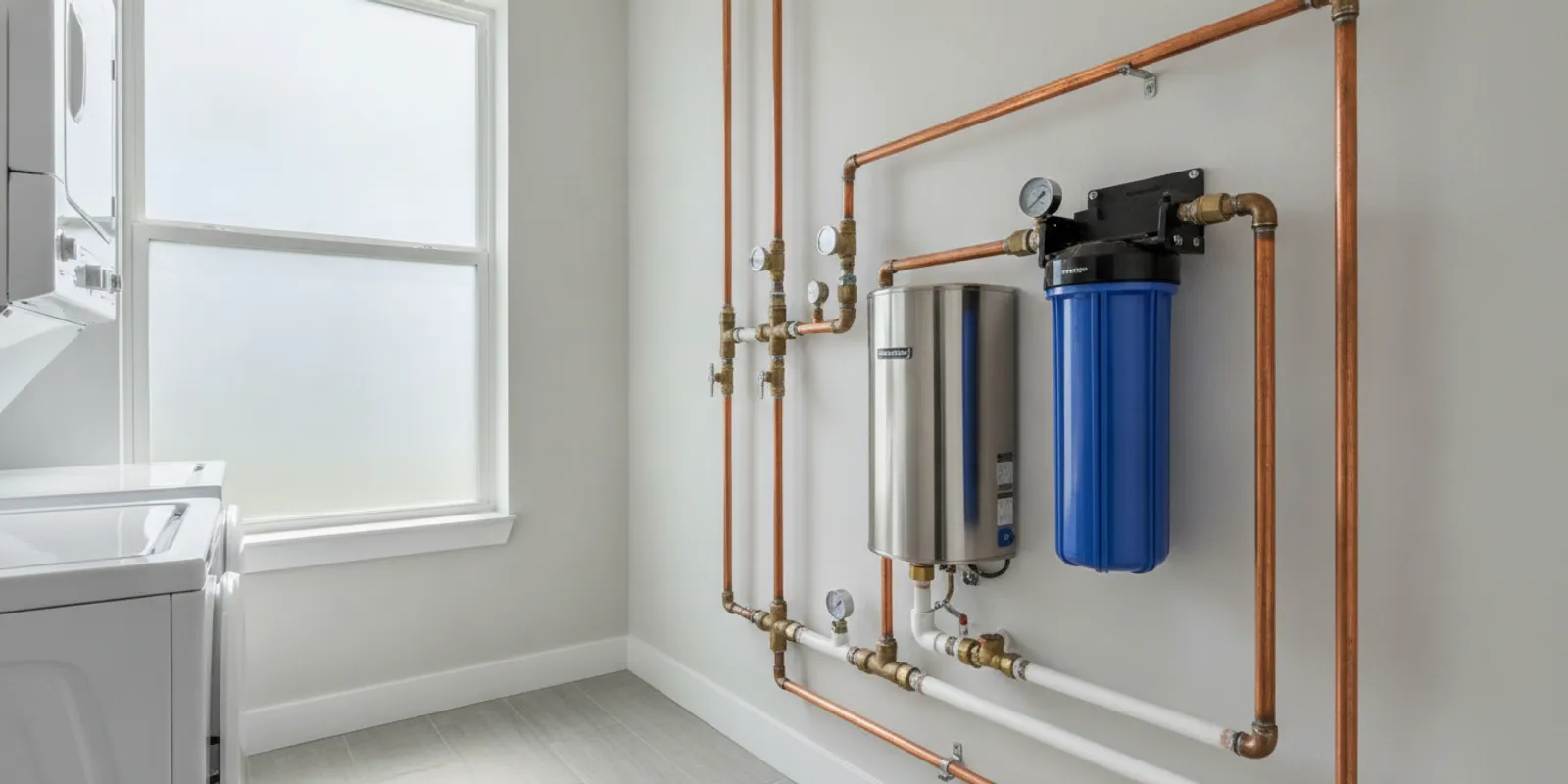
If you are comparing a UV water purification system for your Florida home, start with the question it is meant to answer: Are you trying to address microorganisms, or a different water-quality concern? UV treatment uses ultraviolet light as part of a water-treatment process, but it does not solve every issue that can affect a private well or a home’s water supply. Testing first helps you decide whether UV belongs in a treatment plan and what other equipment, if any, may be needed.
Contact Plumbing by Bishop to discuss your water-treatment needs
What does a UV water purification system do?
A UV system exposes flowing water to ultraviolet light inside a treatment chamber. The goal is to inactivate certain microorganisms as water passes through. Unlike a filter that physically traps material, a UV unit does not strain particles out of the water. Technical literature describes ultraviolet technology as one approach used in water purification systems; the right design and operating conditions matter to the result.
That distinction is important. UV is not a general-purpose filter for every substance in water. By itself, it does not remove dissolved minerals, salts, metals, sediment, or chemicals, and it does not soften hard water. It may not address taste or odor concerns either. A system selected for one issue should not be assumed to correct another.
UV treatment is often considered as one component in a treatment train. For example, a sediment filter may be installed ahead of the UV chamber so suspended particles do not interfere with light reaching the water. Whether that or another pretreatment step is appropriate depends on the water source, test results, and equipment specifications. A UV unit is not a substitute for identifying the specific concern first.
Read more about the technical discussion of UV technologies in water purification, and use it as background rather than as a diagnosis of your own water.
Which water concerns can UV address, and which can it not?
UV technology is intended for a microbial treatment purpose. It is not designed to improve every aesthetic or chemical characteristic of water. Before choosing equipment, separate the symptoms you notice from the cause you want to address. Cloudiness, a change in taste, or an unusual smell can have different explanations and should not be treated as proof that a UV unit is needed.
| Water concern | What UV treatment may do | What else to consider |
|---|---|---|
| Microbial concern identified through appropriate evaluation | May be selected as a disinfection step when system design and operating conditions are suitable | Confirm the concern and treatment approach with testing and qualified guidance |
| Sediment or visible particles | Does not physically remove particles | Determine whether filtration or other pretreatment is needed |
| Hardness or mineral content | Does not soften water or remove dissolved minerals | Test and consider a treatment option designed for the measured issue |
| Metal, salt, or chemical concern | Does not remove these substances | Use test results to identify an appropriate treatment method |
| Taste or odor complaint | Should not be assumed to correct the cause | Investigate the source and select treatment for the specific cause |
The table is a starting point, not a treatment recommendation. Water characteristics vary, and the same symptom can have more than one cause. If your home uses a private well, speak with the appropriate local or state health authority about what testing is recommended for your situation. If you receive water from a utility, review its water-quality information and ask what additional testing or treatment makes sense for a concern inside your home. Homeowners looking for Florida water research resources can also browse the USF Water Institute publications.
Why should you test water before choosing UV treatment?
Testing gives you a clearer basis for deciding whether UV is relevant and whether the water needs preparation before it reaches the unit. Without a defined concern, it is easy to buy equipment that treats the wrong thing. A test can help establish what is present, while a qualified water-treatment professional can help interpret how those results relate to equipment selection and installation.
Start by recording what prompted the search. Is the water from a private well or a public supply? Did a test identify a particular contaminant or microorganism? Has the concern appeared suddenly, or has it been consistent? Note any recent plumbing work, changes to the water source, or changes in appearance, smell, or taste. These details help frame the next conversation, but they do not replace testing.
For a private well, testing and treatment choices should be guided by the actual well and the concern under review. Avoid relying on a single broad claim such as “well water needs UV.” Homes with wells can have different water conditions, and a system should be matched to verified needs. For municipal water, the public supply is treated, but a homeowner may still have a specific concern or a point-of-use treatment goal. Clarify that goal before comparing equipment.
Ask the testing provider what the sample measures, how it should be collected, and whether a follow-up test is needed after treatment. A test taken incorrectly or at the wrong point may not answer the question you have. Keep a copy of the results and any equipment documentation so later service or retesting can be compared with the original baseline.
What should you check before installing a UV system?
A UV system has to be selected and installed for the conditions in the home. Its performance can depend on factors such as water flow, the unit’s capacity, the condition of the lamp and protective sleeve, and how much light can pass through the water. A device that is too small for the flow demand or installed without appropriate pretreatment may not serve its intended role.
- Water test results: Identify the issue the equipment is intended to address. Do not choose a unit solely from a symptom or a product description.
- Water clarity and pretreatment: Ask whether particles or other conditions could interfere with UV exposure and whether a filter or other step should come first.
- Flow and placement: Confirm the equipment is appropriate for the home’s demand and installed in the correct sequence relative to other treatment devices.
- Power and alarms: Find out how the equipment signals a lamp or system problem and what happens if power is interrupted.
- Service access: Leave enough room to inspect the unit and replace components according to its manufacturer’s instructions.
- Follow-up: Ask whether the water should be retested and when, based on the treatment goal and the professional guidance you receive.
These questions help you compare proposals without assuming that every UV unit is interchangeable. Get the model and capacity in writing, along with the installation plan, any recommended pretreatment, what maintenance is included or expected, and who to contact if an alarm sounds. The appropriate arrangement is specific to the water and the home.
If your project includes other treatment equipment, Plumbing by Bishop provides water softener installation and repair and residential plumbing services. A softener addresses a different purpose from UV disinfection, so clarify which concern each device is intended to handle rather than treating the terms as interchangeable.
How should the UV unit fit into your home’s plumbing?
The correct location depends on what the system is intended to treat and the layout of the existing plumbing. A homeowner may be considering treatment at one faucet or for water used throughout the home, but those goals can call for different equipment arrangements. Do not assume a product labeled for residential use will automatically match either setup. Ask the installer to explain where water enters the treatment unit, which fixtures or uses it serves, and how any other filters or treatment devices fit into the sequence.
Before approving the plan, walk through the home’s water needs. List the fixtures that matter to the treatment goal, including any separate drinking-water tap or appliance that is part of the concern. Mention other treatment equipment already installed, even if it is older or not currently in use. These details help the professional consider flow needs, placement, and service access rather than selecting a unit based on a broad description alone.
Ask for the proposed arrangement in writing, including the equipment model, its intended purpose, any pretreatment, and the maintenance access it requires. If the work changes an existing setup, ask what will remain in service and what the installer recommends you monitor afterward. A clear explanation makes it easier to distinguish what the UV unit is expected to do from what other parts of the system handle.
What should you prepare before installation?
Good preparation begins with the information you have already gathered. Put test results, the water source, equipment manuals, and any prior service notes together. Write down when the concern started and whether it affects all taps or only a particular location. If the issue changes over time, note when you notice it. These observations can make the evaluation more focused, but treat them as context rather than proof of a specific cause.
Before the appointment, ask what access the installer needs and whether the work depends on power, a clear area around existing plumbing, or any other site condition. Move stored items only when it is safe and practical to do so. Do not disconnect existing equipment or alter plumbing to make room unless the professional has asked you to. Confirm how the system will be tested or checked after installation and what documentation you will receive.
At completion, keep the model and serial information, installation details, operating instructions, and maintenance schedule in one place. Make sure you know what each indicator or alarm means and who to contact if it appears. If a water test was the basis for the work, ask how to arrange appropriate follow-up testing and keep the new results with the original report. A simple record helps future service providers understand the treatment setup without having to reconstruct its history.
What maintenance does a UV water system need?
UV equipment is not a fit-and-forget device. Maintenance requirements vary by model, so follow the manufacturer’s instructions and the schedule established for the installation. Depending on the unit, maintenance may include replacing the lamp at the specified interval, inspecting or cleaning the protective sleeve, checking alarms, and confirming that the system remains powered and operating as intended.
A lamp can continue to glow even when it has reached the replacement interval specified by its manufacturer. Do not use visible light alone as proof that the equipment is delivering the treatment intended. Use the system’s indicator or service guidance, keep a record of lamp changes, and arrange service if an alarm appears or a component is damaged.
Also ask what to do during a power outage, a system alarm, or a period when the water quality changes. The unit’s instructions should explain its limits and any interim precautions. Do not bypass alarms or remove safety covers unless the manufacturer’s directions specifically allow the task. If you are unsure whether the equipment is operating correctly, contact a qualified service professional.
Maintenance is part of the original purchase decision. Compare not only the equipment but also replacement parts, service access, the manufacturer’s schedule, and the homeowner’s responsibilities. Keep the manual and installation records somewhere easy to find. When you arrange routine plumbing work, mention the treatment system so the technician knows it is part of the home’s water setup.
How do you compare treatment options?
Begin with the verified water concern rather than selecting a technology first. Different treatment approaches serve different purposes, and a multi-step system may be appropriate when testing identifies more than one issue. UV may be one step for a microbial treatment goal; filtration or other equipment may be needed for a separate concern. The test results and equipment specifications should support the design.
When reviewing an option, ask the provider to explain the intended outcome in plain language. What finding is the equipment supposed to address? What does it not treat? What pretreatment is recommended, if any? What maintenance is required? How will you know if the system needs attention? Clear answers make it easier to judge whether the proposal matches your need.
For homeowners comparing a range of solutions, our guides to choosing a water filter and reverse osmosis water filters explain other treatment approaches. These technologies are not direct replacements for UV in every application. Use them to understand distinctions, then base the decision on testing and the specific outcome you want.
Plumbing by Bishop is an authorized warranty service provider for North Star water softeners. That is distinct from evaluating or servicing every type of water-treatment product. If a system is under warranty, check the brand, model, and warranty terms before scheduling service. You can also review the company’s helpful plumbing links for additional homeowner resources.
What should you ask a plumber before moving forward?
Use your questions to establish scope and avoid assumptions. A useful conversation should cover the purpose of the system, the findings it is based on, the required installation conditions, and how the equipment will be maintained. Ask for service-specific pricing and an estimate before approving work; costs depend on the equipment and installation needs, so a general article cannot quote the final amount for your home.
- Which specific water concern is this system intended to address, and what test result supports that recommendation?
- Does the proposal include pretreatment, and why is that step needed?
- How was the unit sized for my home’s water demand?
- What routine maintenance and replacement parts will I need, and at what interval?
- What do the alarm or indicator signals mean, and what should I do if one appears?
- Will follow-up testing help confirm that the original concern has been addressed?
- What is included in the installation, and what service-specific pricing should I expect?
Clear answers help you compare options based on fit, not just the name of a technology. If the recommendation is not tied to a defined water concern, pause and ask what additional testing or explanation is needed.
Frequently asked questions
Does a UV system make all water safe to drink?
No single treatment device should be assumed to address every water-quality issue. UV is intended for a microbial treatment purpose and does not remove many dissolved substances or particles. Test the water, identify the concern, and select equipment designed for that specific need.
Does UV treatment remove chlorine, minerals, or sediment?
No. A UV unit does not physically filter sediment or remove dissolved minerals, salts, metals, or chemicals. If those are your concerns, testing can help identify a different or additional treatment approach.
Can I choose a UV system without testing?
It is better to identify the water concern first. Testing helps establish what needs attention and can guide system selection, any pretreatment, and follow-up. Do not treat an unusual taste, smell, or appearance alone as proof that UV is the answer.
How often does a UV lamp need replacement?
The interval depends on the model and its manufacturer’s instructions. Follow the specified schedule and the unit’s indicators rather than relying only on whether the lamp appears lit. Keep records of maintenance and contact a service professional if the system signals a problem.
Contact Plumbing by Bishop to plan your next step
Make the decision based on your water
A UV water purification system may be worth considering when the water concern and treatment goal are clearly established, but UV is not a universal solution. Start with testing, confirm whether pretreatment is needed, compare equipment and upkeep, and ask how the system will be serviced. That process helps you choose a treatment plan that fits your home instead of relying on a one-size-fits-all promise.