
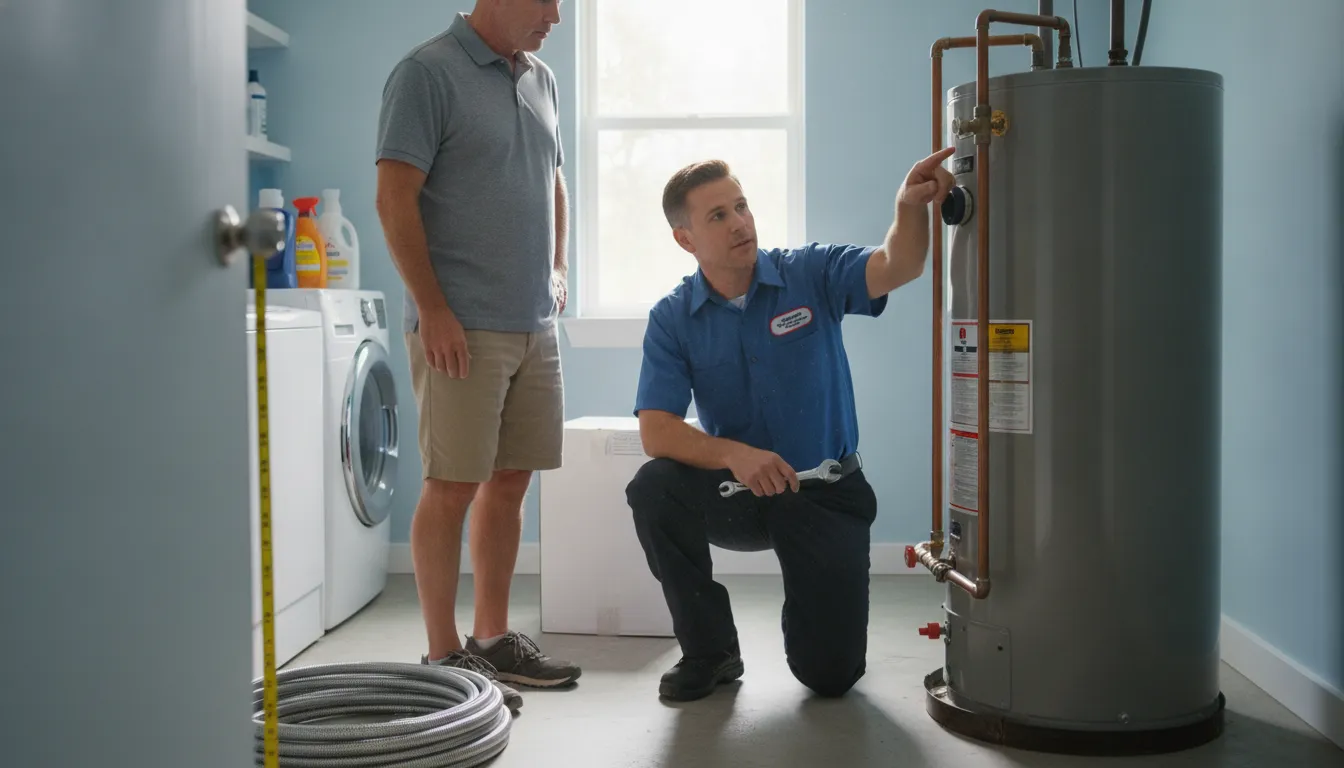
A replacement estimate is about more than choosing a tank from a shelf. The system, its capacity, the home’s existing connections, and the work needed to install it all affect the scope. So an advertised equipment price may not describe the finished job.
Contact Plumbing by Bishop to discuss your water heater needs
For Treasure Coast homeowners, water heater cost depends on system type, size, household demand, and installation complexity. A useful estimate explains the equipment and job-specific work rather than relying on a one-size-fits-all figure.
Tank, tankless, gas, and electric options can involve different equipment and installation considerations. Understanding what an estimate accounts for makes it easier to compare proposals fairly and ask what is included before choosing a replacement.
What goes into a water heater cost estimate?
A replacement estimate is more than the price of the new unit. The total scope can depend on the heater type and capacity, the existing setup, and how straightforward it is to remove the old equipment and install the replacement. Those details vary from home to home, so one advertised figure may not describe the work needed at your property.
An estimate may account for several parts of the job:
- Equipment: The selected water heater, including its type and capacity. The right option depends on the home and the household’s hot-water needs, not just a product listing.
- Removal and disposal: If an existing unit is being replaced, the work may include disconnecting and taking away the old heater. The access route and the equipment’s location can affect how this part of the job is handled.
- Installation labor and access: The estimate may reflect the time and work involved in reaching the unit, preparing the space, connecting the replacement, and checking the completed installation. Tight closets, unusual placement, or difficult access can change the scope.
- Materials and adjustments: Connections or other installation materials may be included, and the existing setup may need adjustments to suit the selected heater. The specific materials depend on what is already in place and what the new system requires.
- Local compliance items, when applicable: Permit, inspection, or testing requirements can depend on the project and jurisdiction. They should be confirmed for the address and proposed work rather than assumed to apply in the same way everywhere.
These are possible estimate components, not a checklist that every replacement automatically needs. A straightforward changeout may have a different scope from a project that changes the system type or requires work around existing connections. Ask for a written description of what is included, what is excluded, and whether any additional work would be discussed before it is done.
Plumbing by Bishop provides water heater sales, installation, repair, maintenance, and replacement on the Treasure Coast. Its flat-rate approach is job-based rather than billed by the hour; the estimate should reflect the specific work, not an assumed universal charge. For details on the service, see Treasure Coast water heater replacement.
How tank, tankless, gas, and electric choices change the estimate
The equipment choice affects more than the unit itself. A useful estimate considers how the system heats water, whether its capacity suits the household, and what the existing connections and installation space can support. Those details are assessed for the home rather than assumed from the system label.
Systems and estimate considerations
| System choice | How it works | Estimate and project-scope considerations |
|---|---|---|
| Storage tank | Stores hot water in a tank and replenishes it with cold water as hot water is used. | Assessment can include tank capacity, the space and connections in place, and whether the proposed unit fits the household’s demand. Storage and tankless systems work differently, but the system type alone does not determine the installed estimate for a particular home. |
| Tankless | Heats water as it is needed instead of keeping a reservoir hot. | Output must be matched to peak simultaneous flow and the temperature rise needed. Existing service and installation conditions may also need review; a conversion is not automatically a like-for-like replacement. |
| Gas or electric | Uses the home’s available fuel or electrical service to heat water. | The estimator checks the existing connections and the proposed unit’s requirements. The scope can differ if a change of fuel or system calls for modifications, but the work cannot be determined from fuel type alone. |
Tankless sizing is especially tied to how much hot water may be needed at one time and the required temperature rise, rather than simply the number of people in the home. The Department of Energy’s Building Science Education resource explains these sizing factors for tankless heaters (DOE tankless water-heater sizing guidance). In Martin County, the county checklist specifically calls for electrical load calculations for tankless electric water heaters. That is a local requirement and should not be treated as a rule for every Treasure Coast jurisdiction.
Gas versus electric and tank versus tankless comparisons can help you think through preferences, but neither pair alone settles the estimate. For more on the tradeoffs, see gas versus electric water heaters and tankless and traditional water heaters. Ask the installer to explain which parts of the proposed scope reflect the selected equipment and which reflect the home’s existing setup.
How do size and household demand affect the estimate?
The right water heater is not determined by a home’s square footage alone. What matters is how much hot water people use, when they use it, and how well a system can keep up. Those details help shape the equipment choice and therefore the estimate.
For a storage tank, capacity is one part of the picture: the tank holds a supply of hot water, and cold water replaces it as hot water is drawn. Storage heaters can serve multiple hot-water uses at once, but household routines still matter. A home where showers, laundry, and dishwashing often overlap may have different needs from one where those activities are spread across the day. The estimate should reflect the expected demand, not simply the number of bathrooms or the size of the house.
Tankless systems heat water as it flows instead of storing a ready supply. Their sizing depends on peak flow needed at one time and the required temperature rise. The Department of Energy’s Building Science Education resource explains these factors (DOE tankless water-heater sizing guidance). An installer considers which fixtures may run together and whether the unit can deliver enough hot water. A larger home does not always need a larger unit. A small household can still have high short-term demand.
When discussing an estimate, describe the household’s typical peak-use periods, including how many showers may run together, whether appliances use hot water at the same time, and whether usage changes on weekends or when guests visit. Also mention any dissatisfaction with the current supply, such as hot water running out before the household is finished. These observations help a plumber compare capacity, recovery, or flow needs without guessing from floor area.
A model’s gallon rating can be a useful starting point, but it is not a stand-alone recommendation. For an example of the questions involved, see this guide to choosing a 40-gallon gas water heater. The appropriate option still depends on actual use, the type of system, and the home’s installation conditions.
When does replacing a heater become a conversion project?
A replacement is closest to a like-for-like swap when the new heater uses the same fuel, serves the same household needs, and fits in the existing location with compatible connections. Even then, the installer needs to confirm the new unit is appropriate and identify any work needed to remove the old one and connect the replacement. The job can become more involved when you change from gas to electric or vice versa, move the heater, switch from a storage tank to tankless, or alter the system’s capacity.
Those changes do not automatically mean every home needs the same upgrades. They do mean the existing setup should be checked before the work is defined. Depending on the proposed unit and site, an assessment may consider electrical service and load, gas supply, venting, water piping, drainage, clearances, access, and whether the new equipment can be installed in the intended location. For example, an electric tankless model may have different electrical demands from the existing heater. Martin County’s checklist specifically calls for electrical load calculations for electric tankless water heaters, a local requirement that should not be assumed to apply elsewhere. Martin County’s water-heater checklist
Permit and review steps are also jurisdiction-specific. Fort Pierce’s official building permit submittal checklists link to a water-heater permit checklist that asks applicants to identify the unit’s size and type and whether the work is a new installation or replacement. It also lists plan review for tankless and solar heaters, and utility pre-approval for new tankless or solar installations in its jurisdiction. These examples illustrate why a homeowner should confirm the rules for the property’s actual location rather than rely on a general statewide assumption. Review the Fort Pierce water-heater permit checklist for the city’s current requirements.
Ask the estimator to distinguish the equipment replacement from any conversion or relocation work in the written scope. That makes it easier to understand which checks or modifications are proposed and why, without assuming every possible item is required. If the current heater is malfunctioning, replacement is not the only question: common water heater problems may have repair options worth discussing before choosing a new system.
What should a Treasure Coast onsite estimate include?
-
Identify the existing heater and proposed replacement. The estimator should record whether the unit is a storage tank or tankless system, its capacity or output, and whether it uses gas or electricity. They should also confirm whether this is a replacement or a change in system type. Type, capacity, and installation complexity can all affect the scope of a replacement estimate.
-
Review the location and access. The visit should account for where the heater sits, how technicians and equipment can reach it, and the condition and arrangement of nearby connections. For electric tankless proposals, electrical service capacity may need particular attention. Martin County’s checklist calls for electrical load calculations for these systems. That is a county-specific requirement, not a rule to assume applies everywhere.
-
Describe removal and any changes to the setup. Ask whether the estimate includes taking out and handling the old unit, and identify any proposed changes to connections, venting, electrical or gas supply, or the equipment location. These are items to assess for the actual home, not automatic additions to every job. A clear explanation helps distinguish a straightforward replacement from a project that changes the system or its installation conditions.
-
Check which local requirements apply. Permit, plan-review, utility, and documentation rules can depend on the property’s jurisdiction and the equipment or work proposed. Martin County publishes a water-heater checklist that includes a permit application and manufacturer specifications. Ask who will verify the requirements for your address and whether any applicable approvals or related work are included in the proposed scope. Do not assume another Treasure Coast city or county follows the same checklist.
-
Get the scope explained in writing. The estimate should list the equipment and installation work covered. It should also clarify removal, modifications, exclusions, and details still to confirm. Ask who handles locally required approvals. Confirm whether inspections or testing apply and what could change the scope if concealed conditions are found. Plumbing by Bishop offers Treasure Coast water heater replacement; its water heater installation process guide can help you understand the work involved.
How can you compare the long-term value fairly?
A useful comparison looks beyond the equipment price to what each option requires to install, operate, maintain, and support over time. Ask for estimates based on comparable household needs and a clearly described scope. If one proposal includes changes to existing connections or other installation work and another does not, the totals are not directly comparable.
Start with the full installed system: the specific model and capacity, removal of the old unit, labor, materials, and any modifications or other work included. Then compare how each system uses energy. Fuel type, equipment efficiency, household hot-water use, and local utility rates all affect ongoing expense. So a general claim about one option being cheaper to run may not predict your household’s bill. Tankless heaters heat water on demand rather than storing it, which avoids standby heat loss. That operating difference is useful context, not a promise of a particular household saving.
Include routine maintenance in the discussion. Ask what the manufacturer recommends for the model under consideration, what service tasks may be needed, and whether those tasks are part of the estimate or handled separately. Maintenance needs can differ by equipment and installation, so avoid relying on a generic lifetime-cost figure unless its assumptions match the system and use in your home.
Finally, read warranty terms rather than comparing warranty length alone. Check what is covered, which parts or labor are excluded, what conditions apply, and who handles a warranty claim. Manufacturer equipment coverage and an installer’s workmanship coverage are separate questions; confirm both in writing for the proposed job. Plumbing by Bishop is an authorized warranty service provider for Rheem, GE, Ruud, and Bradford White water heaters, within that warranty-service role. Ask whether the specific model and work qualify, and what documentation or steps are required.
A fair water heater cost comparison is therefore a side-by-side review of the complete installed scope, likely energy use, maintenance expectations, and applicable warranty terms. It gives you a clearer basis for choosing an option that fits your home, without treating projected savings or a stated service life as guaranteed.
How can you prepare before requesting an estimate?
A few details about the current setup and your household’s hot-water needs can make the conversation more useful. You do not need to diagnose the heater or choose a replacement in advance; gather what you can and note anything you are unsure about.
- Identify the existing unit. If it is safe and easy to reach, note whether it is a tank or tankless model, its fuel source (electric or gas), and its approximate age. Take a clear photo of the manufacturer label, which may show the brand, model, capacity, and other specifications. Do not remove a cover or move the unit to find it.
- Describe what is happening. Note symptoms such as water that runs out quickly, inconsistent temperature, unusual sounds, visible leakage, or no hot water. Include when the issue began and whether it occurs throughout the home or at particular fixtures.
- Explain how hot water is used. Mention how many people live in the home and when showers, laundry, or dishwashing commonly overlap. If the current supply falls short at certain times, give a specific example.
- Describe the location and access. Say where the heater is installed, whether stairs, a narrow doorway, stored items, or limited working space could affect access, and whether you know of any access restrictions. Photos of the unit and surrounding area can help clarify the layout.
- Share the change you have in mind. Say whether you hope to replace the existing type, consider a different fuel or tankless system, relocate the heater, or simply want guidance. You can ask the plumber to explain what options fit the home.
- Ask what the estimate covers. Clarify whether removal and disposal, materials, testing, and any necessary permit or inspection steps are included or handled separately. Ask what warranty applies to the equipment and installation, and whether the answer depends on the selected model or job scope. Permit procedures can differ by jurisdiction, so confirm what applies at your address.
With these notes ready, an estimator can discuss the project scope and any details that need an onsite check without relying on guesswork about your home.
Frequently Asked Questions
What is usually included in a water heater installation estimate?
A written estimate should make clear which heater is being installed and which work and materials are included. It should also state whether removal, connection changes, or permit-related work apply. Ask the plumber to identify exclusions so you can compare the same scope across estimates.
How much does it cost to install a water heater?
There is no single reliable figure for every home. The estimate depends on the heater type and capacity, the condition of existing connections, access, and whether the project needs changes beyond a straightforward replacement. Request an on-site, job-specific estimate rather than relying on a broad advertised price.
How much is a water heater for a 2,000-square-foot house?
Square footage alone does not determine the right heater or its installed cost. The estimate also depends on how many people use hot water, when fixtures run together, and whether the existing setup can support the replacement. Share your household’s hot-water patterns during the assessment.
How many years will a hot water heater last?
Service life varies with the heater, water conditions, maintenance, and use, so no lifespan is guaranteed. Ask the installer or manufacturer what service-life guidance applies to the specific unit and how upkeep affects warranty coverage.
Ready to Compare Your Water Heater Replacement Options?
Whether you are replacing a failed unit or weighing a change in fuel or system type. An estimate should explain the equipment and the work proposed for your home. Plumbing by Bishop serves Treasure Coast homeowners with water heater sales, installation, repair, maintenance, and replacement. Ask questions about the scope, confirm which local requirements apply at your address, and compare complete proposals rather than equipment prices alone.
Contact Plumbing by Bishop to request water heater service or an estimate.