
40 Gallon Gas Water Heater: Is It Right for You?
When a 40 gallon gas water heater runs out during back-to-back showers, the tank may not be the only issue. Household routines, overlapping hot-water use, the existing system, and the installation setup all affect whether this size fits your Treasure Coast home.
Contact Plumbing by Bishop about your water heater needs
Quick answer: A 40 gallon gas water heater can be a practical starting point for many three- to four-person households with moderate, spread-out demand. It may feel undersized when several people shower close together, guests are frequent, or laundry and dishwashing overlap with showers. The right choice depends on your busiest hour, not bedroom count alone.
Gas water heaters also require more than a tank-size decision. A safe replacement includes an assessment of the gas connection, venting, water lines, shutoff components, drainage, access, and local installation requirements. Use the guide below to understand the decision before you schedule an evaluation.
Is a 40 Gallon Gas Water Heater Large Enough for Your Home?
For a typical household of three or four people, a 40 gallon gas water heater is often a reasonable place to start. It stores hot water for normal use and can recover between periods of demand. That general guideline is not a promise that the tank will meet every household's needs. Your schedule and peak use matter more than the number of bedrooms.
When this tank size may work well
A 40 gallon tank may suit a home where hot-water use is spread throughout the day. Family members might shower at different times, run the dishwasher after dinner, and use the washing machine outside the busiest morning window. Those pauses give the unit time to recover before the next major use.
This size may also work when the household has moderate fixture use and does not routinely host overnight guests. If the existing water heater has generally provided enough hot water and the household routine has not changed, replacing it with a properly selected unit may be a straightforward option.
When you may need a different setup
Several showers close together can draw down stored hot water quickly. Demand rises further when a shower overlaps with a bath, hot-water laundry, or dishwasher use. Guests, a growing family, or a new work schedule can turn a previously comfortable system into one that runs short at the same time every day.
- Several household members shower during the same one- or two-hour period.
- Showers overlap with laundry, dishwashing, or filling a bath.
- Guests regularly add to the household's hot-water demand.
- The current tank runs out before the household's busiest routine is finished.
- A household change has made the old capacity less practical.
These signs do not automatically mean that you need the largest tank available. They mean the sizing conversation should account for actual use instead of relying on a simple people-per-gallon rule.
How Should You Match a 40 Gallon Gas Water Heater to Daily Demand?
The most useful sizing exercise is to identify your home's busiest period and list what happens during it. A 40 gallon gas water heater may meet demand when uses are staggered, while the same capacity may be frustrating when multiple fixtures run together. Write down the routine for a typical high-demand morning or evening before choosing a replacement.
Build a peak-use inventory
- Count showers taken close together.
- Note whether someone fills a bath or uses hot water for shaving.
- Record dishwasher and washing-machine cycles that overlap with bathing.
- Include hand-washing, cleaning, and other repeated hot-water uses.
- Account for guests or seasonal changes in household occupancy.
Then compare that inventory with the times you run out of hot water. If the shortage happens only during an unusual event, your normal system may still be appropriately sized. If it happens during the same daily routine, ask a professional to assess the tank, recovery performance, fixture demand, and other possible causes.
Consider recovery, not just storage
A storage tank's capacity is only part of the experience. The system also has to heat incoming water and recover after use. Incoming water temperature, burner operation, thermostat settings, pipe condition, and household demand can all affect how long hot water lasts. A problem that feels like a tank-size issue may instead involve a failing component, sediment, or an installation concern.
| Demand pattern | What it may look like | What to discuss |
|---|---|---|
| Lower | One shower at a time with little overlap. | Whether a standard storage tank supports the routine. |
| Typical | Several daily showers with occasional laundry or dishwasher overlap. | Whether a 40 gallon gas water heater fits the busiest hour. |
| Higher | Several showers, baths, and appliances running close together. | More capacity, a different system, or a demand-management plan. |
Think in terms of the first hour
First-hour thinking means estimating how much hot water the household will need during its busiest hour. It includes the hot water available in the tank and the water the system can produce as the tank reheats. It is not the same as reading the tank's gallon label, and it should not be guessed from tank size alone.
Also review how efficiently your fixtures use water. Low-flow fixtures can reduce flow rates and may lower the capacity your routine requires. Conversely, a large tub, high-flow shower, or several fixtures running together can shift the calculation. Bring this inventory to a plumbing professional so the replacement is based on real use, incoming water conditions, and the home's existing setup.
Why Choose Gas for a 40-Gallon Storage Water Heater?
Homeowners often compare gas and electric water heaters when replacing an aging tank. A gas unit may provide a different recovery experience than an electric model. But the best choice depends on the home's existing fuel source, venting, utility setup, equipment location, and operating priorities. Do not choose by capacity alone.
Review the gas setup already in your home
A replacement assessment should confirm that the existing gas connection, shutoff, venting, and surrounding clearances are suitable for the intended equipment. The location also needs practical access for service and a safe path for combustion gases. If the home's current setup is old or has been modified, the replacement may require additional work before installation can be completed safely.
Gas service is not a reason to skip a comparison with electric equipment. Fuel availability, equipment requirements, household demand, and the condition of the current installation all belong in the conversation. For a broader comparison, read gas versus electric water heater guidance for Florida homes.
Safety is part of the choice
Never treat unusual burner behavior, damaged venting, a gas odor, or combustion concerns as a do-it-yourself adjustment. Leave the area and follow appropriate emergency guidance for a suspected gas leak. For normal replacement planning, use a qualified plumbing professional to inspect connections and venting before the old tank is removed.
Ask Plumbing by Bishop about the right water heater for your home
What Should You Check Before Replacing a 40 Gallon Gas Water Heater?
Replacement planning starts with symptoms and site conditions. A new tank may be needed, but a professional should also determine whether the problem comes from a component, connection, thermostat, sediment, or sizing mismatch. The inspection should explain what is failing and what the proposed replacement needs to support.
Start with the symptoms
- Water is no longer hot enough or runs out much sooner than before.
- The tank leaks, sweats excessively, or shows corrosion around the base.
- Hot water has an unusual color or odor.
- The unit makes repeated popping, rumbling, or unusual operating sounds.
- The pilot, burner, or controls do not operate consistently.
Some symptoms call for urgent attention. A leaking tank can damage flooring or nearby belongings, while a gas or combustion concern should not be ignored. Prompt diagnosis helps separate a repairable issue from a tank that has reached the end of its useful service. Review water heater failure signs if your unit is showing these symptoms.
Check the space and connections
Measure the available height, width, access path, drain location, and clearance around the current equipment. A replacement may have different dimensions even when the gallon capacity is the same. The technician should also review water lines, the gas connection, venting, shutoff components, temperature and pressure protection, and drainage.
Do not assume that a new tank can be connected exactly like the old one. Existing parts may be worn, incorrectly configured, or unsuitable for the replacement. Proper planning reduces surprises and gives the homeowner a clearer explanation of the work.
What Happens During Professional Water Heater Installation?
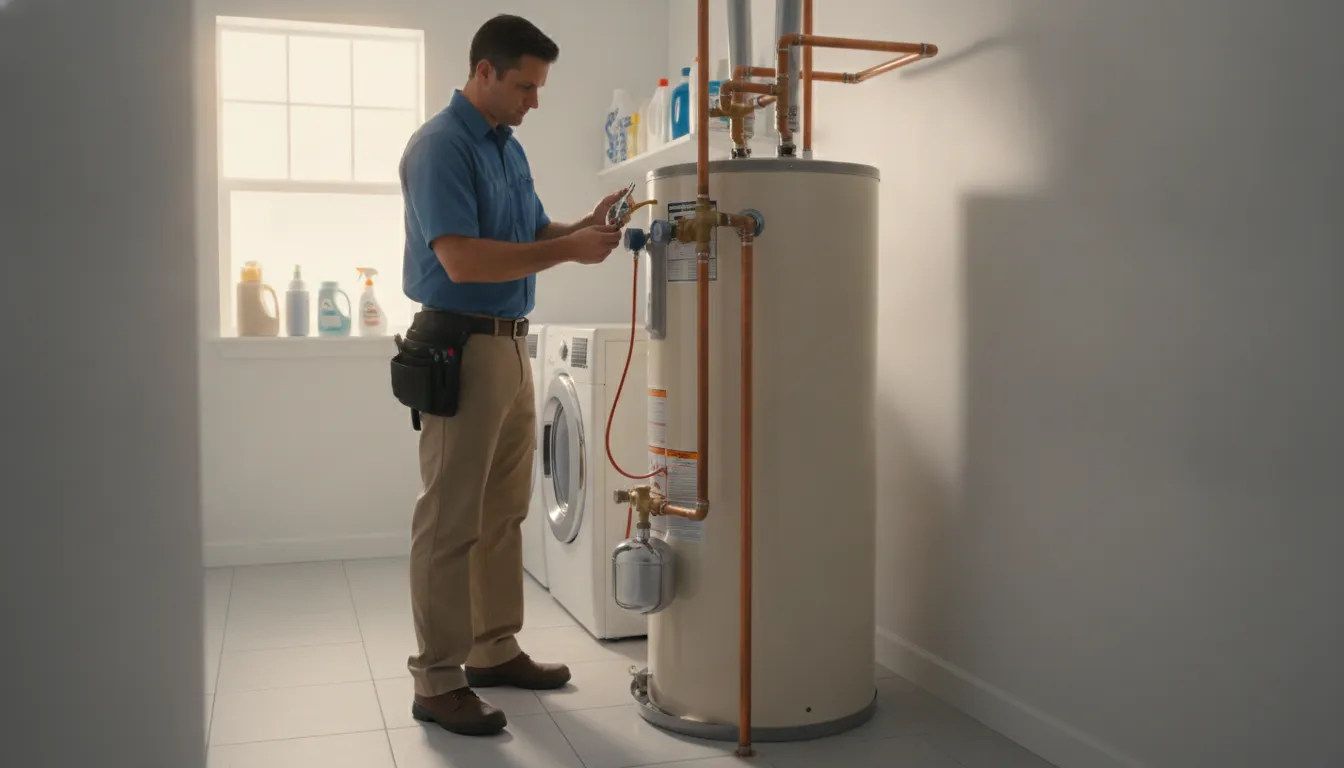
Professional installation is a sequence of assessment, removal, connection, safety review, testing, and homeowner handoff. The exact work varies by home and equipment. But the goal is the same: install the selected water heater so it can operate safely and support the household's expected demand.
Assessment and safe removal
The technician confirms the selected equipment, protects the work area, shuts down the relevant utilities, and drains the old tank. Safe removal also includes evaluating the condition of the existing connections and the route needed to move the old equipment out. A clean, controlled work area matters in a utility closet, garage, or finished part of the home.
Connections, venting, and testing
The new tank is positioned with the required clearances. Water connections, gas connections, drainage, temperature and pressure protection, and venting are reviewed as part of the installation. The system is then filled and tested while the technician checks for leaks, proper operation, and other concerns that should be addressed before the handoff.
Homeowners should receive practical information about operation, warning signs, maintenance, and what to do if the system stops producing hot water. Plumbing by Bishop also provides water heater sales, installation, repair, and replacement services for Treasure Coast homeowners and light commercial customers. Review the company's water heater services for the service scope.
How Can You Get More Reliable Performance From the New Tank?
Good daily habits and early attention to warning signs can help a new water heater serve the household more reliably. Maintenance cannot correct an incorrectly sized tank or a failing installation, but it can help homeowners notice changes before a small issue becomes a disruptive failure.
Use the system thoughtfully
- Spread high-demand activities apart when practical.
- Avoid changing temperature controls without understanding the safety implications.
- Keep the area around the water heater accessible for inspection and service.
- Watch for leaks, rust, unusual sounds, or changes in hot-water availability.
- Ask about maintenance that fits the equipment and home's water conditions.
Water quality and sediment can affect tank performance over time. The Portland Water Bureau's water heater maintenance guidance discusses practical maintenance considerations. Follow the equipment manufacturer's instructions and use a qualified professional when a task involves gas, venting, electrical components, or pressure protection.
For a local maintenance overview, read water heater maintenance guidance for Florida homeowners. If the unit may still be covered, review water heater warranty repair and service options.
What Are the Steps for Planning a Water Heater Replacement?
Planning a replacement is easier when you move from symptoms to system details, then match the equipment to your routine. A short checklist can help you gather useful information before a technician arrives and avoid choosing a tank based only on its gallon label.
- Write down when the home runs out of hot water and what fixtures are being used.
- Record the number of regular occupants and whether guests often stay over.
- Note leaks, rust, unusual sounds, burner concerns, or inconsistent water temperature.
- Clear a safe path to the water heater and identify nearby drains and shutoffs.
- Ask for an assessment of capacity, gas connections, venting, clearances, and installation requirements.
Bring the answers to the appointment. They help the plumber distinguish a sizing problem from a repair issue and explain why a proposed replacement is appropriate for the home. If you are also comparing storage and on-demand equipment, review this tankless versus traditional water heater guide.
Schedule a water heater evaluation with Plumbing by Bishop
Frequently Asked Questions About a 40 Gallon Gas Water Heater
How much should a 40 gallon gas water heater cost?
There is no reliable one-size-fits-all price. The total depends on the equipment selected, access, the condition of the existing gas and water connections, venting, drainage, disposal, and any required updates. Ask for a site-specific explanation of the work rather than comparing tank prices alone.
What is the life expectancy of a 40 gallon gas water heater?
Service life varies with water quality, installation, usage, maintenance, and tank condition. Leaks, recurring loss of hot water, corrosion, and worsening performance are practical reasons to discuss repair or replacement. A professional can evaluate the system rather than relying only on age.
Is a 40 gallon water heater enough for a three-bedroom house?
Bedroom count alone cannot answer that question. A 40 gallon gas water heater often suits a typical three- to four-person household, but showers, laundry, dishwashing, guests, and overlapping use determine peak demand. A professional may recommend a different capacity or setup if the household regularly runs short.
Why does water heater replacement planning vary from home to home?
Replacement involves more than disconnecting one tank and setting another in its place. The technician must evaluate access, water and gas connections, venting, drainage, clearances, household demand, and the condition of nearby components. Existing parts may need adjustment, and the new unit may not have the same dimensions as the old one.
Plan Your Water Heater Replacement With Plumbing by Bishop
Choosing the right water heater depends on your household's peak hot-water use. The gas and venting setup, available space, and tank condition matter too. A professional review can help you plan a replacement that fits your home. It can also support dependable hot water in Stuart, Jensen Beach, Palm City, Hobe Sound, Port St. Lucie, and nearby Treasure Coast communities.
Plumbing by Bishop has served Treasure Coast homes and businesses since 1983. The company is known for its promise to be The Cleanest Plumbers in the Business, including professional service and leaving the work area spotless.
Contact Plumbing by Bishop to plan your water heater installation or replacement