
Florida water heaters face a steady combination of heat, humidity, and mineral-rich water. Over time, dissolved calcium and magnesium can contribute to scale buildup, while sediment makes a tank work harder to heat your water. A simple maintenance routine helps you catch wear early and keep daily hot water dependable.
Schedule an annual water heater maintenance visit with Plumbing by Bishop today to protect your Florida tank and avoid surprise breakdowns.
Water heater maintenance Florida homeowners can rely on includes an annual tank flush and periodic anode rod inspection. It also covers a 120-degree thermostat setting, sediment prevention, and prompt attention to leaks, rusty water, or inconsistent temperatures.
You do not need to wait for a failure to take action. The right schedule can support efficiency, protect the tank, and help you make a calmer replacement decision when the unit reaches the later part of its service life. Start with why Florida conditions make these routine steps especially worthwhile.
Why Regular Water Heater Maintenance Matters for Florida Homes
Florida's water and coastal conditions give homeowners a practical reason to keep water heater maintenance on the annual home-care list. Hard water contains dissolved minerals, especially calcium and magnesium, which can leave deposits inside plumbing and appliances. The USGS explains how water hardness develops, and those minerals can become a persistent concern for a tank water heater.
As mineral deposits accumulate, they can form scale on the tank and heating components. Penn State Extension notes that hard-water scale in water heaters and other appliances can shorten their service life. In Florida, hard water can increase mineral buildup, so a heater may benefit from more frequent flushing and closer inspection than it would in a softer-water area.
Maintenance helps your water heater work more efficiently
Sediment that settles at the bottom of a tank creates another source of strain. The unit has to work harder to heat water through that buildup, which can reduce efficiency and increase energy costs. You may also hear rumbling or popping as water moves through sediment. These sounds do not automatically mean the heater needs to be replaced. But they are useful signals to schedule an inspection and address buildup before it becomes a larger repair.
Regular care can extend useful service life
Traditional tank water heaters commonly last about 8 to 15 years, depending on water quality and maintenance. A well-maintained tank unit often provides around 10 years of service, while many tank units have an average lifespan of 10 to 15 years. Those ranges are guidelines, not guarantees. Florida's humid, hard-water environment and salt air can cause some units to fail sooner when maintenance is overlooked.
Routine service, including sediment removal and inspection of key components, helps you make informed decisions about repair or replacement. It also gives you time to plan when the heater is approaching the end of its expected life, rather than waiting for an inconvenient failure. For more context, review these water heater failure signs and ask a qualified plumber to evaluate your system. Plumbing by Bishop has served Treasure Coast homeowners since 1983, with a focus on clean, careful workmanship.
How Often Should You Flush a Water Heater in Florida?
Flush a tank water heater at least once a year to remove sediment that settles on the bottom. In hard-water areas like much of the Treasure Coast, more frequent flushing may be needed.
Minerals in hard water can form scale inside a tank, and that buildup can shorten the water heater's service life. Hard water is caused by dissolved calcium and magnesium, which are common hardness minerals in many water supplies. Sediment creates a separate problem: it settles at the bottom of the tank, makes heating harder, and may cause rumbling or popping as the unit operates. The water heater type does not eliminate the need to manage sediment.
For many Florida homes, draining the tank once a year helps remove sediment before it hardens and puts additional strain on the unit. Homes in harder-water areas may need this service more often. If you are not comfortable working around gas connections, electricity, hot water, or a pressurized tank, have a qualified plumber perform the flush.
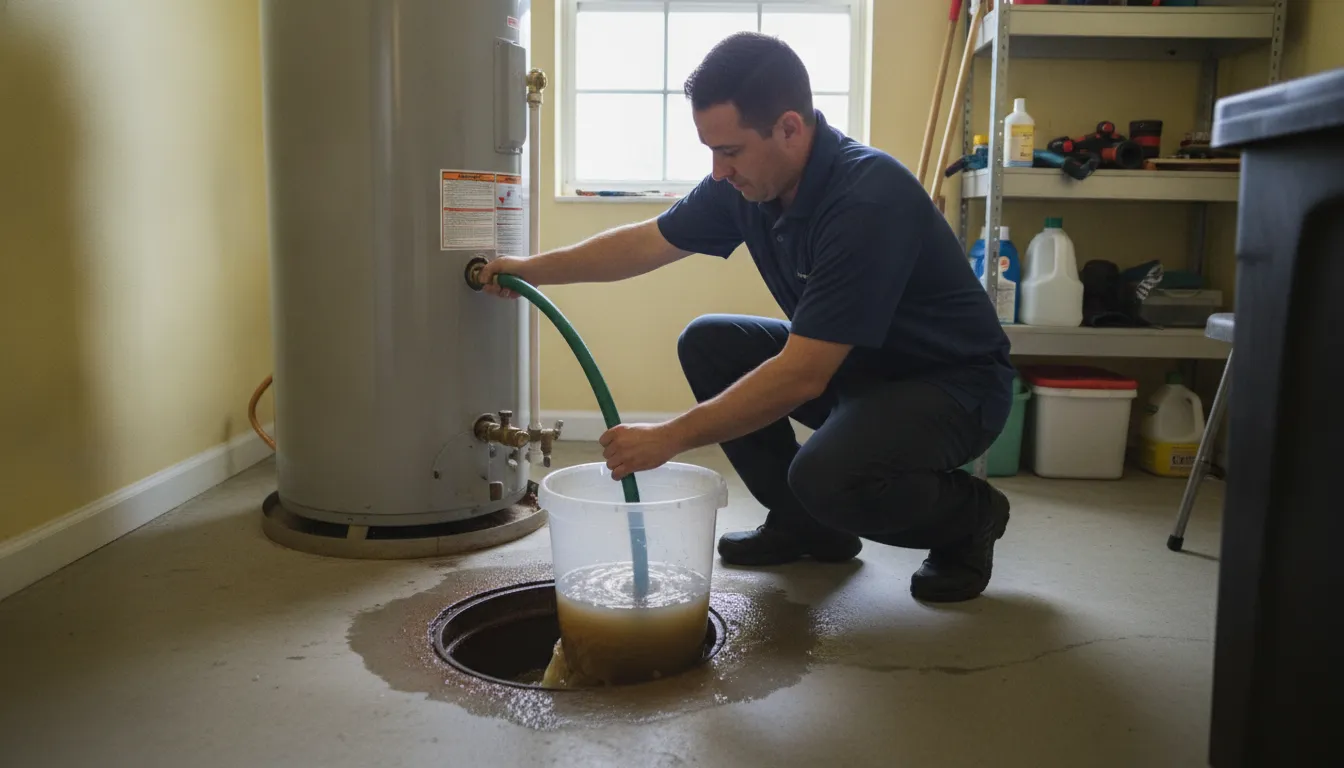
- Turn off the heat source. For an electric unit, switch off the water heater breaker. For a gas unit, set the control to the appropriate vacation or pilot setting according to the manufacturer's instructions. Allow the water to cool before draining whenever possible.
- Shut off the cold-water supply. Close the valve on the cold-water line entering the top of the tank. This prevents the tank from continuing to refill while you work.
- Connect a garden hose. Attach one end securely to the drain valve near the bottom of the tank. Place the other end where hot or dirty water can discharge safely, such as an approved drain or outdoor area that will not be damaged.
- Open the drain and provide airflow. Open the drain valve, then open a hot-water faucet nearby. If appropriate for your unit and the manufacturer's instructions, carefully open the temperature and pressure relief valve to help air enter the tank. Keep clear of the discharge because the water may be hot.
- Drain until the water runs clear. Watch the discharge for cloudy water or sediment. Do not assume the tank is clean simply because water is flowing. If the water remains dirty, briefly restore the cold-water supply to agitate and rinse the tank, then shut it off and continue draining.
- Close, refill, and restore operation. Close the drain valve and the relief valve if it was opened, remove the hose, and open the cold-water supply. Keep a hot-water faucet open until air stops sputtering and water flows steadily. Only then restore power to an electric heater, or return a gas unit to its normal operating setting. A dry electric heating element can be damaged.
Signs Sediment Has Built Up
Rumbling or popping sounds, longer heating times, and murky hot water are practical reasons to schedule an inspection rather than waiting for the next annual date. Sediment can make the tank work harder and, over time, may contribute to cracking. A professional can check the drain valve, temperature and pressure relief valve, and other maintenance points during the same visit. Routine maintenance includes flushing sediment, checking the relief valve, and inspecting the anode rod at appropriate intervals. For hands-on support, review our professional water heater maintenance service options. These steps help Florida homeowners address buildup early instead of treating a preventable maintenance issue as an emergency.
How a Sacrificial Anode Rod Protects Your Tank
Inside a tank-style water heater, the anode rod is a sacrificial piece of metal. It gradually corrodes so the steel tank does not rust as quickly. Once the rod is mostly consumed, the tank loses an important layer of protection, and corrosion can begin attacking the tank itself.
Replacing the anode rod every three to five years can significantly extend the life of a water heater. Although the right interval depends on water conditions and the rod's condition. Hard water deserves special attention. Dissolved calcium and magnesium can contribute to mineral buildup, and hard water may consume the anode rod faster. The result is a greater need for regular flushing and anode checks. Research from the North Dakota State University Extension explains how hardness minerals contribute to scale in plumbing and appliances. If your Treasure Coast home has hard water, an inspection during annual service can help identify wear before it becomes a tank problem.
How to Tell if the Anode Rod Is Worn
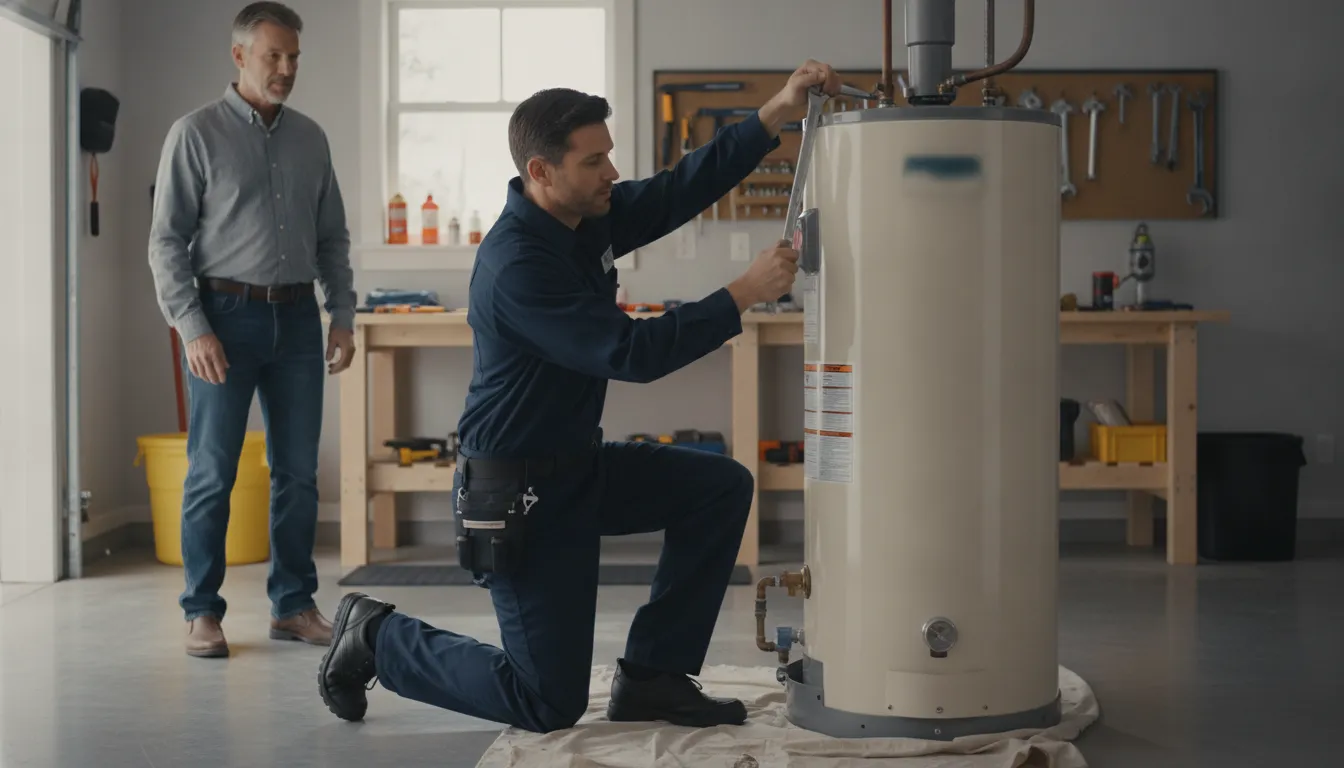
Anode rods are installed inside the tank, so checking one usually requires shutting down the water heater and removing the rod from the top. A professional can evaluate it safely as part of routine water heater maintenance. Warning signs of a heavily consumed rod include:
- Heavy corrosion across much of the rod.
- A rod that has become little more than a thin wire core.
- A white, chalky coating or substantial mineral buildup.
Routine maintenance should include anode rod inspection every few years, along with sediment flushing and other safety checks. If the rod is still in usable condition, a technician can advise when it should be checked again. If it is worn, timely replacement may protect the tank from unnecessary corrosion and help you get more dependable service from the unit. Annual professional service is a practical way to keep this less-visible component from being overlooked.
What Temperature Should a Water Heater Be Set to in Florida?
Set the thermostat to 120 degrees Fahrenheit for most Florida homes. This balances comfortable hot water, energy efficiency, and scald prevention while supporting responsible water use.
A thermostat setting of 120 degrees Fahrenheit is a practical balance for most homes. It provides comfortable hot water for bathing, washing dishes, and cleaning while reducing the risk of scalding and limiting unnecessary energy use. The U.S. Environmental Protection Agency's WaterSense guidance also encourages homeowners to maintain water systems efficiently, including choosing settings and equipment practices that support responsible water and energy use. Learn more from EPA WaterSense.
If your water feels noticeably hotter or cooler than expected, do not assume the thermostat's number tells the whole story. Thermostats can drift over time, and the temperature at a faucet may differ from the setting at the tank. A professional can verify the actual temperature, check the thermostat and heating components, and make an adjustment that suits the home's needs. This is especially useful when household members have different bathing preferences or when a water heater has recently been serviced.
The 120-degree setting works alongside the tank's temperature and pressure relief valve, commonly called the T&P valve. This valve is a safety backstop designed to respond if temperature or pressure inside the tank becomes excessive. It should be checked as part of routine maintenance, and a professional should inspect the valve and related safety components during an annual water heater service visit. A valve that leaks, fails to operate correctly, or shows corrosion should not be ignored.
Regular maintenance also gives a technician an opportunity to confirm that the thermostat is operating as intended and that the water heater is producing dependable hot water. For Treasure Coast homeowners, a simple temperature check and annual safety inspection can support comfortable use without relying on guesswork.
Water Heater Maintenance and Your Manufacturer Warranty
Routine service does more than help a water heater operate reliably. It can also make it easier to use the protection that came with the unit. Manufacturer warranty terms vary, but many require homeowners to follow maintenance instructions and may ask for documentation when a covered repair is requested. Keeping a clear service history gives you useful evidence that the heater received appropriate care.
Annual professional service is recommended to extend heater life and support safe operation. During a maintenance visit, a qualified plumber can review the unit's condition, flush sediment, inspect the anode rod, and check safety components. In Florida, hard water can increase mineral buildup, so a technician may recommend more frequent attention when the home's water conditions call for it. Ask the technician to record the date, work completed, water heater model, and any maintenance recommendations.
Why authorized warranty service matters
Using an authorized warranty service provider helps connect the maintenance record to the manufacturer's service requirements. Plumbing by Bishop is an authorized warranty service provider for Rheem, GE, Ruud, Bradford White, and North Star water heaters. These brand names are relevant here because of their warranty and service relationship, not as a guarantee that every issue or part will be covered.
Before scheduling work, locate the installation paperwork or warranty registration if you have it. Confirm what the warranty covers, whether parts and labor are treated differently, and which maintenance records the manufacturer may require. Keep invoices and service notes with the warranty documents. If the heater develops a problem, this preparation can make the next step more straightforward. Plumbing by Bishop's guide to water heater warranty repair explains what homeowners can expect from that process, while this overview of manufacturer warranty coverage provides additional Florida-specific context.
A warranty does not replace maintenance, and maintenance does not guarantee that every failure will qualify for coverage. It does give homeowners a practical record of responsible care and helps a professional identify problems before they become more disruptive.
When Should You Replace a Water Heater in Florida?
Replace a water heater when the tank leaks, the unit is more than 10 to 12 years old, or repair costs keep climbing. Rusty water and repeated temperature problems are other strong signals.
A water heater does not have to fail completely before replacement becomes the practical choice. Watching for gradual changes gives you time to compare options, plan the work, and reduce the chance of an unexpected loss of hot water. Most traditional tank water heaters last about 8 to 15 years, depending on water quality and maintenance. Many tank units have an average lifespan of 10 to 15 years, but Florida conditions and the unit's service history matter.
Rusty or discolored hot water
Rust-colored water from the hot taps can indicate corrosion inside the tank or a worn anode rod. A plumbing professional can help determine whether the issue is limited to a replaceable component or whether the tank itself is nearing the end of its service life. If discoloration appears only with hot water, have it checked rather than assuming it will clear on its own.
Water around the tank
A leaking tank is one of the clearest replacement warnings. Connections, valves, and other external parts can sometimes be repaired, but a tank that has corroded through generally cannot be restored. Addressing a leak promptly allows for a controlled replacement instead of waiting for water damage to dictate the timing.
Inconsistent temperatures
Hot water that turns lukewarm, runs out unusually fast, or fluctuates during normal use may point to a failing heating element, thermostat, dip tube, or tank. Some components are repairable, especially on a newer unit. On an older heater, repeated temperature problems may make replacement a more sensible long-term plan.
Age beyond the expected service window
If your tank is more than 10 to 12 years old, its age alone is a reason to schedule an evaluation, even when it is still operating. Regular maintenance can help a unit move toward the longer end of its expected lifespan. Neglect, hard-water scale, and sediment can shorten it. Hard water can create scale buildup that reduces service life, so Florida homeowners may need more frequent attention than the calendar alone suggests.
For a closer look at early warning signs, review these water heater failure signs. A measured inspection can separate a repair opportunity from a replacement decision and help you choose the right timing for your home. For everyday upkeep across the home, these plumbing maintenance tips for Treasure Coast homes round out a practical care routine.
| Situation. | Often a repair. | Often a replacement. |
|---|---|---|
| Tank age. | Under 8 years with no other warnings. | 10 to 12 years or older. |
| Rust-colored hot water. | Worn anode rod or small buildup. | Corroded tank interior. |
| Leaks. | Loose valve or connection. | Tank wall leaking or corroded. |
| Inconsistent heat. | Thermostat or element issue. | Repeated failures on an older unit. |
Use this comparison as a starting point with a qualified plumber, not as a substitute for an on-site evaluation. A professional can confirm which parts are failing and give you a clear repair or replacement recommendation for your home.
Book your water heater maintenance visit with Plumbing by Bishop today and keep your Treasure Coast home's hot water dependable all year.
Frequently Asked Questions
How often should you flush a water heater in Florida?
Flush a tank water heater at least once a year to remove sediment. Homes with hard water may need more frequent service because dissolved calcium and magnesium can form scale inside the tank. A plumber can help set a schedule based on your water quality, heater condition, and household use. Learn more about water heater failure signs.
How long does a water heater usually last in Florida?
Most traditional tank units last about 10 to 15 years, although water quality, maintenance, installation, and usage all affect service life. Begin planning for replacement when an older unit develops rusty water, leaks, or inconsistent temperatures instead of waiting for a complete failure. Review common replacement signs.
Does hard water change your maintenance schedule?
Yes. Hard water can create mineral scale that makes the heater work harder and may shorten its service life. In a hard-water home, schedule flushing more often if sediment returns quickly, and have the anode rod checked regularly. Water softening can reduce hardness minerals and help limit scale in plumbing and appliances.
What temperature should a water heater be set to?
For most homes, set the thermostat to 120 degrees Fahrenheit to balance hot-water comfort, energy efficiency, and scald prevention. Check the temperature at a nearby faucet after adjusting the control. Include the temperature and pressure relief valve in routine maintenance, and have a professional inspect it if it does not operate correctly. See EPA WaterSense home-maintenance guidance.
Ready to Schedule Water Heater Maintenance?
Regular professional service can help you keep your water heater operating reliably through Florida's changing seasons and identify maintenance needs before they become bigger problems. Plumbing by Bishop can help with a practical inspection and maintenance plan for your home. To schedule professional water heater maintenance, contact Plumbing by Bishop online or call (772) 286-5872.