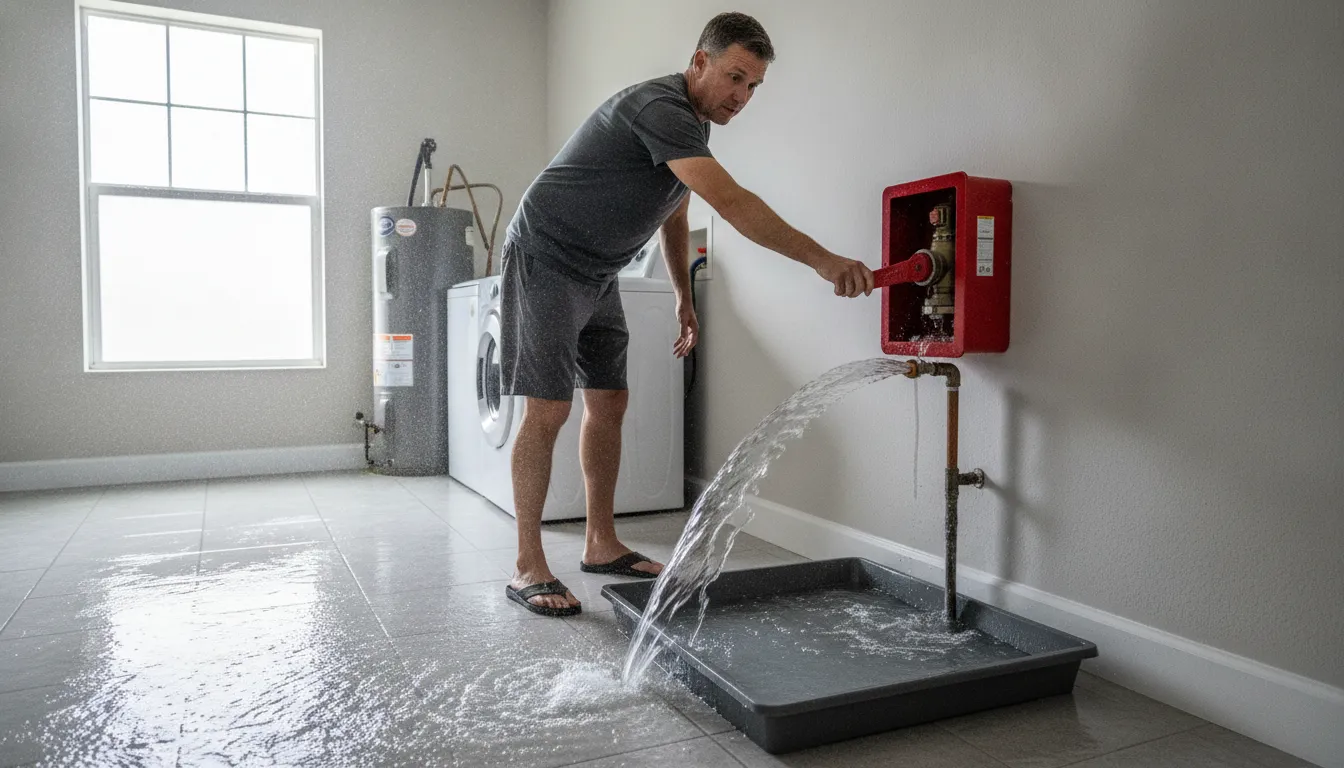
Water spreading across the floor is a sign to act, not a problem to watch. If you know what to do with a burst pipe, you can limit additional water damage while keeping yourself away from electrical and structural hazards. Start by moving people and pets away from the affected area, then shut off the home’s main water supply if you can reach it safely. Do not step into standing water near outlets, appliances, or electrical equipment.
The safest first response to what to do with a burst pipe is to shut off the main water valve. Avoid electrical hazards, protect belongings only when it is safe, and contact a qualified plumber for diagnosis and repair.
For homeowners in Stuart, Jensen Beach, Palm City, Hobe Sound, Port St. Lucie, and nearby Treasure Coast communities, Plumbing by Bishop provides emergency burst-pipe repairs and leak fixes. Contact Plumbing by Bishop for emergency plumbing help
The right sequence matters, especially when the leak is near wiring, a water heater, or hidden areas of the home. Here is how to respond step by step without making the damage worse.
What to Do With a Burst Pipe, Step by Step
If water is spreading from a split pipe, stay calm and focus first on stopping the supply. The safest sequence is to shut off water, avoid electrical hazards, protect the water heater, and then contain what you can without entering an unsafe area.
- Move people away from the affected area. Keep children and pets clear of standing water, wet ceilings, slippery floors, and any area where the ceiling or wall appears swollen. Do not touch outlets, appliances, switches, or cords that may be wet.
- Close the main water shut-off valve. The valve is often where the service line enters the home, near the hose connection, in the garage, or near the water heater. If you need a refresher, this guide can help you locate your main water shut-off valve. Turn the valve only if you can reach it without stepping through standing water or approaching an electrical hazard. Closing the main valve is the recommended first response to a burst pipe. Portland Water Bureau guidance also notes that the valve may be outside near the water meter if it is not inside.
- Close a branch shut-off if it is closer and safe to reach. A fixture or appliance may have its own valve on the supply line. Closing it can isolate that section, but do not delay the main shutoff while searching for a small valve when water is actively spreading. Apartment and multifamily residents may need the property manager to access a building-level valve.
- Protect the water heater. After the water supply is off, use the dedicated shut-off valve on the cold-water inlet to isolate the water heater. If you have an electric water heater and can reach its breaker without entering wet areas, turn it off at the electrical panel. Do not touch the heater, wiring, or breaker if water is present near the equipment or panel. Gas equipment should be handled only when it is safe and you understand the shutoff procedure.
- Open faucets only when the area is safe. Opening a faucet may relieve remaining pressure, but do not cross standing water, handle wet electrical fixtures, or run water through a visibly damaged line. Then place containers or towels beneath a small, accessible drip and move belongings only if doing so does not put you at risk.
- Document the damage and arrange repair. Take photos before moving damaged materials when possible. A burst pipe may require leak detection, pipe repair, or repiping rather than a temporary patch. Stop cleanup and leave the area to a professional if water is contaminated, the structure is unstable, or electrical hazards cannot be isolated.
These steps are for immediate damage control, not a substitute for finding and repairing the failed section. Once the area is safe and the supply is isolated, get the plumbing problem assessed before restoring water.
How to Shut Off Water Without Making the Damage Worse
If water is still flowing, shut it off as close to the source as you safely can. A small fixture valve may stop a toilet, sink, or appliance leak. For a broken supply line or flooding that continues after a branch valve is closed, use the home’s main shut-off valve.
Check the most likely valve locations
The main valve is commonly near the point where the water line enters the house. Look near the front hose connection, inside the garage, or near the water heater. If you cannot find it indoors, check outside near the water meter. The valve may have a wheel handle or a lever. Turn a wheel clockwise, or move a lever until it is perpendicular to the pipe, without forcing a stuck valve.
Once the main valve is closed, open a nearby cold-water faucet briefly if it is safe to do so. This can relieve some pressure in the lines. Do not keep searching through a flooded area simply because the valve is not in the first location you check. Locate your main water shut-off valve before an emergency so you do not have to search under stress.
Know when building management must act
In an apartment or multifamily building, your unit may not have an accessible main shut-off, or the valve may control more than your residence. Contact the property manager or building maintenance team and explain that water is actively leaking. If there is a unit-level valve you can reach without entering unsafe water, close it while management responds. Do not enter a locked utility room, alter a shared valve, or shut off water to other units without authorization.
Stop searching when safety is uncertain
Leave the area if standing water is near outlets, appliances, electrical panels, structural damage, or a gas appliance. Do not reach through water or climb over wet flooring to reach a valve. Move people and pets away, and prioritize emergency help over finding the perfect shut-off point. Water shutoff is useful, but it should never put you in contact with electrical or unstable hazards.
When Should You Shut Off Electricity?
Water and electricity can turn a manageable plumbing failure into a serious safety hazard. Treat the electrical question separately from the water shutoff. Use a circuit breaker only when you can reach it from a dry position without touching wet surfaces or damaged equipment. If the panel is not safely accessible, keep everyone away and call a qualified professional.
| Situation | What to do | Why it matters |
|---|---|---|
| The breaker panel is dry, accessible, and away from the water. | From a dry position, switch off the breaker serving affected outlets or appliances. If you cannot identify the circuit, use the main disconnect. | Removing power from the affected area can reduce electrical risk while the leak is being controlled. |
| Water is near outlets, appliances, wiring, the panel, or an inaccessible area | Do not enter the water, touch wet equipment, or approach the panel. Keep people and pets clear, and call an electrician or emergency service for guidance. | A wet electrical system may remain hazardous even when the source of the leak appears small. |
These boundaries are consistent with electrical safety guidance. It recommends shutting off power at the breaker when water is near outlets or appliances, but only when doing so is safe. Do not rely on a wall switch, unplug an appliance from a wet area, or investigate a sparking, buzzing, or burning-smell condition yourself. Leave the area and contact emergency services if there is an immediate danger such as fire, smoke, or an electrical arc.
Once the electrical hazard is addressed, focus on stopping the water at the main shutoff or an accessible branch valve. A burst pipe may continue feeding water until the supply is closed, but electrical safety always comes first.
How to Contain Water and Protect Your Home
Once the water supply is off, focus on keeping the leak from spreading. Place a bucket, pan, or other stable container beneath the active drip if you can do so without reaching through unsafe water or touching damaged electrical equipment. Use towels to catch splashes and protect nearby flooring. Do not climb on wet surfaces or move heavy furniture by yourself.
Move rugs, boxes, electronics, and other belongings away from the affected area only when the path is dry and safe. If an item is plugged in, leave it alone until power has been disconnected safely. Do not enter standing water near outlets, appliances, electrical panels, or other equipment. If you cannot reach the breaker without crossing water, wait for qualified help.
If the burst involves a water heater, turn off the heater and close the dedicated cold-water inlet when it is safe to access. Do not handle a gas control, electrical connection, or hot equipment if you are unsure how to do so. A plumber can determine whether the heater or connected piping has been damaged.
After immediate hazards are controlled, remove accessible residual moisture and dry waterlogged surfaces. Open windows to improve ventilation when outdoor conditions allow. Fans or dehumidifiers may help, but avoid using electrical equipment in wet areas. Moisture should be addressed promptly because prolonged water intrusion can create indoor environmental problems. Guidance from the University of Florida emphasizes prompt attention, while Oklahoma State Extension recommends controlling moisture and drying affected materials thoroughly.
Materials that cannot be dried thoroughly may need to be removed rather than left in place. For prevention after the emergency, review how to prevent frozen pipes, especially if freezing temperatures may have contributed to the failure.
What Should You Document Before Cleanup?
Once the water is under control and the area is safe to enter, document the condition of your home before moving damaged belongings. Take wide photos that show the room, then closer photos of wet drywall, flooring, cabinets, furniture, appliances, and visible pipe damage. Oklahoma State University Extension recommends photographing damaged sheetrock, furniture, and personal items before repairs begin for insurance documentation: see its water-damage guidance.
Make brief notes while the details are fresh. Record when you discovered the leak, where the water appeared to come from, what you did to shut it off, and which rooms or belongings were affected. Photograph serial numbers or identifying details when practical, and keep receipts for reasonable emergency supplies or professional services. Do not assume a policy covers a particular loss. Ask your insurer or claims representative:
- What documentation do you need before damaged materials are removed?
- Should an adjuster inspect the damage before cleanup or repairs?
- Does the policy provide access to a professional drying or restoration crew?
- Which damaged belongings should be kept, and how should they be stored?
You can usually remove surface water, blot accessible areas, and move small belongings if doing so does not expose you to electricity, contaminated water, unstable materials, or heavy lifting. Do not enter standing water near outlets or appliances. Professional drying is appropriate when water has reached walls, ceilings, flooring, insulation, or concealed spaces, or when you cannot dry materials quickly and thoroughly. Moisture left behind can contribute to indoor environmental problems, and some structural drying projects take much longer than the visible water removal. Ask the drying professional what will be measured, removed, or documented, and coordinate those decisions with your insurer without assuming coverage.
When Should You Call an Emergency Plumber for a Burst Pipe?
Call for professional help when the water is still flowing, the leak is spreading, or you cannot safely control the supply. Your first-response steps are meant to limit damage while help is arranged. They are not a substitute for locating the failed section, restoring safe water service, or repairing the pipe.
Request emergency plumbing help promptly if:
- Water is actively spraying or running and you cannot stop it with an accessible shutoff valve.
- The main valve is stuck, damaged, missing, or located somewhere you cannot safely reach. Apartment and multifamily residents may need the property manager to isolate the supply.
- Water is near outlets, electrical appliances, panels, wiring, or other equipment. Do not walk through standing water to reach a breaker. Leave the area and ask for qualified help if power cannot be shut off from a dry, safe location.
- A ceiling is bulging, a wall is becoming saturated, flooring is lifting, or water is entering cabinets and other enclosed spaces.
- You hear water but cannot identify the source, or the visible leak stops while unexplained moisture continues. A hidden pipe failure or slab leak may still be releasing water.
Do not keep troubleshooting if access requires climbing, removing building materials, handling damaged wiring, or entering contaminated water. Move people and pets away from the affected area. If you can do so without exposure to electrical or structural hazards, take photos before moving damaged belongings and note where the water appeared.
Plumbing by Bishop’s 24/7 emergency plumbing for burst pipes page covers burst-pipe repairs and leak fixes. This article explains what to do immediately; the service page explains the professional response. Plumbing by Bishop also provides leak detection, leak repair, pipe repair, and repiping for Treasure Coast homes and light commercial properties, including Stuart, Jensen Beach, Palm City, Hobe Sound, and Port St. Lucie.
Contact Plumbing by Bishop for emergency plumbing help
How Can You Reduce the Risk of Another Burst Pipe?
After the immediate leak is controlled and the damaged section is repaired, make prevention part of the follow-up. Start by making sure everyone in the household knows where the main water shut-off valve is and how it operates. Common locations include where the water line enters the home, near the water heater, in the garage, or outside near the meter. Test it only when the plumbing is stable and the valve can be operated safely. A guide to locating your main water shut-off valve can help you prepare before the next emergency.
Ask the plumber what caused the failure and whether nearby sections of pipe need inspection. A replacement may solve the immediate problem without addressing a broader condition. Look for signs of corrosion, aging materials, recurring leaks, or restrictions that could increase pressure around a blockage. High pressure, corrosion, and age can weaken plumbing over time, while freezing water can expand inside a pipe and contribute to a burst. Pipes that froze may remain more likely to leak as they thaw. The Portland Water Bureau explains these freeze-related risks and recommends locating the shut-off valve before a failure.
Keep exposed plumbing protected during unusual cold, address small leaks promptly, and avoid ignoring changes in water pressure or repeated clogs. If the burst affected walls, floors, or cabinets, confirm that the area is fully dry and that no hidden moisture remains. For freeze-related concerns, review these practical tips on how to prevent frozen pipes. A careful inspection and a known shut-off plan can make the next plumbing emergency easier to manage.
Frequently Asked Questions
What should I do first when a pipe bursts?
Close the main water shut-off valve as soon as you can do so safely. If you cannot find it indoors, check where the water line enters the home, near the hose connection, in the garage, or outside near the water meter. Residents of apartments or multifamily buildings may need to contact the property manager to shut off the supply. Portland Water Bureau recommends closing the main shut-off valve as the first response.
Should I turn off electricity after a pipe bursts?
Only turn off a circuit breaker if you can reach it without stepping through standing water or touching wet electrical equipment. Water near outlets, appliances, wiring, or the electrical panel creates a serious hazard. Leave the area and call a qualified electrician or emergency professional if the breaker is not safely accessible. Do not enter a flooded space to reach a switch.
Do I need to turn off my water heater?
Yes, if it can be done safely after the water supply is shut off. Turn off the water heater and locate the dedicated shut-off valve on its cold-water inlet, as recommended by the Portland Water Bureau. Do not handle the heater or its controls when the surrounding area is wet or unsafe, and ask a professional for guidance if you are unsure.
When should I call a professional plumber?
Call promptly when the water cannot be stopped, the damaged pipe is hidden, water has reached walls or flooring, electrical hazards are present, or you cannot safely identify the source. A professional can isolate the failure, assess damage, and complete leak or pipe repairs. Plumbing by Bishop offers emergency burst-pipe repair and leak-fix services for Treasure Coast homeowners and light commercial customers.
Get Started With Professional Help
A burst pipe can leave you unsure what to do next, especially after you have stopped the water and made the area safe. A professional inspection can help identify the source, assess affected plumbing, and guide the next practical steps for your home.