
Slab leak estimates depend on the work required at a specific home. One generic figure cannot describe every repair. Diagnosis, pipe access, repair choice, restoration, and verification can shape the scope.
A slab leak can be hidden beneath concrete. The estimate depends on what the inspection finds and how the pipe can be reached. Ask what work is included after plumbing repair.
Request a slab leak evaluation and estimate
The cost to fix a slab leak depends on the leak location, the repair scope, access to the pipe, and whether opening and restoration are included. The estimate should explain each item, not rely on a generic price range.
For Treasure Coast homeowners, a useful estimate makes the proposed work understandable before it begins. Ask what was found, which repair approach is being considered, and what is or is not included in the quoted scope. If you are still checking for possible warning signs, review our guide to warning signs of a slab leak. The next sections explain estimate factors from diagnosis through verification and restoration.
How the Cost to Fix a Slab Leak Is Estimated
Each estimate should reflect the work needed at that home. It is not a standard price for every leak. The scope may include locating the leak, reaching and repairing the pipe, restoring the affected area, and checking that the repair works. The diagnosis and repair plan shape which items apply. Plumbing by Bishop describes diagnosing the issue, presenting options and a flat-rate quote before work. Completing the repair, and checking it by pressure test or by running the fixture. Ask which steps the estimate includes.
Request a slab leak evaluation and estimate
Detection is the starting point because the repair plan depends on the leak location and the access needed. A service visit can establish the work required. The estimate should say what the diagnosis covers and whether further investigation is separate.
Repair and access are related parts of the scope. The estimate should identify the repair being proposed and explain what access work is anticipated. It should also be clear about restoration: plumbing repair may not include replacing flooring or finishing concrete, so ask whether those tasks are included, excluded, or handled separately. Avoid comparing estimates by the bottom line alone if one includes restoration and another does not.
Verification is another item to clarify. Ask how the plumber will confirm the repair, such as through pressure testing or by operating the fixture, and whether that check is part of the quoted work. Before approving the job, make sure the written estimate describes the diagnosis, repair, access, restoration, and verification as applicable. Ask what is not included. Ask how any newly found work will be handled before proceeding. A clear breakdown helps you understand what the cost to fix a slab leak covers. It also shows what may need a separate decision if the scope changes.
How Detection and Access Affect the Estimate
Before defining the repair, a plumber needs to narrow down the leak location and how to reach the pipe. Diagnosis and access both shape the scope. An estimate should reflect what is known, plus any uncertainty that could affect work after access is opened.
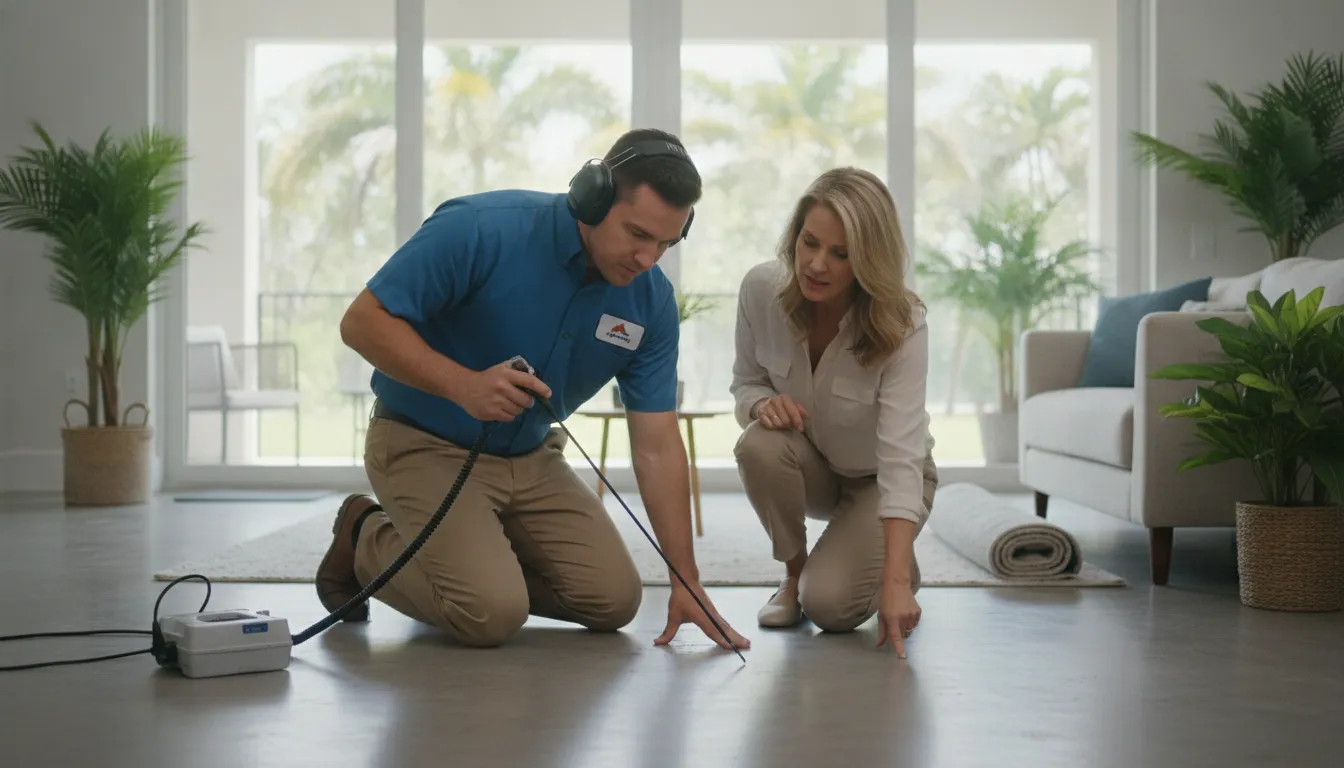
Plumbing by Bishop describes using pressure testing and, when needed, acoustic listening equipment to help isolate slab leaks without tearing up the entire floor. These are diagnostic methods, not a promise that every leak can be located or repaired without opening a surface. The findings help inform the next step, but the appropriate approach depends on the specific conditions at the property.
Before approving work, ask what the diagnosis has established. Is the leak location clear? What supports that conclusion? Does the proposed scope account for the repair and access? Clear answers show what the estimate covers. They also show what may change if conditions differ after work begins.
Access can vary with the repair location and the surfaces or built-in features around it. The estimate should say whether an opening is expected and what area may be affected. It should also show whether closing or restoring that area is included. If the plumber cannot confirm access needs beforehand, ask how any scope change will be explained and approved. Do not assume how much flooring or concrete will be disturbed.
A careful diagnosis can help narrow the repair area. Still, testing cannot remove every uncertainty in advance. The goal is a clear explanation of the findings, required work, and any conditional parts of the project.
Learn more about professional slab leak detection and repair. Use that information to separate diagnosis from repair, access, and restoration work in an estimate.
Which Repair Path Changes the Project Scope?
A slab leak does not automatically mean the entire plumbing system needs replacement. The repair scope depends on what the plumber finds, where the affected pipe is. And whether the problem appears limited to one section or connected to broader pipe concerns. Those findings can change the estimate. Ask how each option affects access, repair, and follow-up work.
A localized repair may involve reaching the affected pipe and replacing or repairing a limited section. The estimate should identify the planned access and pipe work. Ask whether closing the opening or restoring the finish is included. Also ask what could change if the pipe looks different once accessible. This clarifies what is known and what remains uncertain.
Rerouting is another possibility a plumber may assess. The replacement pipe may follow a different route instead of accessing a section beneath the slab. Feasibility depends on the home layout and plumbing conditions. The estimate should describe the proposed route and work. Rerouting is not automatic or universally preferable.
If inspection raises concerns about more widespread pipe problems, the plumber may discuss broader repiping as a separate scope option. Plumbing by Bishop lists pipe repairs and repiping among its services, but that does not mean a slab leak by itself calls for whole-home repiping. Ask what findings support a broader scope, which pipes it includes, and whether a localized approach remains an option. The company describes its repair services at leak repair and repiping.
Compare options by what each includes, not simply by the method name. A useful estimate should identify the planned repair area, access work, pipe work, testing or verification, and any exclusions such as finish restoration. It should also explain how you will be asked to approve a change if conditions require additional work. This helps compare scope without assuming both estimates cover the same tasks.
For a broader overview of detection and repair approaches, see slab leak repair options. That guide covers general repair approaches. This article focuses on how scope shapes an estimate. An on-site evaluation is needed to discuss options for a particular home.
What Restoration and Testing Should Be Included?
| Estimate item | What to clarify |
|---|---|
| Diagnosis | What was found and what remains uncertain? |
| Access and repair | How will the pipe be reached, and what repair work is included? |
| Restoration | Are concrete or finish repairs included or separate? |
| Verification | How will the plumber confirm the repair? |
After a pipe beneath a slab is repaired, the work may not be finished from the homeowner's point of view. The opening may affect concrete, flooring, baseboards, or another finished surface. Different providers may handle these items. The estimate should show where plumbing work ends and finish restoration begins.
Ask for the repair scope to spell out what happens to the access opening. Does the plumbing work include closing or patching concrete, or does it stop after the pipe repair and backfill? If flooring has to be removed, is replacement flooring included, or will you need to arrange that separately? What about matching tile, grout, wood, or another existing finish? The answer may depend on the specific repair and materials. Do not assume that a neat plumbing repair includes restoring the room to its original appearance.
Use these questions to compare proposals. One may cover pipe work only, while another may include concrete work or cleanup. Ask each provider to list included tasks and exclusions in plain language. Clarify who coordinates a flooring or finish contractor. If another provider will restore the surface, ask when that work can happen and whether plumbing must be checked first. A vague phrase like "repair complete" does not explain the floor condition afterward.
Testing is a separate part of the scope. Ask how the plumber will verify the repair and explain the result. Plumbing by Bishop describes verifying repairs with a pressure test or by running the fixture, then leaving the workspace spotless. You can review its leak repair process for those service details. Confirm which test applies to your repair. Do not assume every job is checked the same way.
It also helps to distinguish plumbing cleanup from restoration. Ask what materials or debris will be removed, how the work area will be left, and whether patching or replacement of the visible finish is excluded. A clean workspace is valuable, but cleanup alone does not mean tile, flooring, or concrete has been cosmetically restored. Clarify that difference before approval to avoid mismatched expectations.
For an overview of possible repair approaches, see slab leak repair options. The right scope depends on the findings at the property; get the verification step and the finish-restoration responsibilities stated clearly in your estimate.
How Treasure Coast Homeowners Can Compare Estimates
Look beyond the bottom line when comparing estimates. Two proposals may describe different work for the same leak. A useful written estimate explains the findings, proposed work, and exclusions. Ask for clarification before approval.
- Diagnosis and findings: What tests or observations support the diagnosis? Is the leak location confirmed, or is additional investigation needed? Ask the plumber to explain any uncertainty in plain language and distinguish confirmed findings from assumptions.
- Exact location: Does the estimate identify where the affected pipe is, such as a particular room or area? If the location is described broadly, ask how the crew will confirm the work area before opening the floor.
- Repair approach and materials: Does the proposal explain whether it covers a localized pipe repair, a reroute, or another scope? What pipe and connection materials are included? Do not compare proposals as if the methods are interchangeable; ask why each approach is being considered for your home's findings and plumbing condition.
- Access and opening: What must be moved, opened, cut, or excavated to reach the pipe? Does the estimate include protection for nearby surfaces and the work area? Confirm whether access work is included or billed separately.
- Restoration: Who will close or patch the opening after plumbing work, and what finish work is included? Ask specifically about concrete, tile, flooring, paint, and matching existing finishes. A plumbing repair estimate may not include every restoration trade, so get exclusions in writing rather than assuming the floor will be returned to its original appearance.
- Verification and warranty: What testing will confirm the repair is complete, and will the result be explained to you? Ask for the warranty terms that apply to this specific work in writing, including what components or labor they cover and any exclusions. Do not assume a warranty automatically applies to related flooring or restoration.
- Cleanup and changes: What cleanup is included when the work is finished? If opening the slab reveals a different condition or the scope needs to change. Who will explain the options, revise the estimate, and obtain your approval before additional work proceeds?
A flat-rate, pay-by-the-job estimate should still make the job's boundaries clear. Compare the listed diagnosis, repair, access, testing, cleanup, and exclusions line by line. If a proposal leaves out restoration or scope-change approval, ask for written clarification. Plumbing by Bishop describes its leak-repair process as diagnosis, estimate, repair, and verification; homeowners can review its professional slab leak detection and repair information when evaluating what questions to ask.
What to Ask Before Approving Slab Leak Work
Before work begins, confirm what the plumber found and what the work will address. Ask for the diagnosis in plain language. Where is the leak believed to be? What supports that location? What remains uncertain? If there are multiple repair options, ask why one fits the findings and what alternatives involve. Understand the reasoning rather than choosing by method name alone.
Next, clarify the work boundary. What exactly will be repaired or replaced? Which materials and labor are included, and what is excluded? Ask how the crew will reach the pipe and what disruption that may involve. This could include opening flooring or concrete. Also confirm who is responsible for putting those finishes back and whether that restoration is included, handled by another contractor, or left for you to arrange.
Ask how the plumber will check the work when it is complete. Plumbing by Bishop describes diagnosing the issue, presenting options, completing approved work, and verifying the repair. You can review its professional slab leak detection and repair process. Ask what test applies to your repair. Find out whether you will receive the result in writing.
Before authorizing work beyond the agreed scope, ask how unexpected findings will be explained and who will contact you. Request details about any change and its effect on the work. Review revised terms before you decide. Ask for written coverage terms, including what is covered and any exclusions. Do not assume flooring or restoration is included unless the terms say so. If you may contact your insurer, ask for an itemized work description and keep records. The insurer can explain your policy.
Contact Plumbing by Bishop to discuss your slab leak evaluation and estimate.
If you need a separate overview of how plumbing work can affect an estimate, read factors that affect plumbing costs.
Frequently Asked Questions
What affects a slab leak repair estimate?
The estimate depends on what diagnosis finds and the work needed to reach and repair the leak. Ask whether it includes access work, pipe repair, testing after the repair, and restoration of the slab or finished surfaces. Have the plumber explain what is included, what is excluded, and what could change if the findings differ once work begins.
Should I repipe instead of repairing a slab leak?
Not necessarily. A localized repair and a broader repiping project have different scopes, and the right option depends on the condition of the plumbing and the leak findings. Ask the plumber to explain the available options, why each is being considered, and how the scope would differ. You can also review the slab leak repair options guide for background.
Will homeowners insurance pay for a slab leak?
Coverage depends on your policy, the cause of the leak, and the damage involved, so do not assume a particular repair or related work is covered. Contact your insurer, describe what you know, and ask what documentation they need before work proceeds. Keep photos of visible damage and copies of estimates and repair records.
How urgent is a slab leak?
Arrange an evaluation promptly if you suspect water is still escaping or notice new dampness. If water is spreading, stop the flow if you can do so safely and contact a plumbing professional. An inspection can clarify the source and next steps.
Get a Clear Slab Leak Repair Plan
Slab leak repair costs depend on where the leak is, how accessible it is, and what work is needed to address the cause and any related damage. A professional evaluation can help you understand the scope and the practical options for your home.
Contact Plumbing by Bishop to discuss your slab leak concerns.
With a clear scope, you can decide what to approve and what questions to ask before work begins.