Water can move in the wrong direction when pressure changes inside a plumbing system. That matters whenever drinking-water piping connects, directly or indirectly, with irrigation, fire protection, or another source that is not intended for consumption. In Florida, understanding that connection helps homeowners and property managers make sensible decisions about protection and service.
Contact Plumbing by Bishop to discuss backflow testing or service
What is a backflow preventer? It is a device or physical separation that helps stop nonpotable water or other substances from reversing through a cross-connection and entering drinking-water piping. Florida DEP identifies air gaps and mechanical devices as the basic forms of protection. The right choice depends on the connection, the potential hazard, and applicable local requirements.
These devices are not all built or maintained the same way, and not every property has the same testing obligation. A closer look at how reverse flow happens makes it easier to understand where protection may be needed and why professional testing or repair can matter.
What Is a Backflow Preventer?
A backflow preventer is a device or mechanism that helps stop water from flowing in the wrong direction. In a typical plumbing system, treated water moves from the public supply into your home or business. A backflow preventer helps keep nonpotable water or other substances from moving back into that drinking-water piping.
How cross-connections create a risk
A cross-connection is a temporary or permanent connection between potable water piping and a source that contains nonpotable water or another substance. Irrigation lines, equipment, tanks, and other plumbing systems can create these connections. The connection may be intentional and properly protected, or it may develop through an installation change, a hose, or a faulty component.
Backflow is the unwanted reversal of flow through that cross-connection. It can happen when pressure changes push connected water toward the potable supply, or when a vacuum draws water backward. The next section explains those two mechanisms in more detail.
Why drinking-water protection matters
An unprotected cross-connection can allow untreated water to enter a drinking-water distribution system. The U.S. Environmental Protection Agency explains that this may cause chemical or microbiological contamination, while the Florida Department of Environmental Protection notes that backflow can make water unsafe or unusable. A backflow prevention program helps keep contaminants out of the distribution system.
The right protection depends on the connection and the hazard. Some systems use physical separation, such as an air gap. Others use a mechanical assembly that creates a physical barrier. Mechanical devices can contain seals, springs, and moving parts, so they need appropriate inspection and service over time. Florida DEP identifies backflow prevention as an important part of protecting public water supplies, but device requirements and testing rules can vary.
For more answers to common plumbing questions, start with the symptoms and plumbing connections at your property rather than assuming every home uses the same device.
Sources: Florida Department of Environmental Protection guidance and the U.S. EPA cross-connection fact sheet.
How Can Backflow Happen in a Plumbing System?
Backflow occurs when water or another substance moves in the wrong direction through a cross-connection. A cross-connection can be a permanent or temporary link between drinking-water piping and a nonpotable source, such as irrigation water. The change in direction is driven by a pressure difference. The Florida Department of Environmental Protection identifies two main mechanisms: backpressure and backsiphonage.
Backpressure: downstream pressure pushes backward
Backpressure develops when pressure on the downstream side becomes greater than the pressure in the potable water supply. For example, a pump may push water through connected piping, or heating in a boiler may increase pressure. If that pressure exceeds the supply pressure, water can move back toward the drinking-water piping. A pressure increase is not the only possibility. A drop in supply pressure, such as during firefighting, water-line flushing, or a water-main break, can also allow higher-pressure connected plumbing to push water backward.
Backsiphonage: low pressure creates a vacuum
Backsiphonage happens when negative pressure creates a vacuum or partial vacuum in the potable water system. It works much like drinking through a straw. If water supply stops or pressure falls suddenly, water from a connected source can be drawn into the drinking-water line. The EPA notes that backflow can occur when pressure in the public water system falls below pressure in connected plumbing, including private irrigation and fire sprinkler systems.
- Backpressure: higher pressure in connected plumbing pushes water toward the supply.
- Backsiphonage: low supply pressure draws water from a connected source.
These conditions do not mean contamination has occurred in every plumbing system. They explain why a properly selected backflow preventer matters. The device creates a barrier against reverse flow at a connection where nonpotable water could otherwise reach potable piping. Florida DEP: cross-connection and backflow prevention guidance. EPA: cross-connection control and backflow prevention facts.
Where Might You Find a Backflow Preventer?
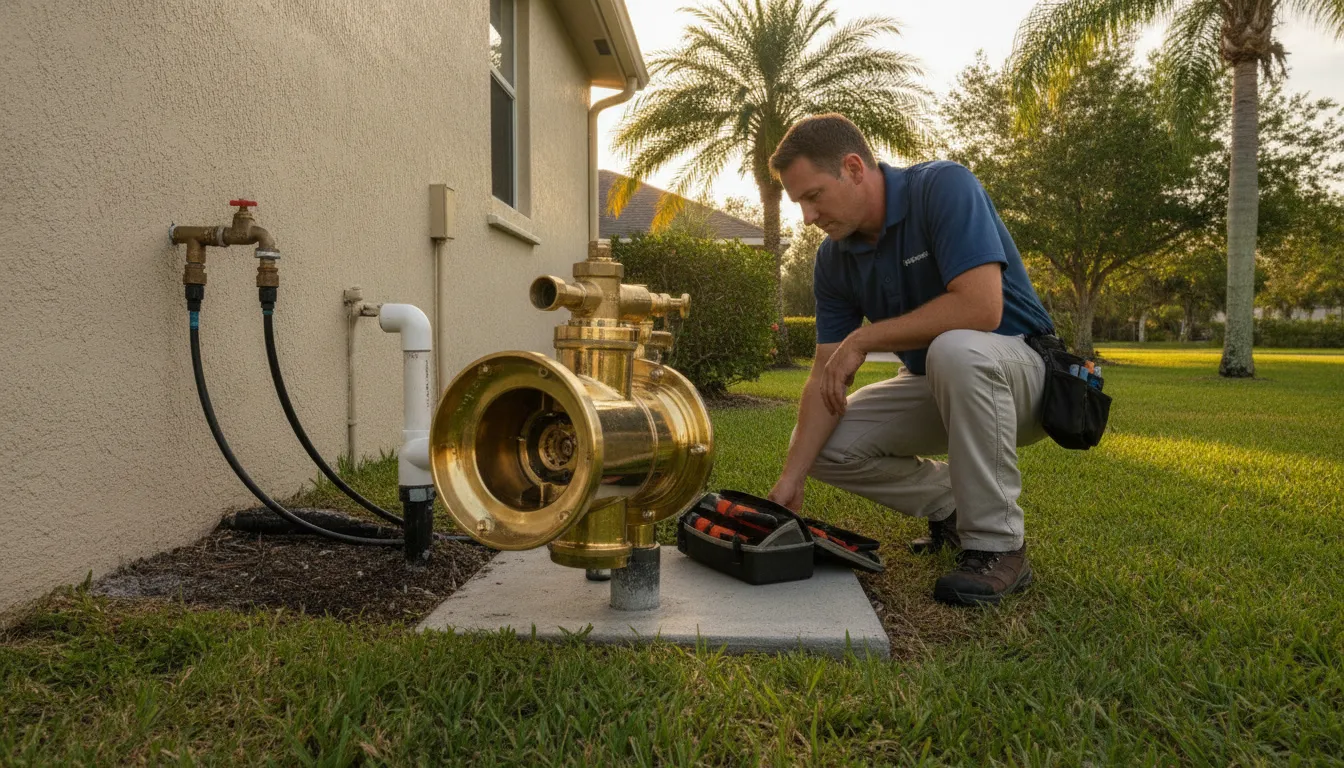
Backflow preventers are installed where drinking-water plumbing connects with another system that could contain nonpotable water. The device may be near the water service entrance, at a dedicated branch, or beside the equipment it protects. The exact location and device depend on the connection, the potential hazard, and applicable local requirements.
Residential applications
One of the most familiar examples is an irrigation system. Outdoor irrigation lines can connect to a home's potable water supply, so a properly selected preventer helps keep irrigation water from moving backward into drinking-water piping. Similar protection may be relevant at hose connections, pool-related equipment, water features, boilers, or other systems where water can contact soil, chemicals, stagnant water, or other substances. Not every home has the same plumbing arrangement, and a visible valve outside does not by itself identify the device type or whether it is correctly installed.
Florida guidance specifically identifies dedicated irrigation piping and dedicated fire-protection systems as examples of service connections that may need backflow protection. The Florida Department of Environmental Protection explains how these connections are managed, while the U.S. Environmental Protection Agency also lists private irrigation and fire sprinkler systems among common cross-connection settings.
Light-commercial applications
Businesses, multi-tenant properties, restaurants, offices, landscape systems, and small facilities may have several connected water systems. Irrigation, fire sprinklers, process equipment, cooling equipment, boiler systems, and hose connections can each create a different cross-connection question. A property owner or manager may need to identify devices at more than one service connection, rather than assuming the main building supply protects every branch.
This article provides a broad explanation of where devices may appear. For a location-specific testing discussion, see commercial backflow testing in Hobe Sound. Business owners can also review commercial plumbing services for businesses for wider plumbing planning. Plumbing by Bishop serves residential and light-commercial customers throughout the Treasure Coast, including Stuart, Jensen Beach, Palm City, Hobe Sound, and Port St. Lucie.
Which Types of Backflow Preventers Are Common?
Backflow protection can use a simple physical separation or a mechanical assembly with internal parts. The right option depends on the connection, the potential hazard, the plumbing layout, and the requirements of the water supplier or local authority. No single device is appropriate for every home or business.
| Type | Plain-language action | Common context | Service/testing note |
|---|---|---|---|
| Air gap | Leaves a visible open space between the water outlet and the receiving vessel, eliminating the direct connection. | Fixtures or equipment where a physical separation can be built into the design. | Usually checked visually to confirm the gap remains open and has not been bypassed. |
| Reduced-pressure principle assembly | Uses mechanical check valves and a relief area to provide a barrier against reverse flow. | Connections where the potential hazard calls for a higher level of mechanical protection. | Contains seals, springs, and moving parts that can foul or wear, so calibrated testing and service may be needed. |
| Pressure vacuum breaker | Helps prevent backsiphonage by admitting air when supply pressure drops. | Some irrigation or other connections where the applicable hazard and installation conditions allow this assembly. | Installation position, operating conditions, and local requirements matter. Mechanical testing uses properly calibrated gauge equipment. |
| Double-check assembly | Uses two check valves in sequence to create a mechanical barrier against reverse flow. | Selected for certain connections with an appropriate level of hazard protection. | Internal components can wear or become fouled, and the assembly may require periodic testing or repair. |
| Residential dual check | Uses two internal checks to limit reverse flow in a residential plumbing connection. | Some residential applications, when the device is suitable for the connection and local rules. | It is a mechanical device, not a permanent guarantee. Inspection or service depends on the installation and applicable requirements. |
The Florida Department of Environmental Protection identifies the air gap as a basic method of preventing backflow and lists reduced-pressure, pressure-vacuum-breaker, and double-check assemblies as principal mechanical types. It also identifies the residential dual check as a secondary mechanical type. Florida DEP explains these backflow prevention methods in its cross-connection control guidance.
Mechanical preventers are not maintenance-free. Their seals, springs, and moving parts may foul, wear, or fatigue over time. A plumber can identify the installed assembly, consider the connected system and hazard, and explain whether inspection, calibrated testing, repair, or replacement is appropriate.
Does Every Home Need the Same Backflow Device?
No. A backflow preventer is not selected by home size or neighborhood alone. The right protection depends on what is connected to the drinking-water plumbing, what could flow backward, and how serious that hazard would be if it entered the potable supply.
What determines the right device?
Connection type is an important starting point. A basic home water service may have different needs from a property with a dedicated irrigation system, pool-related equipment, fire-protection piping, or another auxiliary water connection. Florida guidance identifies dedicated irrigation and fire-protection systems as examples of service connections that may pose significant hazards and need appropriate protection. Read the Florida Department of Environmental Protection guidance for the technical definitions.
The potential hazard also matters. A device suitable for a lower-risk connection may not provide the level of protection needed where chemicals, untreated water, or other contaminants could be involved. The EPA explains that backflow programs and allowable assemblies can vary by state and municipality. So a device that is accepted in one setting is not automatically the correct choice everywhere.
Installation details affect the decision, too. Pipe size, the device location, available access, and whether periodic testing is needed all influence selection. This is why replacing a device based only on its appearance or label can create problems. A site-specific review can identify the connection, hazard level, local authority requirements, and practical testing needs before a device is installed or changed.
This article provides general education, not a universal legal determination for every Treasure Coast home. If you are unsure what a device protects, whether an irrigation connection is properly separated, or what your local water supplier requires, have the setup evaluated by a qualified plumbing professional.
How Are Backflow Preventers Tested or Repaired?
Testing depends on the kind of protection installed. An air gap can usually be evaluated visually by confirming that the required physical separation remains open and has not been bypassed. Mechanical assemblies, such as reduced-pressure or double-check devices, need a different process. Florida Department of Environmental Protection guidance says they should be tested with properly calibrated gauge equipment, not judged by appearance alone. Florida DEP explains the difference between visual air-gap checks and gauge testing.
What happens during a backflow test?
A qualified technician examines the assembly, checks its test ports and shutoff components, and uses the appropriate test procedure to determine whether its internal checks and pressure relationships are working as intended. The result is documented so the property owner, water supplier, or local authority has a clear record of the device condition.
Periodic testing matters because mechanical preventers contain seals, springs, and moving parts that can foul, wear, or fatigue. A device that looks intact may not provide the protection it was designed to provide. Testing frequency is not universal. Requirements and repair options can vary by state, local program, hazard type, device, and water supplier. The U.S. Environmental Protection Agency notes that cross-connection programs may differ by state and municipality.
When does a backflow preventer need repair?
A failed test does not automatically mean the entire assembly must be replaced. Depending on the device and the failure, service may involve cleaning debris, replacing worn internal components, correcting installation or drainage concerns, or replacing the assembly when repair is not appropriate. The next step should follow the test findings and applicable local requirements.
- Keep the test date, results, and any repair or replacement details.
- Ask which component failed and whether the device passed after service.
- Keep records of the technician or tester and the assembly identification.
EPA guidance recommends records covering testing, repairs, inspection results, and personnel qualifications. For a home, irrigation connection, or light commercial property in the Treasure Coast, qualified service helps turn a confusing failed test into a documented plan without guessing at the correct device or interval.
When Should You Contact a Treasure Coast Plumber?
You do not need to identify every valve or understand every plumbing diagram before asking for help. Contact a plumber when a backflow preventer is unknown, difficult to access, damaged, or connected to equipment that could affect the drinking-water supply. A professional can identify the device, explain its purpose, and determine whether testing or repair is appropriate for the installation.
Call about visible changes or unusual performance
A visible leak around the assembly, steady dripping, corrosion, unusual pressure, or discolored water deserves prompt attention. These signs do not prove that a backflow preventer has failed, but they can point to a plumbing problem that should be diagnosed before it causes more damage or affects water quality. If a test has failed, do not bypass or remove the device to restore flow. Mechanical assemblies contain moving parts that can wear or foul over time, so repair or replacement should be based on the device and the hazard involved.
Ask before connecting irrigation or fire-protection piping
Private irrigation and fire-sprinkler systems are examples of piping that may create a cross-connection with a drinking-water system. The Florida Department of Environmental Protection identifies dedicated irrigation and fire-protection connections as potentially hazardous service connections. Device selection and testing rules vary with the installation, hazard, and local authority, so a qualified review is more useful than choosing a device from a picture online.
Commercial connections need careful review
Light commercial owners and property managers should request an evaluation when a business has process equipment, boilers, chemical connections, irrigation, fire protection, or another cross-connection. Records may also be needed for testing and repairs. Plumbing by Bishop provides backflow testing and service for residential and light commercial customers throughout the Treasure Coast, including Stuart, Jensen Beach, Palm City, Hobe Sound, and Port St. Lucie. Explore Plumbing by Bishop services or review Florida DEP backflow guidance for additional context.
Contact Plumbing by Bishop to arrange a backflow service discussion
Frequently Asked Questions
What is a backflow preventer, and how does it work?
A backflow preventer is a device or arrangement that keeps nonpotable water or other substances from reversing into drinking-water piping. It may create an air gap or use mechanical check valves that act as a physical barrier. The Florida Department of Environmental Protection explains that backflow can occur through a cross-connection between potable water and another system, such as irrigation piping.
How do I know if my house has a backflow preventer?
Look near the water service entrance, irrigation connection, pool equipment, or another point where a separate water system connects to the home. A mechanical assembly may have shutoff valves, test ports, or a raised body, but appearances vary. If you cannot identify the device or are unsure whether a connection is protected, have a plumber inspect the piping rather than guessing.
Does every home need the same backflow device?
No. The appropriate protection depends on the type of connection, the potential hazard, the plumbing layout, and applicable local requirements. A device suitable for an irrigation system may not be appropriate for another application. Florida guidance identifies irrigation and dedicated fire-protection systems as examples that may require backflow protection, but it does not make one device universal for every property.
When should a backflow preventer be tested or repaired?
Arrange an inspection if the device leaks, shows visible damage, causes a pressure concern, or has failed a required test. Mechanical preventers contain seals, springs, and moving parts that can wear or foul. Florida DEP says air gaps can be checked visually, while mechanical devices require properly calibrated gauge testing, with frequency determined by the device, hazard, and applicable rules.
Contact Us About Backflow Service
A backflow preventer helps protect connected plumbing and drinking-water supplies, but the right next step depends on the device and property. Plumbing by Bishop can help Treasure Coast homeowners and light commercial property owners discuss backflow testing or service in clear, practical terms. Contact Plumbing by Bishop to get started.